
Building Emotional Machines: Bridging the Affective Gap with Semantic Deep Learning
Building Emotional Machines: Recognizing Image Emotions Through Deep Neural Networks
This paper proposes a Feedforward Deep Neural Network (FFNN) for image emotion recognition, transitioning from discrete categories to a continuous 2D Valence-Arousal (V-A) space. The method integrates high-level semantic features (objects and background) with low-level color and texture descriptors to achieve superior prediction accuracy compared to traditional CNN transfer learning.
Executive Summary
TL;DR: Researchers from Yonsei University have developed a deep learning framework that moves beyond labeling images as simply "happy" or "sad." By utilizing continuous Valence-Arousal (V-A) values and fusing high-level object/background features with low-level visual cues, their model precisely maps how image content translates into human feelings.
Academic Positioning: This work represents a shift from "fine-tuning classification models" to "context-aware affective computing." It highlights that while objects (like a shark) trigger specific emotions, the background and color provide the necessary nuance to distinguish a "majestic" scene from a "terrifying" one.
The Affective Gap: Why Computers "Feel" Differently
The primary challenge in affective computing is the Affective Gap. A standard CNN is trained to recognize a "bicycle" based on shapes and patterns. However, a person riding a bike at sunset evokes "peace," while a crashed bike evokes "sadness."
Current SOTA classification models often fail here because:
- Appearance Emotion: Different scenes can trigger the same emotion (e.g., a baby or a flower both evoking happiness).
- Category Limitation: Discrete labels (Happy, Angry, etc.) are too coarse to describe the infinite shades of human sentiment.
Methodology: Deep Semantic Fusion
The authors argue that semantic information—specifically the Main Object and the Background—is the strongest cue for emotion.
1. High-Level Feature Extraction
Instead of training a CNN from scratch for emotion, the authors "borrow" knowledge from pre-trained classification models:
- Object Features: Probabilities of 1,000 categories from VGG16/ResNet.
- Semantic Segmentation: Using scene parsing to identify the ratio of sky, sea, or grass (150 categories).
2. The Architecture
The core is a Feedforward Neural Network (FFNN) that takes a 1,588-dimensional concatenated feature vector.
- Input: Color (RGB/HSV), Local Descriptors (GIST/LBP), Objects, and Background.
- Latent Processing: Three hidden layers (3000, 1000, 500 neurons) with ReLU activation.
- Output: Two continuous values representing the V-A coordinates.
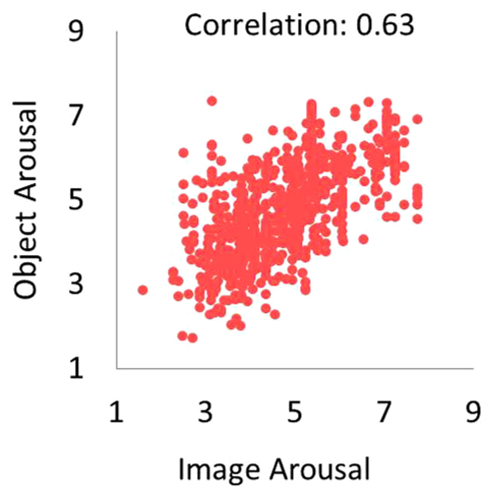 Figure 1: The overarching framework showing the fusion of multi-level features into the emotion prediction network.
Experimental Results
The researchers built a custom crowdsourced dataset of 10,766 images, each rated by five human subjects using the Self-Assessment Manikin (SAM) to establish ground truth V-A values.
Benchmarking vs. Transfer Learning
A key finding was that their FFNN outperformed common transfer learning approaches (fine-tuned AlexNet/VGG19).
- Valence MSE: 1.64 (Proposed) vs. 2.60 (Fine-tuned VGG19).
- Arousal MSE: 1.47 (Proposed) vs. 1.87 (Fine-tuned VGG19).
 Figure 2: Qualitative valence prediction results. Note how the model effectively differentiates between positive and negative stimuli.
The "Object" Advantage
In their correlation analysis (Figure 9 in the paper), the authors proved a significant Pearson correlation between the emotional value of a word (the object tag) and the actual emotion evoked by the image. This confirms that semantic understanding is non-negotiable for emotional AI.
Critical Analysis & Future Outlook
Limitations
- Static Mapping: The model struggles with the "state" of an object. A sleeping lion (calm) and a charging lion (terrifying) both trigger the "Lion" object feature, potentially confusing the Arousal prediction.
- The Human Factor: The current model doesn't explicitly weight facial expressions, which are arguably the most potent emotional signals.
Perspective
This research paves the way for emotional-aware content recommendation and intelligent image editing. By quantifying the emotional impact of objects and backgrounds, future AI could automatically "recolor" or "recompose" images to achieve a desired emotional outcome for the viewer.
Final Takeaway: To build truly "emotional machines," we must move beyond pixels and start understanding the stories being told within the frame.