
Marxo: Bridging the Gap Between Crowdsourcing and Marketing Automation
Building On-demand Marketing SaaS for Crowdsourcing
The paper introduces "Marxo," a cloud-based Marketing Information System (MkIS) delivered as a SaaS platform. It integrates crowdsourcing capabilities with traditional marketing workflows and social media tracking, providing a flexible, multi-tenant environment for enterprise-scale marketing automation.
TL;DR
In the fast-evolving digital landscape, traditional Marketing Information Systems (MkIS) are struggling to keep up with the dynamic nature of social media and the power of the "crowd." This paper presents Marxo, a pioneer SaaS platform that integrates customizable workflows with crowdsourcing features. By leveraging a multi-tenant, cloud-native architecture, Marxo allows enterprises to automate complex marketing cycles—from information publishing on social networks to tracking crowd engagement—all within a unified, extensible environment.
The Motivation: Why Current MkIS Are Falling Short
Despite the high ROI potential of MkIS, nearly 50% of organizations surveyed in previous years didn't use them effectively. The reasons are three-fold:
- Management Overhead: Systems are too complex for non-technical marketing staff.
- Rigidity: They lack the flexibility to adapt to unique business workflows.
- Isolation: They operate in silos, ignoring the massive potential of crowdsourcing platforms like Amazon Mechanical Turk or Kickstarter.
The authors recognized that for an MkIS to be truly effective in 2026 and beyond, it must treat "the crowd" as a first-class citizen and provide work-flows that are as elastic as the cloud itself.
Methodology: The Workflow-Centric Engine
The heart of Marxo is its Model-driven Workflow Engine. Instead of hard-coding marketing procedures, Marxo treats every project as a series of connected nodes and actions.
1. Architectural Blueprint
The system is built on a decoupled SaaS architecture, separating the web front-end from the heavy-lifting server logic. This ensures that the system is Ubiquitous (accessible via any HTML5 browser) and Extensible (via RESTful APIs).
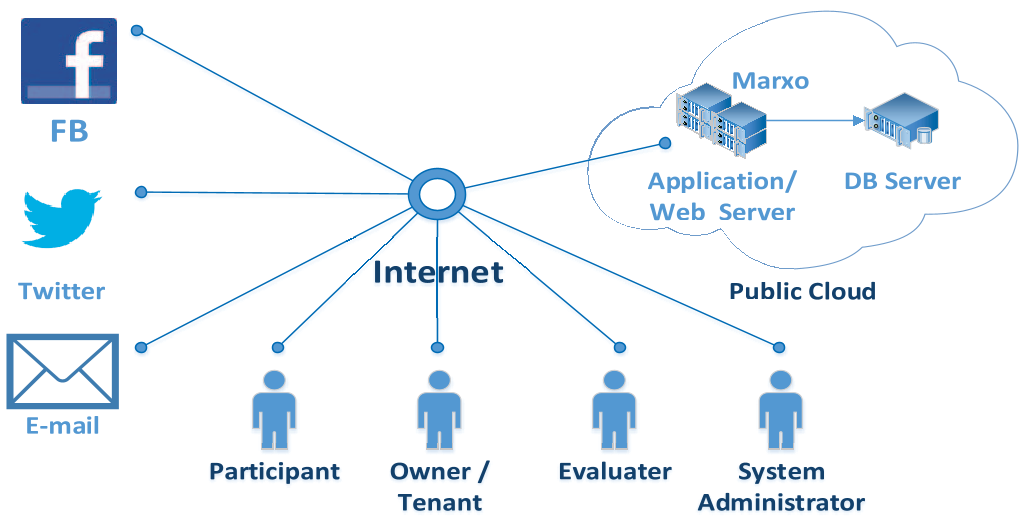 Figure 2: The conceptual layers of Marxo, showing the linkage between Web APIs and the Engine Worker.
2. Multi-tenancy and Shared Intelligence
One of the most clever aspects of Marxo is its approach to Multi-tenancy. Marketing managers are often hesitant to share their proprietary strategies, yet they benefit from standardized best practices. Marxo solves this by providing a "Public Workflow" layer.
- Public Workflows: Act as templates (e.g., "Standard Crowdsourcing Social Campaign").
- Private Workflows: Tenants "inherit" these templates and customize them (nodes, links, and conditions) without affecting others.
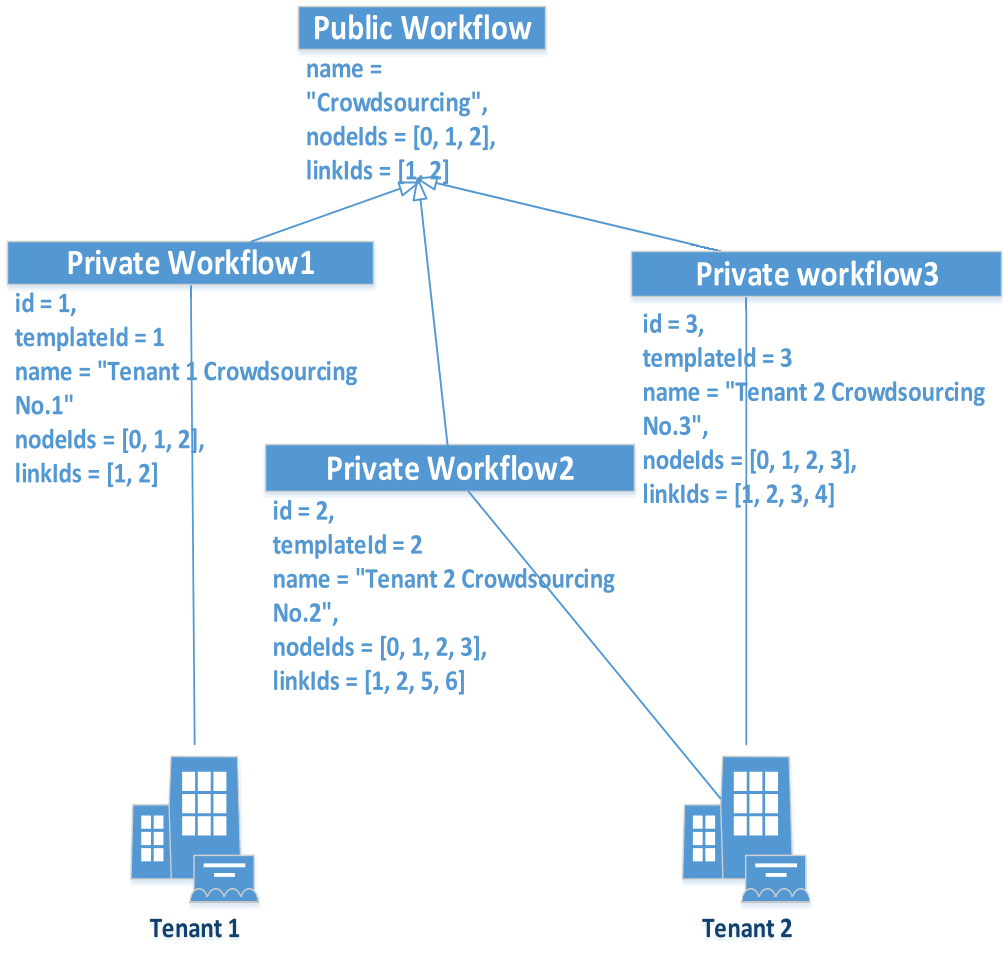 Figure 3: How Marxo isolates tenant data while sharing core logic through inherited templates.
Experiments & Results: Real-World Validation
To prove the system's viability, the authors deployed a "Conference Check-in" project. Using the Workflow Editor, they mapped out a sequence of social media posts, wait conditions, and data collection points.
Key Performance Indicators:
- Automation: The engine successfully executed actions based on predefined triggers without human intervention.
- Real-time Analytics: The system provided granular feedback on social media "clicks" and "comments," allowing for immediate project pivot or evaluation.
- Scalability: By utilizing a Mongo DB cluster and stateless web-api modules, the system demonstrated horizontal scalability, ready to support a high volume of concurrent users.
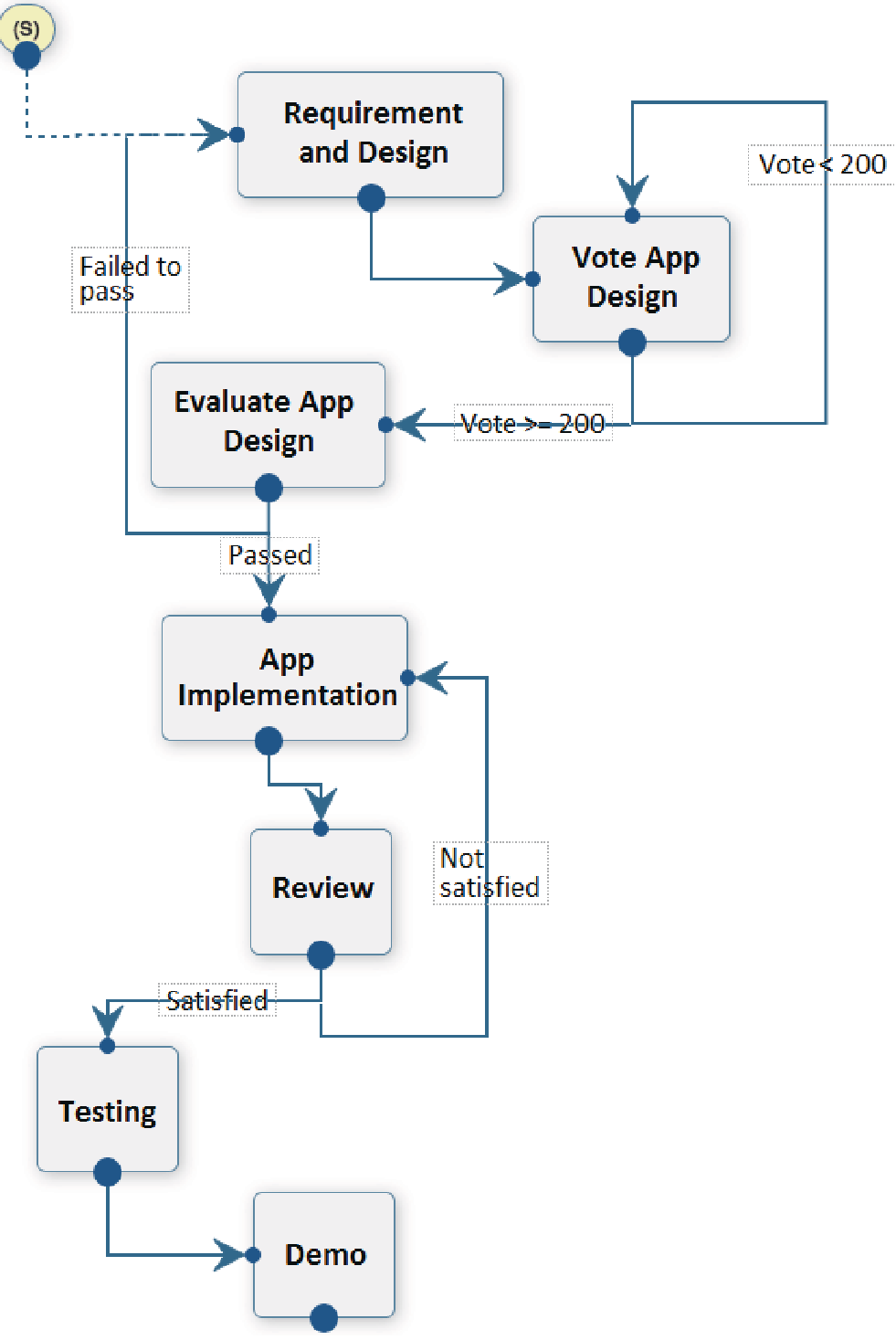 Figure 8: The graphical interface where users drag-and-drop to define marketing logic.
Critical Analysis & Conclusion
Marxo represents a significant shift from "static trackers" to "active orchestrators." By merging SaaS accessibility with the power of crowdsourcing, it solves the rigidity of traditional MkIS.
The "So What?": This work proves that marketing software should not be a closed box. The inclusion of a RESTful API and a flexible node-based workflow suggests a future where marketing "bots" and "crowd workers" seamlessly collaborate in a shared digital workspace.
Future Outlook: While currently limited to Facebook, the framework's scalability suggests that adding LinkedIn or Twitter (X) integration is a trivial extension. The next frontier for Marxo will likely be the integration of Self-suggesting AI mechanisms—using Big Data to automatically recommend the most effective workflow nodes based on historical performance.
Main Takeaway: For modern enterprises, crowdsourcing is no longer an "extra" feature; it is a core business requirement. Marxo provides the technical blueprint for making crowd participation a seamless, automated part of the corporate marketing lifecycle.