
Beyond the High Rent: Leveraging Geo-Social Networks for "Cybercelebrity" Shop Location Selection
Business Location Selection Based on Geo-Social Networks
The paper proposes a novel Business Location Selection (BLS) framework for "cybercelebrity" shops by integrating social influence maximization with geographic constraints. It introduces the Relative Distance Aware Influence Maximization (RDAIM) model, achieving significantly higher customer reach compared to traditional Reverse Nearest Neighbor (RNN) methods.
TL;DR
In the age of TikTok and Instagram, a shop's physical location is no longer the sole determinant of its success. This paper introduces a Business Location Selection (BLS) model that uses Influence Maximization to find locations that maximize customer reach through social media viral effects. By moving beyond traditional "foot traffic" metrics, the authors demonstrate how businesses can thrive in low-rent areas by strategically activating influential social network users.
The "Wanghong" Intuition: Why Location Formulas are Changing
The classic real estate mantra "Location, Location, Location" traditionally refers to physical visibility and proximity. In technical terms, this was modeled as Reverse Nearest Neighbors (RNN)—finding a spot where you are the closest option for the most people.
However, the rise of "Cybercelebrity" (Wanghong) shops in China has proven that people are willing to travel (the "Daka" phenomenon) to specific locations if they are socially "trendy." The authors identify two massive flaws in current research:
- Passive Seeding: Previous models assumed only local residents (RNNs) would promote a shop. In reality, a shop might hire a high-influence influencer who lives nowhere near the store.
- Distance Myopia: People aren't just repelled by distance; they are repelled by relative distance (i.e., "Is there a similar shop much closer to me?").
Methodology: The RDAIM Framework
The paper formalizes the problem as Relative Distance Aware Influence Maximization (RDAIM).
1. Relative Distance Awareness
Instead of a simple decay based on distance, the model uses a weight which factors in how close the candidate location is compared to existing competitors . If a competitor is much closer to a user than your proposed shop, the probability of successfully "influencing" that user to visit drops exponentially.
2. High-Efficiency Pruning & Sampling
Calculating influence for thousands of candidate locations is computationally "lazy" and expensive. The authors introduce:
- Rule 1 (Competitor Proximity): Prune any candidate location that is too close to an existing similar business (avoiding saturation).
- Rule 2 (Density Clustering): Group nearby candidate locations. If a cluster center has poor influence potential, the entire group is pruned.
- Multi-Location RIS: Typically, the Reverse Influence Sampling (RIS) algorithm is run for each location. The authors extended this to select seeds for multiple locations using a single, uniform set of samples, drastically cutting down the complexity overhead.
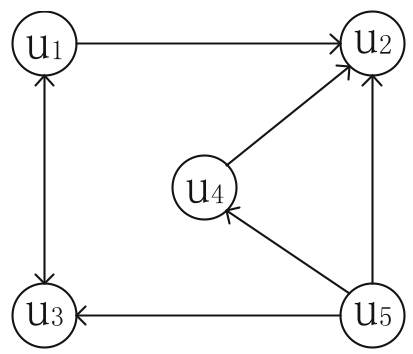 The figure illustrates the interplay between physical candidate locations and the social network graph, highlighting how a single influencer () can activate users across different geographic zones.
Experimental Battleground: Real-World Performance
The researchers tested their approach on three major geo-social datasets: Gowalla, Brightkite, and Foursquare, using 35,489 real Chinese restaurant locations.
Key Insights from Results:
- Superior Reach: The BLS method consistently found locations that yielded higher total influence than the RNN-B baseline. In Foursquare, the gap was particularly pronounced, proving that "socially strategic" spots win over "geographically convenient" ones.
- Efficiency Gains: While the basic BLS is slow, the BLSII (using both pruning and clustering) is a speed demon. It outperformed the baseline in online time as the number of candidate locations increased, making it viable for real-city planning.
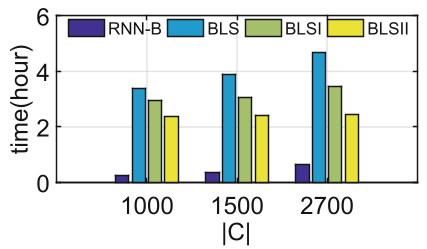 The experimental results confirm that while pruning slightly reduces maximum possible influence (the ~5% trade-off), the gains in computational speed are massive.
Critical Analysis & Professional Takeaways
The brilliance of this work lies in its Inductive Bias: it assumes that in the modern economy, digital influence flows can override physical distance.
Limitations:
- The model assumes a static competitor landscape. In reality, competitors react.
- It uses the Independent Cascade Model (ICM), which might not fully capture the nuance of how "foodie" trends spread compared to general information.
Future Outlook: This is a "must-read" for urban planners and retail tech developers. The next logical step is integrating User Interests (Personalization)—because an influencer might be great at promoting milk tea but terrible at promoting hotpot. This paper provides the mathematical foundation for "Smart Retail" where social data and GIS (Geographic Information Systems) are finally treated as a single unified graph.