
BERS: Empowering Business Intelligence with Urdu Emotion Recognition
BERS: Bussiness-Related Emotion Recognition System in Urdu Language Using Machine Learning
The paper introduces BERS (Business-Related Emotion Recognition System), a supervised machine learning framework designed to detect six distinct emotions from Urdu-language business reviews and tweets. Utilizing Support Vector Classifiers (SVC), Random Forest, Naïve Bayes, and KNN, the study establishes a new benchmark for Urdu emotion analysis, achieving a peak accuracy of 81.09% in the sports domain.
TL;DR
In the competitive world of global business, understanding customer sentiment is key to survival. While English-language sentiment analysis is a mature field, the same cannot be said for Urdu. The BERS (Business-Related Emotion Recognition System) project bridges this gap by introducing a supervised machine learning approach that classifies pure Urdu business reviews into six core emotions, achieving an impressive 81.09% accuracy using Support Vector Classifiers.
Contextual Positioning
Within the landscape of Social Computing, BERS moves beyond general sentiment (Positive/Negative) into fine-grained Emotion Recognition. It shifts the focus from "Roman Urdu" (Latin script) to "Pure Urdu" (Perso-Arabic script), addressing a critical void in South Asian Business Intelligence tools.
The "Resource-Poor" Challenge (Motivation)
Urdu is spoken by millions, yet it is classified as a "resource-poor" language in AI due to the lack of labeled datasets and standardized linguistic tools.
- The Problem: Business owners in Pakistan and India currently lack automated tools to parse Urdu tweets about their products.
- The Insight: The authors hypothesized that by creating a domain-specific dataset (Smartphones and Sports) and applying traditional supervised learning, they could outperform complex ontology-based systems that rely on rigid rules.
Methodology: The BERS Architecture
The system follows a classic but refined ML pipeline. The core innovation lies in the adaptation of Ekman’s Emotion Model—originally a psychological framework—into the linguistic context of Urdu business discourse.
The Engine Under the Hood
- Data Acquisition: 2,200 tweets across two domains (Smartphones & Sports).
- Emotion Mapping: Categorizing feedback into Khushi (Joy), Khauf (Fear), Ghussa (Anger), Ghamgeeni (Sadness), Nafrat (Disgust), and Nidamat (Shame).
- Classifier Selection: Comparing SVC, Random Forest (RF), Naïve Bayes (NB), and K-Nearest Neighbors (KNN).
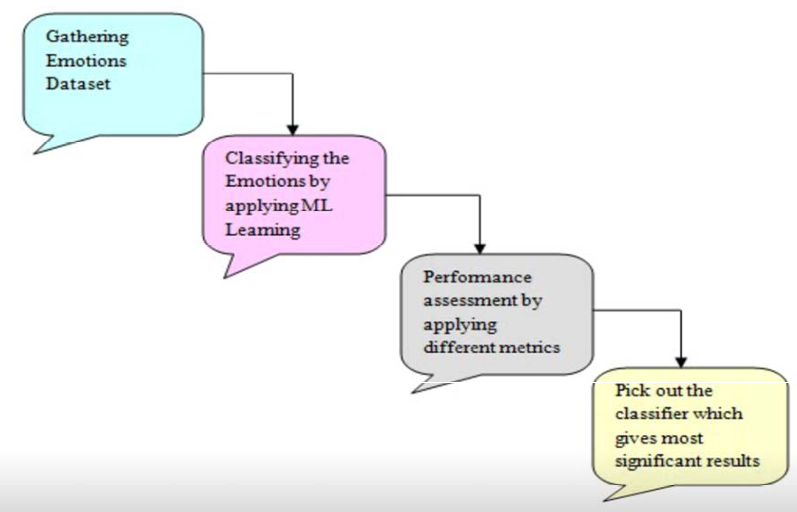 Figure 1: The BERS Workflow from Data Collection to Recommendation.
Experimental Showdown
The study pitted different algorithms against each other. The Support Vector Classifier (SVC) emerged as the clear winner. Why? SVC’s ability to find the maximum margin hyperplane allows it to generalize better on the sparse, high-dimensional data typical of Urdu text.
| Classifier | Dataset (Sports) | Accuracy | Precision |
|---|---|---|---|
| SVC | Sports | 81.09% | 0.949 |
| RF | Sports | 67.66% | 0.72 |
| NB | Sports | 58.71% | 0.68 |
| KNN | Sports | 72.64% | 0.75 |
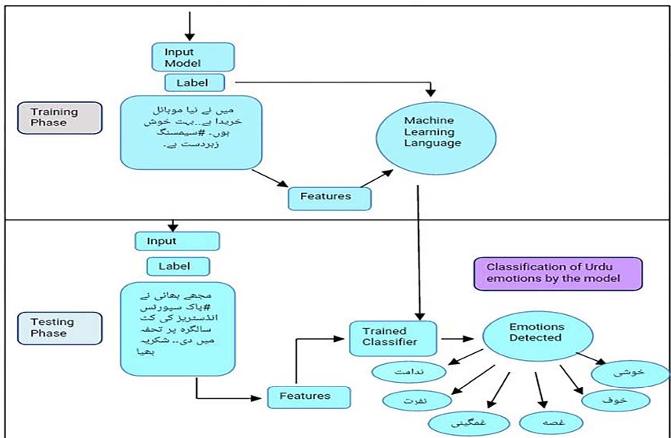 Figure 2: Performance metrics across different ML algorithms and datasets.
Key Comparison
When compared to the baseline study by Nargis et al. (2016) which focused on Roman Urdu, BERS showed a significant jump in precision (from 92.8% to 94.9%). This proves that analyzing the native Urdu script directly provides richer emotional indicators than phonetic transliterations.
Critical Analysis & Future Outlook
Strengths:
- Practicality: Directly applicable to Business Intelligence for local markets.
- Granularity: Goes beyond "Happy/Sad" to include nuanced emotions like "Shame" and "Disgust," which are vital for crisis management.
Limitations:
- Dataset Size: 2,200 tweets is a modest start for modern ML.
- Contextual Slang: The study notes that adding features like "emoticons" and handling "complex/compound sentences" remain challenges for the current model.
The Road Ahead: This work sets the stage for Large Language Models (LLMs) to be fine-tuned for Urdu. As the authors suggest, the next evolution involves increasing dataset variety and exploring hybrid systems that combine deep learning with visual cues (emojis) to capture the full spectrum of human emotion in the digital Urdu marketplace.
Conclusion
BERS is a vital step toward linguistic equity in AI. By proving that SVC can handle the complexities of Urdu business reviews, the researchers provide a roadmap for SMEs in Urdu-speaking regions to leverage social computing for better customer satisfaction.