
Beyond the Stars: A Multi-Dimensional Approach to Business Reputation via Social Network Analysis
A Business Reputation Methodology Using Social Network Analysis
This paper introduces a comprehensive methodology for calculating business reputation and attractiveness by analyzing social network reviews. Leveraging the Yelp Dataset, it combines Natural Language Processing (NLP), sentiment analysis, and social network metrics into a scalable Big Data architecture to track shifting public opinion.
Executive Summary
TL;DR: This paper moves beyond simple star-rating averages to propose a sophisticated "Business Public Opinion" (BPO) scoring system. By integrating user influence, review engagement, and temporal decay, the authors provide a methodology that reflects how people actually perceive businesses on platforms like Yelp.
Positioning: This work serves as a practical bridge between traditional Sentiment Analysis and Social Network Analysis (SNA), positioning reputation as a dynamic metric influenced by social "Elite" users rather than just raw data counts.
The Problem: The Flaw of Averages
In the current digital ecosystem, word-of-mouth has moved to Online Social Networks (OSNs). However, most business owners and consumers still rely on the "Average Star Rating." This is fundamentally flawed because:
- Credibility Gap: A review from a first-time "fake" account is often weighted the same as one from a trusted "Elite" user.
- Engagement Blindness: It ignores whether other community members found a review "useful" or "funny."
- Static Nature: A 5-star review from 2015 might inflate a business's current score even if the quality has declined in 2024.
Methodology: The BPO Framework
The authors define Business Public Opinion (BPO) through a multi-layered mathematical approach.
1. The Opinion Value (Ov)
For every review by user , an Opinion Value is calculated:
- Review Value (): A fusion of the star rating and NLTK-based sentiment scores.
- User Value (): A weighted sum of user attributes (Friends, Fans, Elite status, total reviews).
- Review Success (): The social validation of the review (Useful/Funny/Cool votes).
2. The Temporal Evolution
A crucial insight of this paper is the temporal weighting. The reputation is updated recursively: The parameter acts as a "memory" factor, ensuring that the most recent voices are the loudest in the system's final output.
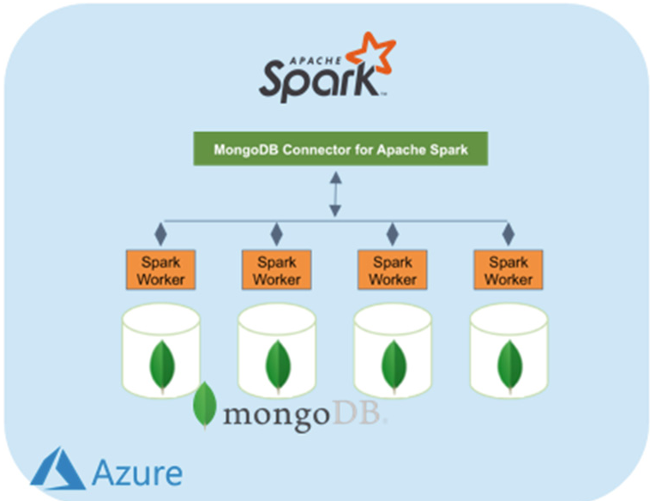 The architecture utilizes a scalable Big Data stack: MongoDB for storage and Apache Spark (PySpark) for distributed processing.
Experimental Insights
The methodology was tested on the massive Yelp Dataset Challenge. Key findings include:
- Sentiment Alignment: There is a strict correlation between the text processed by NLTK and the stars given by users, validating that the NLP module accurately captures human sentiment.
- Influence Filtering: The system effectively mitigates the impact of potential "fake users"—those with no friends, no fans, and few reviews—by assigning them a low User Value.
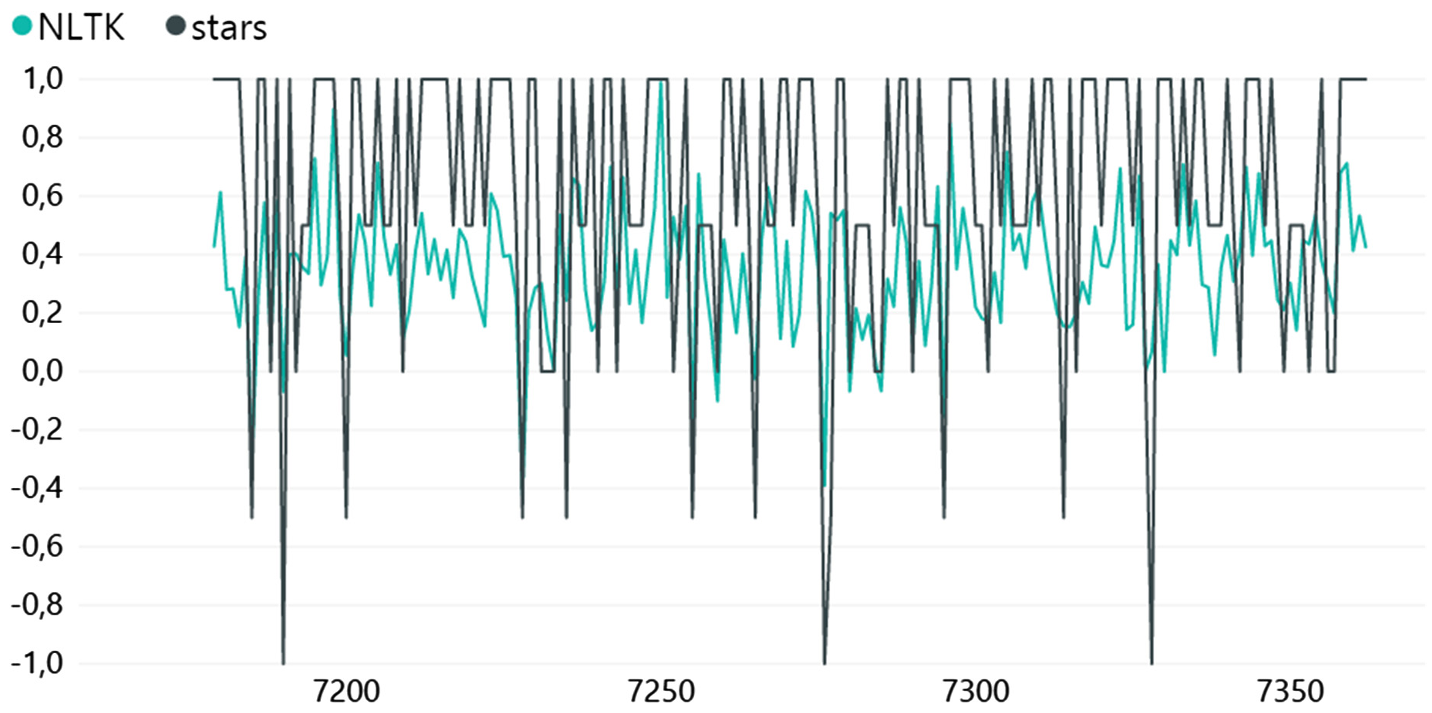 Figure: The correlation between user stars and NLTK-derived sentiment values.
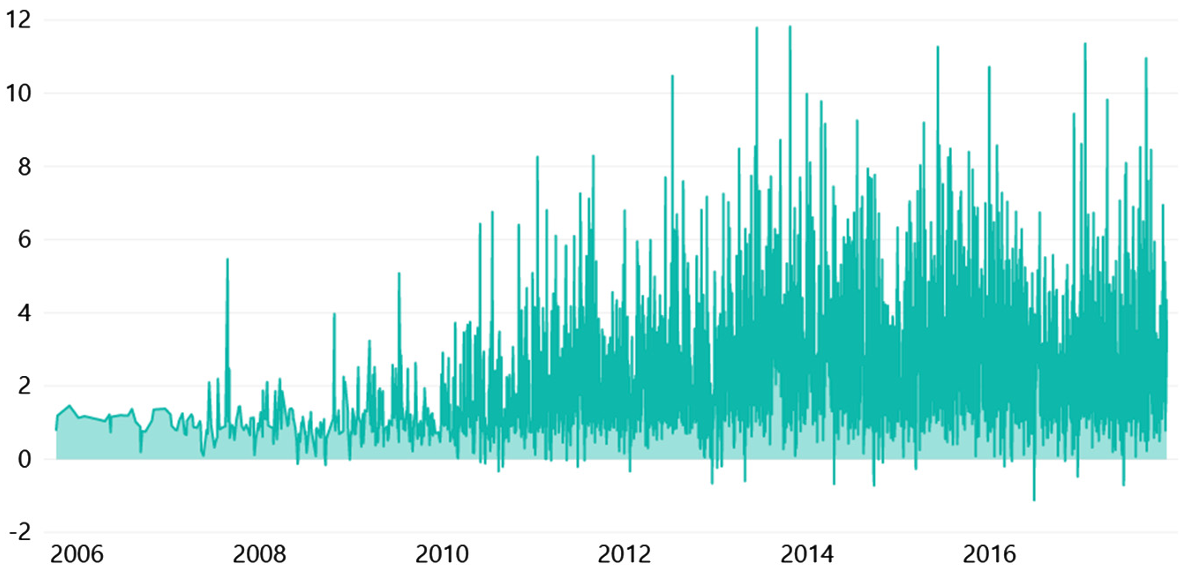 Figure: The BPO score evolving over time, reflecting the "living" nature of public opinion.
Critical Analysis & Takeaways
Takeaway
This research proves that business "attractiveness" is a compound metric. By mathematically modeling the "Influencer" effect, the authors provide a tool that is highly resilient to review manipulation and more reflective of a community's true pulse.
Limitations
- Language Dependency: The current NLP module is optimized for English via NLTK; multi-lingual support remains a challenge.
- Compute Overhead: While Spark provides scalability, real-time BPO updates for millions of businesses simultaneously would require significant computational resources.
Future Outlook
The integration of this methodology into "Viral Marketing" strategies and automated Recommendation Systems represents the next frontier. By identifying which businesses are gaining "social momentum" (via rising BPO), platforms can provide much more accurate suggestions than static rating systems.