
Beyond the Digital Divide: How "Outlier" Seniors are Mastering the Digital Age
Busting the Myth of Older Adults and Technology: An In-depth Examination of Three Outliers
The paper, "Busting the Myth of Older Adults and Technology," utilizes a quasi-ethnographic approach to investigate high-functioning "outliers" among seniors using Information and Communication Technologies (ICTs). It identifies that highly engaged older adults leverage social media and video conferencing to enhance social connectivity, refuting the stereotype of geriatric technological ambivalence.
TL;DR
This research shatters the stereotype that older adults are technologically stagnant. Through a deep-dive ethnographic study of three "outliers" (aged 71-88), the paper reveals that far from being confused by ICTs, some seniors are using Facebook, FaceTime, and online gaming to achieve "virtual embodiment" and maintain social networks that rival those of younger generations.
The Persistence of the "Tech-Averse Senior" Myth
In the academic and social discourse, a "technological divide" is often taken for granted. We assume that as one ages, their interest in or capacity for digital tools diminishes. However, statistics tell a different story: Internet use among those 65+ jumped from 22% in 2004 to nearly 60% by 2013.
The author, Robert Beringer, argues that we have focused too much on numbers and not enough on experience. Why do some seniors thrive online while others do not? The motivation behind this study was to look at the "Outliers"—the power users of the geriatric world—to understand the "Why" behind their digital success.
Methodology: A Quasi-Ethnographic Deep Dive
The study moved past simple surveys. Instead, it used a quasi-ethnographic approach, combining semi-structured interviews with real-world participant observation. The researcher didn't just ask them if they liked Facebook; he joined their friend lists to observe their behavior in real-time.
The sample included:
- Jean (88): An iPhone user with 800+ Facebook friends who uses Pinterest and plays games against strangers.
- Paula (71): A multi-device user (iPad, iPhone, Apple TV) who uses "virtual walks" to stay connected to her family.
- Bill (82): A man who found his current life partner online at age 75.
The Four Pillars of Senior Tech Engagement
1. Social Connectivity & Virtual Embodiment
The most striking finding was the concept of virtual embodiment. One participant described "walking" through Central Park with her daughter via FaceTime. She wasn't just watching a video; she felt as if she were in New York, keeping an eye on her daughter.
2. The Myth of Social Displacement
A common fear is that technology replaces human contact. The study found the opposite: participants used tools like the Internet to facilitate physical meetings (e.g., finding a partner for a bridge game at a local senior center).
3. Positive Addiction
While participants recognized they sometimes spent "too much" time on devices (3+ hours), they viewed this as a Positive Addiction. Unlike negative addiction, which harms the user, this behavior provided a sense of empowerment, cognitive stimulation, and global awareness.
 Direct observation of participant Facebook activities, confirming high levels of social interaction.
4. Back to the Future: The Magic of the Present
For these seniors, today's technology is the "miracle" they only read about in science fiction or heard about from their parents in the 1930s. This creates a unique sense of gratitude and wonder that younger "digital natives" often lack.
Results & Competitive Analysis
The performance metrics for these participants are staggering when compared to general assumptions about senior capability:
| Participant | Age | Key Metric | Device Ecosystem |
|---|---|---|---|
| Jean | 88 | 856 Facebook Friends | iPhone, Skype, Pinterest |
| Paula | 71 | Integrated Video Usage | iPhone, iPad, Apple TV |
| Bill | 82 | Online Gaming Prowess | Laptop (exclusive) |
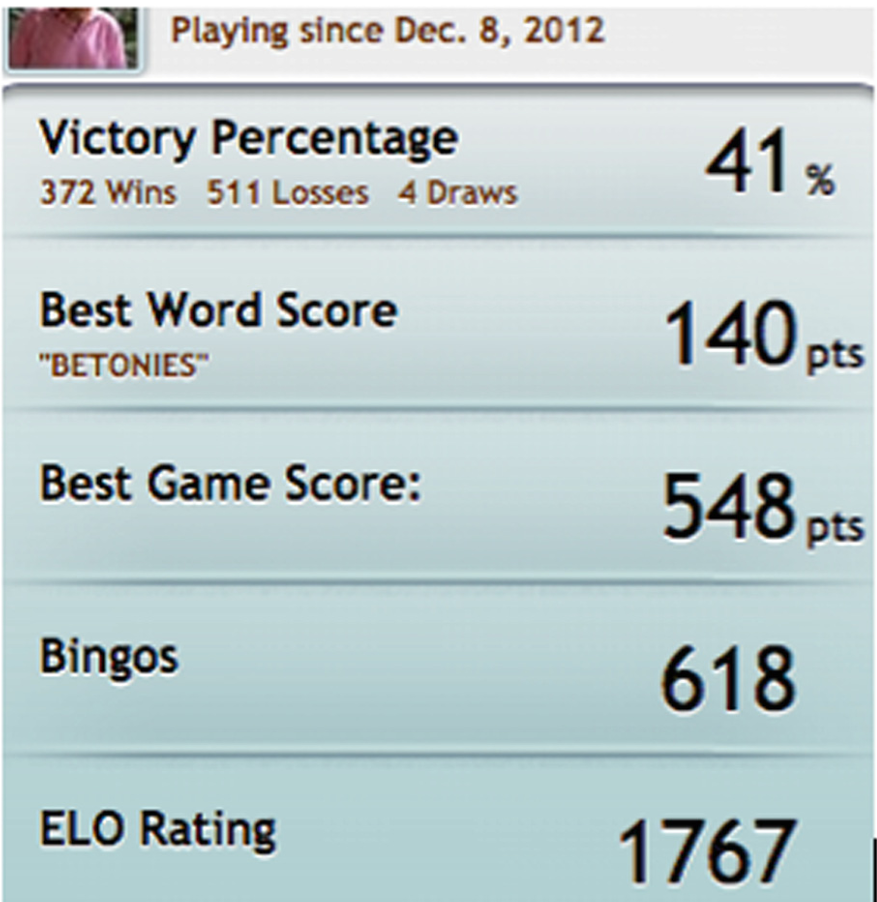 Performance data from online gaming (Scrabble/Words with Friends) showing high ELO ratings and thousands of games played, indicating sustained cognitive engagement.
Critical Perspective: Limits and Potential
While the study successfully "busts the myth," it is important to note its limitations:
- Selection Bias: The study deliberately chose "outliers" (n=3). This is not representative of the average senior, but it serves as a "proof of concept" for what is possible.
- Socio-economic Factors: The participants reside in Salt Spring Island, B.C., suggesting a certain level of privilege that may facilitate access to high-end hardware.
Conclusion: This work is a clarion call to UI/UX designers and social scientists. Older adults are not merely a "burden" to be accommodated; they are a sophisticated user base seeking connection, empowerment, and "miracles" that bridge the distance of time and space.