
C3PO: Reclaiming Social Connection in the Absence of Infrastructure
C3PO: A Network and Application Framework for Spontaneous and Ephemeral Social Networks.
The C3PO project introduces Spontaneous and Ephemeral Social Networks (SESNs), a decentralized framework designed for temporary events like festivals or sports. It utilizes a "store-carry-and-forward" opportunistic networking model to enable multimedia sharing among mobile devices without requiring Internet access or centralized infrastructure.
TL;DR
The C3PO project (Collaborative Creation of Contents and Publishing using Opportunistic networks) presents a paradigm shift in social media. Instead of relying on centralized giants like Facebook or Twitter, it empowers event attendees to form Spontaneous and Ephemeral Social Networks (SESNs). Using the mobile devices in their pockets, users can share photos, results, and comments via Bluetooth and Wi-Fi—even in the middle of a marathon route or a music festival where cellular signals are non-existent.
Why Centralized Social Networks Fail at Events
Traditional OSNs are built on a "permanent link" philosophy. They assume you have a 5G connection and that your data should live on a server in a distant data center. However, large events present three major friction points:
- Congestion & Dead Zones: Massive crowds often crash local cell towers.
- Transience: Relationships at a marathon are "ephemeral"—you care about what the runner next to you is doing now, not necessarily following them for life.
- Data Sovereignty: Centralized authorities control the dissemination and ownership of your event memories.
C3PO solves this by treating the physical vicinity of users as the primary connection logic, rather than a pre-defined social graph.
Methodology: Bridging the Gap Between Islands
The magic of C3PO lies in its hybrid architecture that manages both the physical "radio" mess and the high-level user experience.
1. The Network Layer: Micronets and Macronets
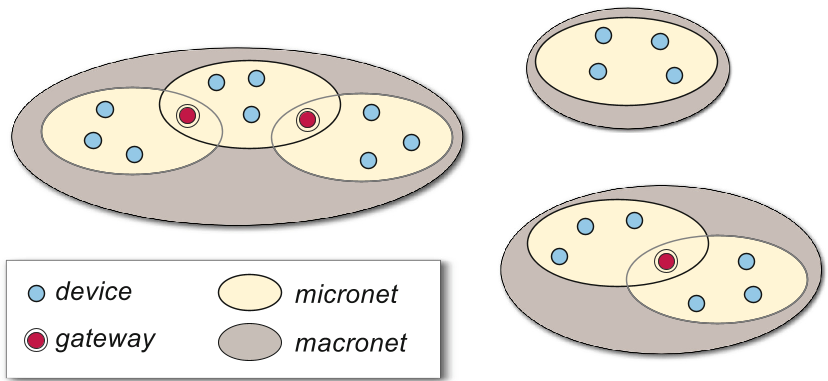
C3PO organizes devices into a hierarchy to overcome the physical limits of hardware (like Bluetooth's 8-device limit):
- Micronets: A group of devices in direct radio range (e.g., a Wi-Fi Direct group).
- Macronets: Interconnected micronets. If one person is in two groups, they act as a "bridge."
The system uses a Store-Carry-and-Forward principle. If a message can’t reach its destination immediately, it stays on a user's phone. As that user moves through the crowd, their phone "infects" others with the data, effectively using human mobility as a data transport mechanism.
2. The Application Layer: The In-Browser Plugin System
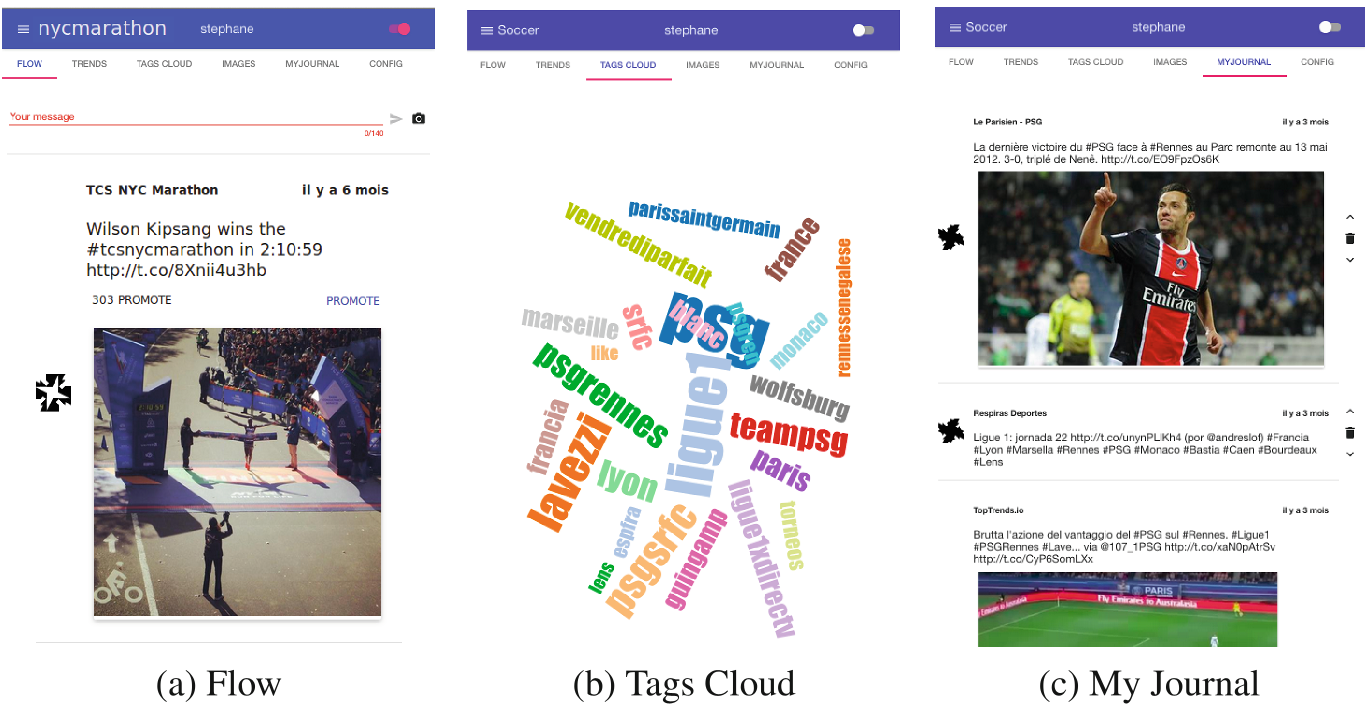
Because attendees use various devices (iOS, Android), C3PO uses a browser-based architecture. Using Apache Cordova and AngularJS, they developed an extensible plugin system.
- Event Dispatcher: Filters incoming data using Regular Expressions.
- Plugin Composition: Developers can quickly build event-specific tools (e.g., a "Vote" plugin for a photo contest or a "Live Results" plugin for a race).
Advanced Insight: The "Live Recommendation" Algorithm
In a flood of data, how do you find the highlights without a central server ranking things? C3PO introduces a decentralized scoring mechanism:
This formula balances Popularity (P) and Freshness (ΔT). By using a sliding window (), the system ensures that "old news" fades away, while content that is currently trending among nearby devices rises to the top of the "Popular" feed.
Evaluation and Impact
Preliminary real-world tests confirm that the "Epidemic Strategy" (replicating messages to all nodes) works well when localized. To prevent the network from being overwhelmed, C3PO implements Network Healing: exchange of catalogs of message IDs ensures that devices only download what they don't already have.
Key Takeaways:
- Inductive Bias: The framework assumes that physical proximity equals social relevance—a perfect fit for "happenings."
- Resilience: By removing the Internet requirement, the social network becomes as resilient as the crowd itself.
- Extensibility: The plugin-based approach allows a "generic" social network to become a specialized tool for any event in minutes.
Future Outlook
As privacy concerns and infrastructure costs rise, the C3PO model represents a compelling alternative. While currently limited by the battery consumption of constant Bluetooth/Wi-Fi scanning, the project paves the way for truly democratic, user-owned, and localized digital communities.
Limitations
- Battery Life: Keeping wireless interfaces active for scanning is energy-intensive.
- Storage: Devices must act as "carriers," which might consume local storage on high-traffic events.