
C3PO: Redefining Social Connectivity through Spontaneous and Ephemeral Networks
Demo: C3PO: Spontaneous and Ephemeral Social Networks
The C3PO project introduces a framework for Spontaneous and Ephemeral Social Networks (SESNs), enabling multimedia content sharing during localized events. It leverages an opportunistic peer-to-peer architecture and an Android-based middleware to maintain connectivity without relying on fixed infrastructure.
TL;DR
C3PO is a novel framework designed for localized, short-lived events (festivals, conferences) where traditional internet-based social media fails. By utilizing Opportunistic Networking, it allows mobile devices to form a peer-to-peer mesh, sharing photos and messages directly between users without any cellular or Wi-Fi infrastructure.
Background Positioning
In the landscape of mobile computing, C3PO sits at the intersection of Mobile Ad-hoc Networks (MANETs) and Social Computing. Unlike Twitter or Instagram, which are permanent and global, C3PO creates "Digital Pop-up Communities" that vanish once the event ends.
Problem & Motivation: The Infrastructure Bottleneck
When thousands of people gather at a stadium or a remote festival, cellular towers often become a bottleneck, and Wi-Fi coverage is rarely ubiquitous. Existing social apps are useless in these "dead zones."
The authors identified that the core challenge isn't just the lack of signal, but the heterogeneity of devices and the sporadic nature of movement. People move in and out of range, creating "islands" of connectivity. A robust system must be able to "store and forward" data—carrying a message in one person's pocket until they get close enough to someone else to pass it on.
Methodology: The C3PO Framework
The architecture is cleverly split into a low-level networking engine and a high-level UI layer.
1. The Opportunistic Pipe
The back-end manages the messy reality of wireless radios. It doesn't just use one protocol; it aggregates Bluetooth, Wi-Fi Legacy, and Wi-Fi Direct simultaneously.
- Publish/Subscribe Paradigm: Users don't "send" to a person; they "publish" to a topic.
- Epidemic Forwarding: If a device receives a new photo, it automatically attempts to replicate that photo to any new neighbor it discovers.
2. The Plugin-Based Web Canvas
To solve the problem of OS compatibility, the UI is built using Web technologies. This "Canvas" uses plugins like:
- Flow: A real-time chronological list of all shared media.
- Tags Cloud: A visual representation of trending hashtags within the event.
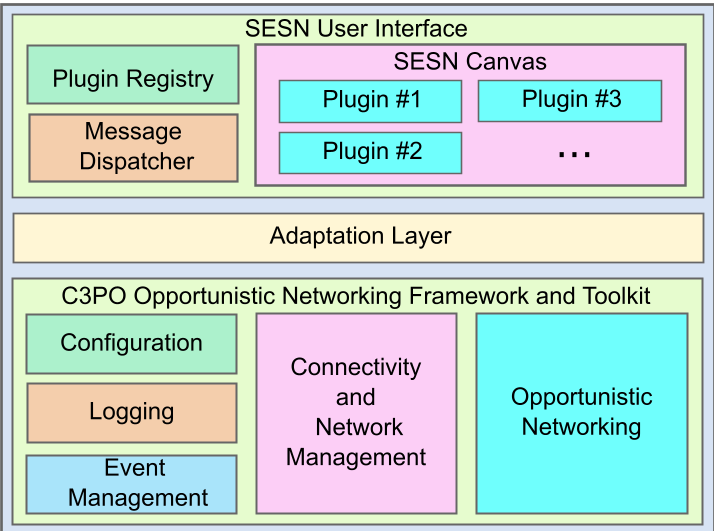 Figure 1: The dual-layer architecture separating the networking toolkit from the user-facing web plugins.
Experiments & Real-World Demonstration
The framework was put to the test during the CHANTS'15 workshop. Attendees were invited to install the Android app to live-comment on presentations and share photos.
Key Technical Insights from the Demo:
- Social-Based Criteria: The system can prioritize forwarding based on "contact frequency," meaning nodes that are "popular" or move around a lot become the primary carriers of data.
- Privacy-Preserving Traces: The demo collected connection logs (who met whom) without recording private message content, providing a dataset for future networking research.
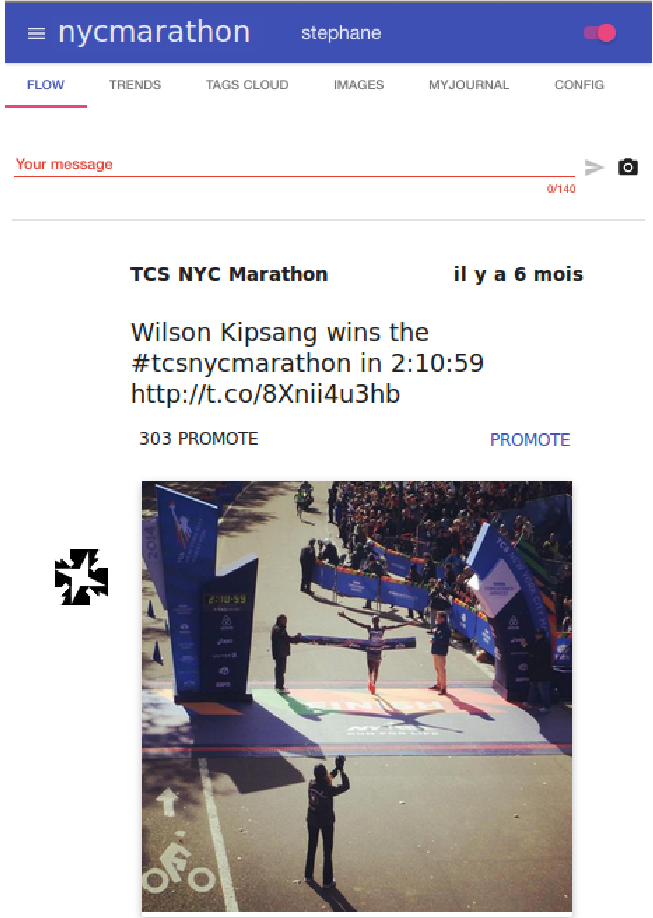 Figure 2: The "Flow" plugin in action, showing real-time multimedia updates shared via P2P connections.
Critical Analysis & Future Outlook
Takeaway: C3PO proves that the "Ephemeral" nature of events is a feature, not a bug. By focusing on a specific time and place, the system reduces the complexity of global data synchronization.
Limitations:
- Battery Drain: Constant scanning for Bluetooth/Wi-Fi neighbors is energy-intensive.
- Saturation: In extremely dense crowds, "Epidemic" flooding can lead to broadcast storms that overwhelm device memory.
Future Work: The transition to 5G "Sidelink" and more efficient Low Energy protocols could solve the battery issues, potentially making C3PO-like frameworks a standard feature for every major music festival or sporting event in the future.