
CaDRoP: Balancing Causal Semantics and Cloud Costs in Social Networks
CaDRoP: Cost Optimized Convergent Causal Consistency in Social Network Systems
CaDRoP is a novel causal+ consistency (CC+) protocol designed for partially geo-replicated social network systems. It achieves cost optimization by integrating a proactive dynamic replication strategy (CORP) with a relay-based update mechanism and multi-version cache.
TL;DR
CaDRoP (Causal consistency under Dynamic Replication Protocol) is the first consistency protocol that optimizes monetary costs in cloud storage by combining Dynamic Replication with Convergent Causal Consistency (CC+). It ensures that posts and their subsequent comments are seen in a globally consistent causal order while slashing AWS infrastructure bills by up to 70%.
The Problem: Static Replication in a Dynamic World
In the realm of geo-distributed social networks (like Twitter or Instagram), providing high availability requires replicating data across multiple data centers (DCs). Most systems use Causal Consistency (CC) because it preserves the intuitive ordering of human interactions (e.g., a "reply" should never appear before the "original post").
However, traditional CC+ protocols suffer from two fatal flaws:
- Inefficient Resource Usage: They often use "Static Replication," where the number and location of data copies are fixed. If a photo suddenly goes viral in Tokyo but was only replicated in New York, latency and costs skyrocket.
- Semantic Loss: Most CC+ systems use a "last-writer-wins" approach, which discards concurrent updates. In social media, we don't want to lose comments; we want all of them to converge in a logical order.
Methodology: The CaDRoP Architecture
The core innovation of CaDRoP is treating the underlying replication layer as a moving target. It uses a proactive strategy called CORP (Cost-aware Optimized Replication Placement) which utilizes ARIMA models to predict where users will access data next.
1. Hybrid Causality Tracking
CaDRoP differentiates between two types of social data:
- Posts: Tracked via Explicit Causality (e.g., @mentions or manual links), which reduces metadata overhead.
- Comments: Tracked via Potential Causality within a "Causal Version List" (cvl). Every comment is an immutable version, ensuring no reply is lost.
2. The Relay & Cache Mechanism
To avoid the "N^2" message explosion of full replication, CaDRoP uses a Relay Mechanism. Instead of every node talking to every other node across the expensive WAN, one "relay server" per DC receives the update and distributes it locally.
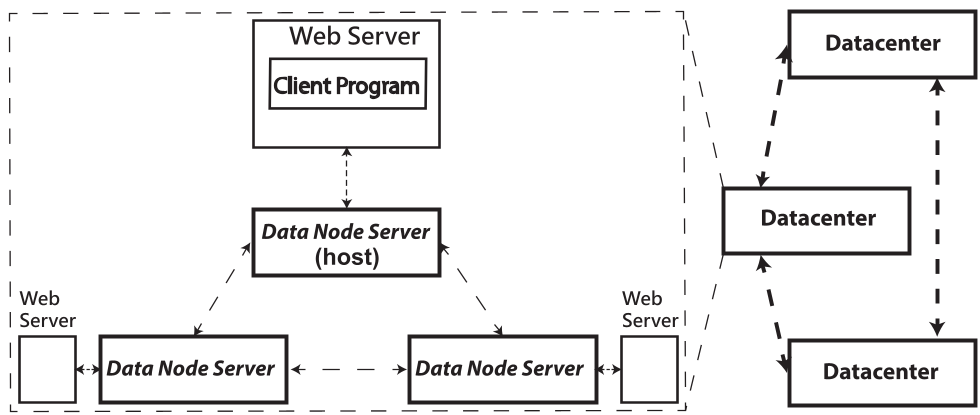 Figure 1: The hierarchical geo-distributed framework of CaDRoP.
Convergent Conflict Handling
To ensure all users see the same order of comments (Convergence), CaDRoP sorts concurrent entries using a combination of Lamport Timestamps and Node IDs. This creates a deterministic global order without requiring heavy global synchronization.
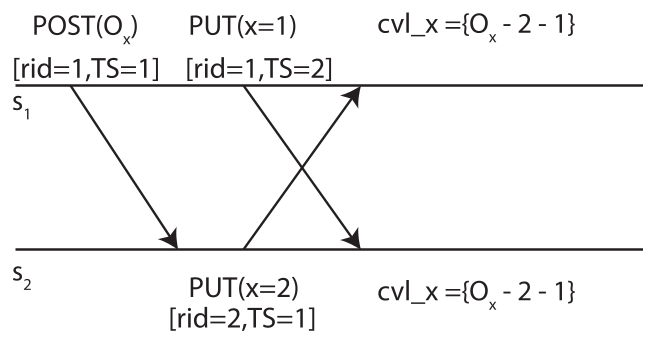 Figure 2: Users at different replicas (s1, s2) obtaining identical causal lists.
Performance: 70% Less Cost
The authors evaluated CaDRoP using real Twitter traces and simulated AWS pricing (including Storage, Transaction, and Network Transfer costs).
Key Findings:
- Cost Efficiency: Compared to static replication (RF=2, 5, or 9), CaDRoP significantly lowers the Total System Cost (TSC) by placing data only where predicted demand exists.
- Proximity to "Optimal": The "Clairvoyant Optimal" (OPT) strategy represents a system that perfectly predicts the future. CaDRoP, using realistic ARIMA predictions, stays within 6-16% of this theoretical limit.
- Get-Intensive Superiority: The savings are most pronounced in "Get-intensive" workloads, which represent the typical "scrolling" behavior of social media users.
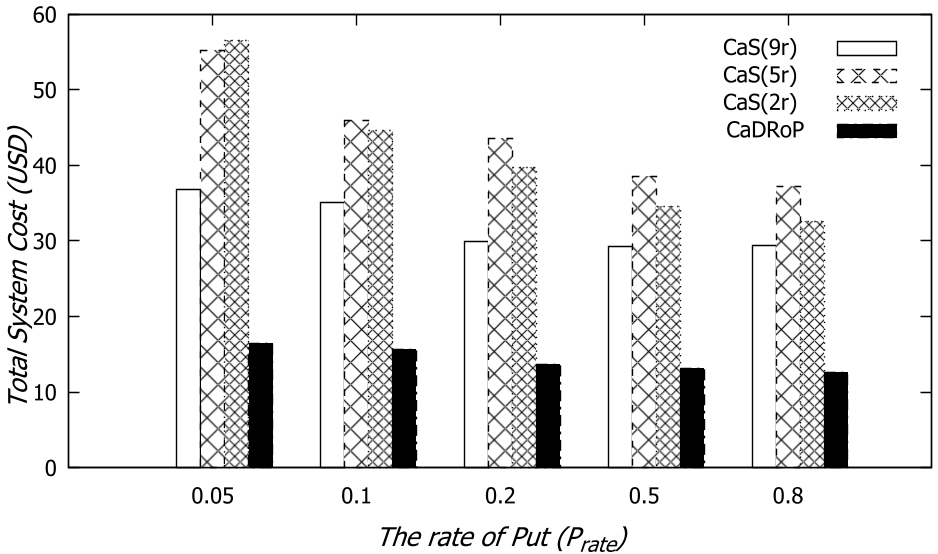 Figure 3: Total System Cost Comparison showing CaDRoP's efficiency against static RF models.
Critical Insight & Conclusion
CaDRoP proves that Consistency and Cost are not a binary trade-off. By making the replication layer "aware" of the application's causal needs and user access patterns, we can achieve high-quality semantics (CC+) at a fraction of the cost of traditional static systems.
The limitation remains the ARIMA prediction accuracy; in extremely "bursty" or unpredictable workloads, the migration cost (moving data between DCs) might eat into the savings. However, for the majority of human-driven social interactions, CaDRoP provides a blueprint for the next generation of cost-optimized, semi-structured cloud stores.