
Maximizing the Viral: Optimal Resource Allocation in Heterogeneous Social Networks
Campaigning in Heterogeneous Social Networks: Optimal Control of SI Information Epidemics
This paper presents an optimal control framework for maximizing information propagation in heterogeneous social networks using a Susceptible-Infected (SI) epidemic model. The authors introduce two control mechanisms—direct recruitment and word-of-mouth incentives—and solve a resource allocation problem under a fixed budget to determine the optimal strategy across different degree classes and campaign durations.
TL;DR
How do you spend a limited marketing budget to ensure your message reaches the maximum number of people? This paper provides a mathematical blueprint for "Information Epidemics." By treating information like a virus and the social network like a heterogeneous landscape, the authors show that the "best" strategy depends entirely on the network's shape—whether it's a hub-and-spoke "Scale-Free" network or a more uniform "Erdős-Rényi" graph.
Problem & Motivation: Beyond Random Meeting
Most classical epidemic models assume "homogeneous mixing"—the idea that everyone is equally likely to meet everyone else. Real life is messier. We follow specific "hubs" on Twitter/X or interact within specific social circles.
The authors identify three missing links in previous research:
- Positive Epidemics: Most work focuses on stopping viruses; this focuses on spreading ideas.
- Explicit Budgets: Research often ignores the fact that ads and referral rewards cost real money.
- Degree Heterogeneity: High-degree nodes (influencers) and low-degree nodes (lurkers) require different strategies.
Methodology: The Math of Persuasion
The researchers model the network using a Degree-Based Compartmental Model. They split the population into two states: Susceptible (haven't heard the news) and Infected (aware and potentially spreading).
They introduce two "Controls":
- Direct Recruitment (): Mass media ads targeting certain groups.
- Word-of-Mouth (): Incentives (referral codes, discounts) to turn "infected" people into "active spreaders" ().
Explaining the Core Logic
The system is governed by a set of differential equations: This formula essence: The rate of new infections in degree class depends on the current number of susceptible nodes (), the spreading rate (), and how many "active" neighbors are currently pushing the message.
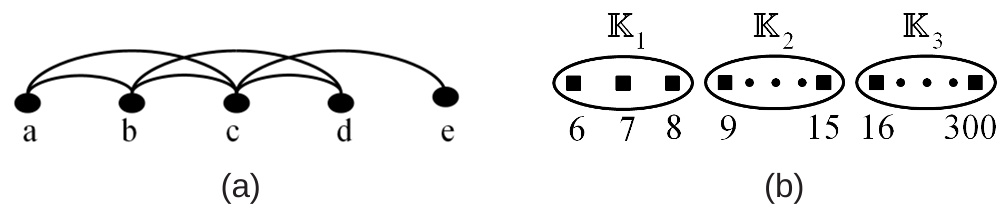 Fig 1: Illustrates how a network is partitioned into degree groups (M=3) for targeted control.
Experiments: Where Should the Money Go?
The authors compared three network types: Erdős-Rényi (ER) (Poisson distribution) and Scale-Free (PL2, PL3) (Power-law distribution).
1. The Hub Strategy (Scale-Free)
In Scale-Free networks (like most social media), the optimal strategy is to obsess over the hubs. The highest degree groups received a massive portion of the resource (up to 78%). Why? Because one influencer "infection" can reach thousands of neighbors instantly.
2. The Middle-Class Strategy (Erdős-Rényi)
Surprisingly, in more uniform ER networks, the optimal strategy targets medium-degree nodes.
- Insight: In uniform networks, targeting the very top is inefficient because "hubs" aren't significantly more connected than the average. Targeting the middle ensures the message stays in the "dense" part of the network longer.
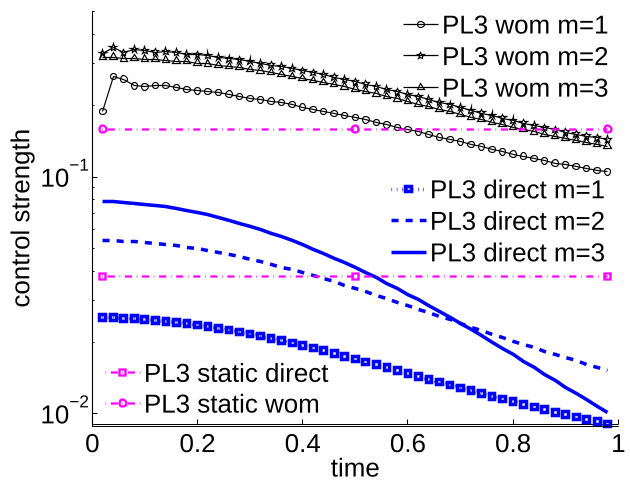 Fig 2: Comparison of resource allocation over time. Notice how controls peak early in the campaign to "seed" the epidemic.
Results: Efficiency Gains
The "Optimal Control" strategy was compared against:
- Static Strategy: Fixed spending throughout.
- Bang-Bang Strategy: Maximum spending until the money runs out.
The optimal strategy significantly outperformed both, especially in high-heterogeneity networks (PL2). The word-of-mouth strategy was found to be more effective in these heterogeneous networks because incentivizing an influencer is much cheaper than buying enough mass-media ads to reach all their followers.
Critical Insight & Conclusion
This work demonstrates that "timing" is just as important as "targeting."
- Early Incentives: You must spend heavily at the beginning () because an infection today results in exponential awareness tomorrow.
- Context Matters: If your network is full of influencers (Scale-Free), pay the influencers. If your network is a flat community (ER), broad referral incentives for the "average Joe" are better.
Limitations: The model currently ignores clustering (friends of friends being friends) and community structures, which could potentially slow down the spread in real-world "echo chambers." Future work should integrate these topological nuances into the control framework.