
Decarbonizing Freight: When Does a Carbon Tax Actually Benefit Society?
18536_Effects of Carbon Emission Taxes on Transportation Mode Selections and Social Welfare.
This paper utilizes a two-stage Stackelberg game model to analyze how carbon emission taxes influence transportation mode selection (e.g., road vs. rail) and social welfare. It identifies critical thresholds—Social Cost of Carbon (SCC), Transportation Mode Shifting Threshold (TMST), and Biggest Carbon-emission tax a company can Afford (BCRA)—to determine the optimal government taxation scheme.
Executive Summary
TL;DR: This paper explores the "sweet spot" for government intervention in green logistics. Using a Stackelberg game model, researchers found that carbon emission taxes aren't a universal solution; their success in improving social welfare depends on a delicate balance between the Social Cost of Carbon (SCC) and the physical characteristics of the products being shipped (like density and volume).
Background: Positioned at the intersection of Systems Engineering and Environmental Economics, this work transitions from macro-level policy discussion to micro-level equilibrium analysis, providing a mathematical roadmap for when governments should—and shouldn't—intervene in corporate logistics.
Problem & Motivation: The Market Failure in Logistics
Traditional logistics optimization focuses on the "Golden Triangle": Cost, Time, and Quality. However, the environmental cost of carbon (the negative externality) is rarely factored into a firm's bottom line. Governments attempt to solve this via taxes, but a tax that is too high might crush consumer surplus and corporate profit, leading to a net loss in social welfare.
The authors identify a critical gap: Product physical attributes (how heavy or bulky a product is) fundamentally change how a company responds to a tax. A "one-size-fits-all" tax might work for heavy machinery but fail for lightweight consumer goods.
Methodology: The Stackelberg Game of Green Logistics
The research employs a two-stage Stackelberg Gaming Model.
- The Leader (Government): Sets the carbon tax () to maximize Social Welfare (), which is the sum of firm profit, consumer surplus, and tax revenue, minus the social damage caused by emissions.
- The Follower (Firm): Observes the tax and decides on the Transportation Mode (Road vs. Rail) and the Selling Price () to maximize profit.
The "secret sauce" of this model is the inclusion of Dimensional Weight. The cost of transport is not just based on weight, but the maximum of actual weight and volumetric weight, which brings physical reality into the abstract mathematical equilibrium.
 Equation 1: The Firm's Profit Function considering carbon tax and holding costs.
Key Insights: The Three Thresholds
The paper introduces three pivotal concepts that determine the success of a tax policy:
- SCC (Social Cost of Carbon): The shadow price of environmental damage.
- TMST (Transportation Mode Shifting Threshold): The tax level at which a company finds it cheaper to switch from "dirty" road transport to "clean" rail transport.
- BCRA (Biggest Carbon-emission tax a company can Afford): The point where the tax makes the business unviable.
A core finding is that Social Welfare only improves if the SCC is high enough to justify the economic friction caused by the tax. If the product is expensive to produce but cheap to ship, a carbon tax might simply reduce demand without successfully triggering a shift to cleaner transport.
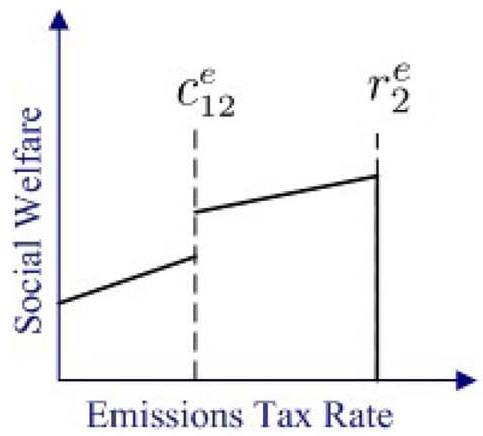 Figure 1: Mathematical relationships between different social welfare thresholds.
Experimental Analysis: Density and Volume Matter
Through numerical simulations, the authors demonstrate that:
- High-Volume Products: As product volume () increases, the probability that a carbon tax will improve social welfare also increases. This is because the "per-unit" emission impact becomes more significant.
- High-Density Products: Similarly, higher density () lowers the mode-shifting threshold, making it easier for the government to "nudge" companies toward rail transport without destroying their profit margins.
 Figure 4: Impact of product volume on the effectiveness of social welfare improvement.
Critical Analysis & Conclusion
Takeaway: This research provides a strong argument for targeted taxation. Instead of a flat carbon tax across all sectors, governments should apply more stringent taxes on products with high "emission intensity" (large volume/high density) where the transition to intermodal rail or water transport is more economically viable.
Limitations:
- The model assumes a simple additive demand function; real-world market dynamics might be non-linear.
- It only considers two modes of transport (Road vs. Rail), whereas modern logistics involves complex multi-leg journeys.
Future Outlook: Shifting the focus toward stochastic models (uncertain demand) and exploring how "Cap-and-Trade" mechanisms interact with these physical product constraints would be the next logical step for this research lineage.