
CardioFit: Elevating Affordable PPG to Clinical-Grade Cardiac Analytics
CardioFit: Affordable Cardiac Healthcare Analytics for Clinical Utility Enhancement
CardioFit is a noninvasive cardiac monitoring system that utilizes Photoplethysmogram (PPG) signals from smartphones and wearables to detect arrhythmias and compute Heart Rate Variability (HRV). By employing a robust multi-stage decorruption pipeline, it achieves high clinical utility through the removal of motion artifacts and transient noise.
TL;DR
CardioFit is a breakthrough monitoring framework that transforms noisy, smartphone-derived Photoplethysmogram (PPG) signals into high-precision cardiac markers. By implementing a sophisticated multi-stage decorruption pipeline using Morphologically Adaptable Dynamic Time Warping (MADTW), it eliminates motion artifacts that typically plague wearable devices, ensuring reliable arrhythmia detection and Heart Rate Variability (HRV) analysis with near-perfect recall.
Problem & Motivation: The "Noise" Problem in Mobile Health
While Electrocardiograms (ECG) remain the gold standard for cardiac health, they are often bulky and expensive for continuous home monitoring. Photoplethysmogram (PPG) sensors—found in almost every modern smartwatch and smartphone camera—offer a cheaper alternative.
However, PPG signals are notoriously "fragile." Even slight finger movements or ambient light changes introduce Motion Artifacts (MA). In clinical settings, these artifacts lead to high false alarm rates, while in consumer tech, they render health metrics like HRV virtually useless. The authors' insight was to move beyond simple frequency filtering (which often fails for non-stationary noise) and instead use morphological pattern analysis to "clean" the signal before processing.
Methodology: The Multi-Stage Decorruption Engine
The core innovation of CardioFit lies in its two-tiered approach to identifying corrupted signal segments:
1. Extrema Detection
The system first targets "Extremas"—large, sudden spikes caused by transient disturbances. It employs the Modified Thompson Tau technique, a statistical method used to identify outliers in a distribution, ensuring that massive signal "glitches" are pruned immediately.
2. Intricate Detection via MADTW
For more subtle distortions (Intricates), CardioFit uses Morphologically Adaptable Dynamic Time Warping (MADTW).
- The Logic: It compares each segmented heart beat against a "probable template" (). Unlike standard Euclidean distance, DTW can "stretch" or "shrink" time to find the best alignment between two waveforms.
- The Physics: If the DTW distance is high (e.g., ), it indicates the signal morphology is too distorted to be a valid heartbeat. If it is low (), the segment is retained.
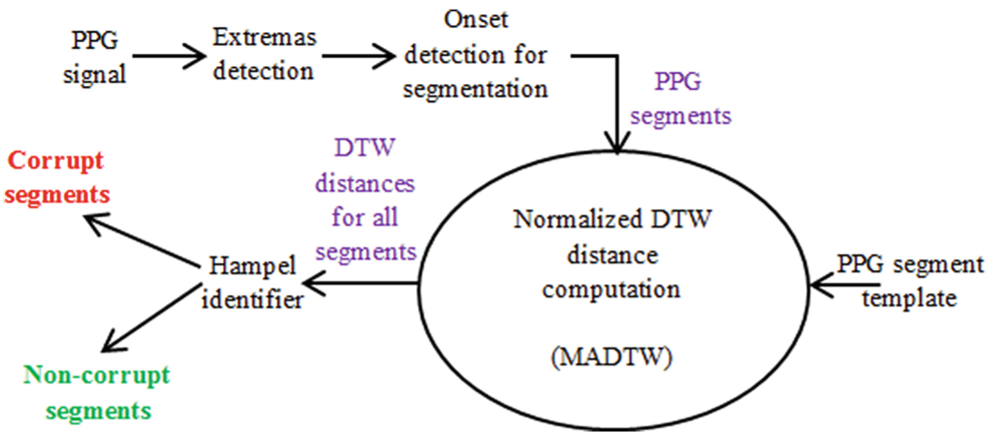 Figure 1: The signal processing pipeline from raw PPG to decision.
Experiments and Results
The researchers validated CardioFit using both controlled field data (with 10 subjects performing specific finger/hand movements) and the MIT-PhysioNet 2015 Challenge dataset.
Breaking the HRV Accuracy Barrier
Heart Rate Variability (HRV) is highly sensitive to noise. The experiment showed that a standard preprocessing method yielded a Mean Absolute Deviation (MAD) of 36.5 from the ground truth. In contrast, CardioFit achieved a MAD of 0.34, essentially matching the accuracy of clean, uncorrupted signals.
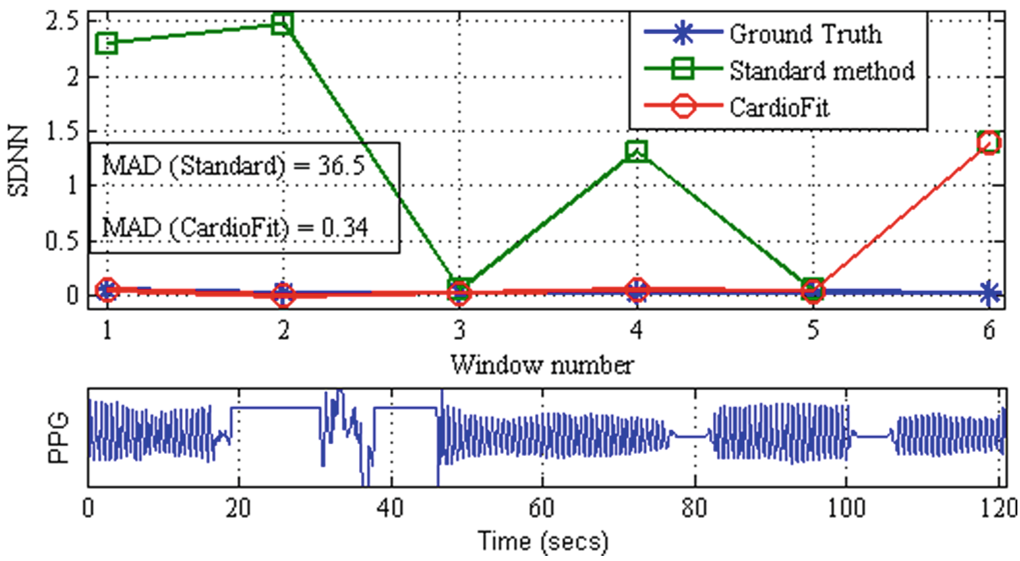 Figure 2: Performance comparison of HRV accuracy between CardioFit and Standard Methods.
Clinical Utility in Arrhythmia Detection
In detecting Bradycardia (abnormally slow heart rate), CardioFit achieved 100% Recall. This is critical in a medical context: it means the system missed zero actual conditions, a significant improvement over standard methods that might filter out real pathological anomalies as noise.
| Performance Metric (%) | Standard Method (SM) | CardioFit |
|---|---|---|
| Precision | 66 | 62 |
| Recall (Sensitivity) | 97 | 100 |
Critical Analysis & Conclusion
CardioFit succeeds by prioritizing Signal Integrity over complex downstream modeling. By "cleaning the data" using domain-aware signal processing (DTW and Hampel filtering), it allows simple diagnostic algorithms to perform at SOTA levels.
Limitations: The current approach relies on a "template" PPG signal. Since PPG morphology can vary significantly based on Age, Vasculature, and Sensor Placement, a static template might limit performance. Future iterations would benefit from Self-Supervised Learning to generate personalized templates for each user.
Takeaway: This research paves the way for smartphones to act as preventative diagnostic tools, bringing ICU-level anomaly detection to the palm of your hand without the need for expensive hardware.