
CORSA: Reimagining Urban Micro-Mobility through Social Rewards and Efficient Path Matching
A Carpooling Open Application with Social Oriented Reward Mechanism
This paper introduces CORSA (Carpooling Open source Ride Sharing Application), a Real-Time Ride Sharing (RTRS) platform that integrates social network dynamics with a unique virtual credit reward system. It achieves an efficient matching mechanism for "micro-carpooling" (short-distance trips) by utilizing a stratified lookup algorithm based on geographic bounding boxes.
TL;DR
CORSA (Carpooling Open source Ride Sharing Application) is an open-source solution designed for Real-Time Ride Sharing (RTRS). Unlike profit-driven giants like Uber, CORSA focuses on "micro-carpooling"—short, spontaneous urban trips. It solves the dual challenge of low driver incentives and high computational matching costs by introducing a social virtual credit system and a stratified bounding-box lookup algorithm.
Problem & Motivation: The "Short-Trip" Dilemma
In the landscape of modern transport, short-range urban commuting (micro-mobility) is a major source of pollution and traffic. However, existing carpooling models fail here because:
- Low Incentives: For a 2km trip, monetary compensation is so small it doesn't cover the driver's "hassle" factor.
- Trust Deficit: Sharing a car with a total stranger for 10 minutes feels riskier than a long-distance planned trip.
- Computational Latency: Matching two moving users in real-time requires calculating thousands of coordinate distances every second.
The authors’ insight is to decouple carpooling from "profit" and re-attach it to "social value" and "gamification."
Methodology: The Core of CORSA
1. Social-Oriented Reward Mechanism
Instead of cash, CORSA uses Virtual Credits. These credits create a "circular economy":
- Drivers earn credits that can be spent at affiliated retail stores or public institutions.
- Users participate in a "competition," boosting visibility through social networks (Viral Marketing).
- Hot Spots: The system uses geo-fencing to reward users who check-in/out at specific promotional locations (e.g., a concert hall or a partner mall).
2. Stratified Path Management
To ensure the "Immediately" requirement (fast response time), the system avoids brute-force path comparisons.
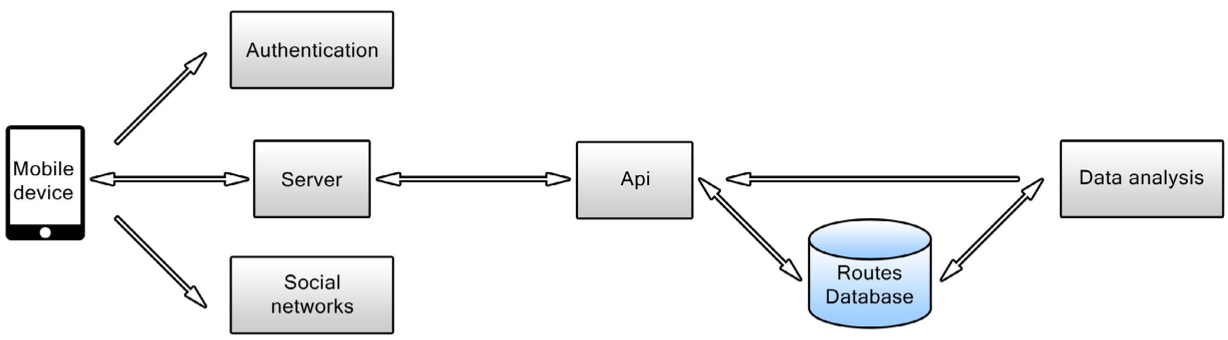 Figure 1: The CORSA System Architecture featuring Mobile Frontend, WebSocket Server, and Path Management API.
The lookup process is stratified:
- Level 1 (Exact Match): Matches start and finish nodes directly.
- Level 2 (Bounding Boxes): It creates square bounding boxes around trajectory nodes. If a passenger's nodes fall within the driver's "neighborhood" boxes, they are marked as compatible.
- Level 3 (Heuristic Filtering): It uses buffered bounding boxes to filter out paths going in the opposite direction or those too far away, only running expensive distance calculations on a tiny subset of "highly likely" candidates.
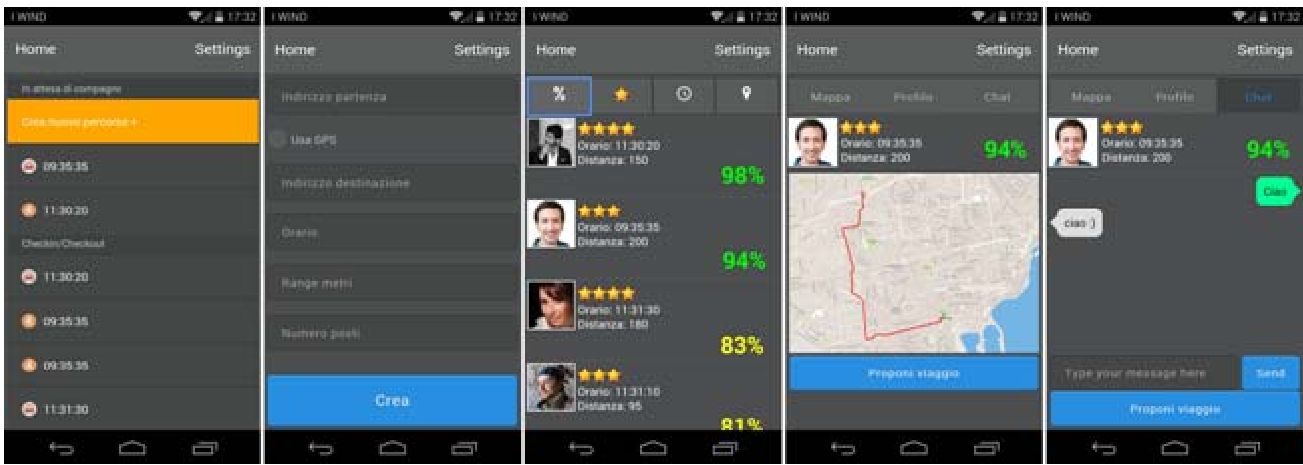 Figure 2: Trajectory approximation using nodes and neighborhood bounding boxes for efficient matching.
Experiments & Results: Real-Time Performance
The implementation utilized AngularJS and Apache Cordova for the frontend, with WebSockets for bidirectional communication. This setup addressed the "Asymmetric Data" problem—ensuring that if a passenger finds a driver, the driver’s app is notified instantly even if their local search hadn't updated yet.
Key Technical Findings:
- Performance: By using the bounding-box approach, the complexity was reduced from per ride (where is the number of nodes) to a simple numerical range check, which is essential for peak-hour scalability.
- Usability: The "Handshake" feature (QR code or tap) effectively formalized the start/end of journeys, providing the necessary data for the credit-calculation engine.
Critical Analysis & Conclusion
Takeaway
CORSA successfully demonstrates that for micro-mobility to work, we must move beyond the "Taxi Model." By leveraging existing social ties (like university communities) and replacing cash with gamified credits, the platform lowers the barrier to entry for casual drivers.
Limitations & Future Work
- Scalability of Partnerships: The virtual credit system requires a robust ecosystem of retailers to be valuable. Without enough "places to spend," drivers will lose interest.
- Complexity of Earth’s Surface: While the "plane approximation" works for micro-carpooling, global scaling would require more complex geodetic calculations.
- Future Outlook: The authors suggest that the next step is "Community Discovery"—automatically identifying groups of users with hidden shared routines to suggest recurring carpools proactively.
This research was developed under the SINERGREEN project, supported by the Italian Ministry of Education, University and Research (MIUR).