
Deciphering Children's Speech: A Hybrid AI Approach to Phonological Diagnosis
A case-based approach using phonological knowledge for identifying error paerns in children's speech
This paper presents a case-based architectural model for automatically identifying Phonological Processes (PPs) in children's speech. By integrating Case-Based Reasoning (CBR) with Machine Learning classifiers like Random Forest and Neural Networks, the system achieves over 93% accuracy in predicting speech error patterns across a massive corpus of nearly 100,000 audio files.
TL;DR
Researchers have developed a sophisticated Case-Based Reasoning (CBR) system that identifies "Phonological Processes"—the systematic error patterns children use when they can't quite master adult speech. By combining visual spectrogram analysis with a knowledge-rich "case history" database, the system identifies these disorders with over 93% accuracy, offering a powerful tool for clinical decision support.
The Diagnostic Gap in Speech Therapy
When a child says "bu-a" instead of "bru-xa" (witch), they aren't just making a random mistake. They are applying a Phonological Process (PP)—in this case, Cluster Reduction. For Speech-Language Pathologists (SLPs), identifying these systematic rules is the key to effective therapy.
However, the manual analysis of these patterns across dozens of words is time-consuming. Prior automated works focused heavily on Speech Recognition (the "what") rather than Phonological Analysis (the "why"). This paper fills that gap by asking: Can we model clinical intuition using previous cases?
Methodology: The CBR-ML Synergy
The authors propose a dual-module architecture designed to mimic the workflow of a human therapist.
1. The Capture & Classification Module
The system first captures audio via a mobile device. To determine if a word is "correct," it doesn't just look at the raw wave; it converts speech into spectrograms (visual representations of sound frequencies). It then uses Local Binary Patterns (LBP)—a technique usually used in facial recognition—to extract features from these images.
2. The CBR Cycle: Learning from Experience
The "magic" happens in the Service Module. When a word is flagged as incorrect, it enters the CBR Cycle.
- Retrieve: The system looks for past cases with similar error profiles.
- Reuse: It suggests a diagnosis based on these similarities.
- Review/Retain: Once an SLP confirms the diagnosis, the system "learns" the case, updating its weights for future predictions.
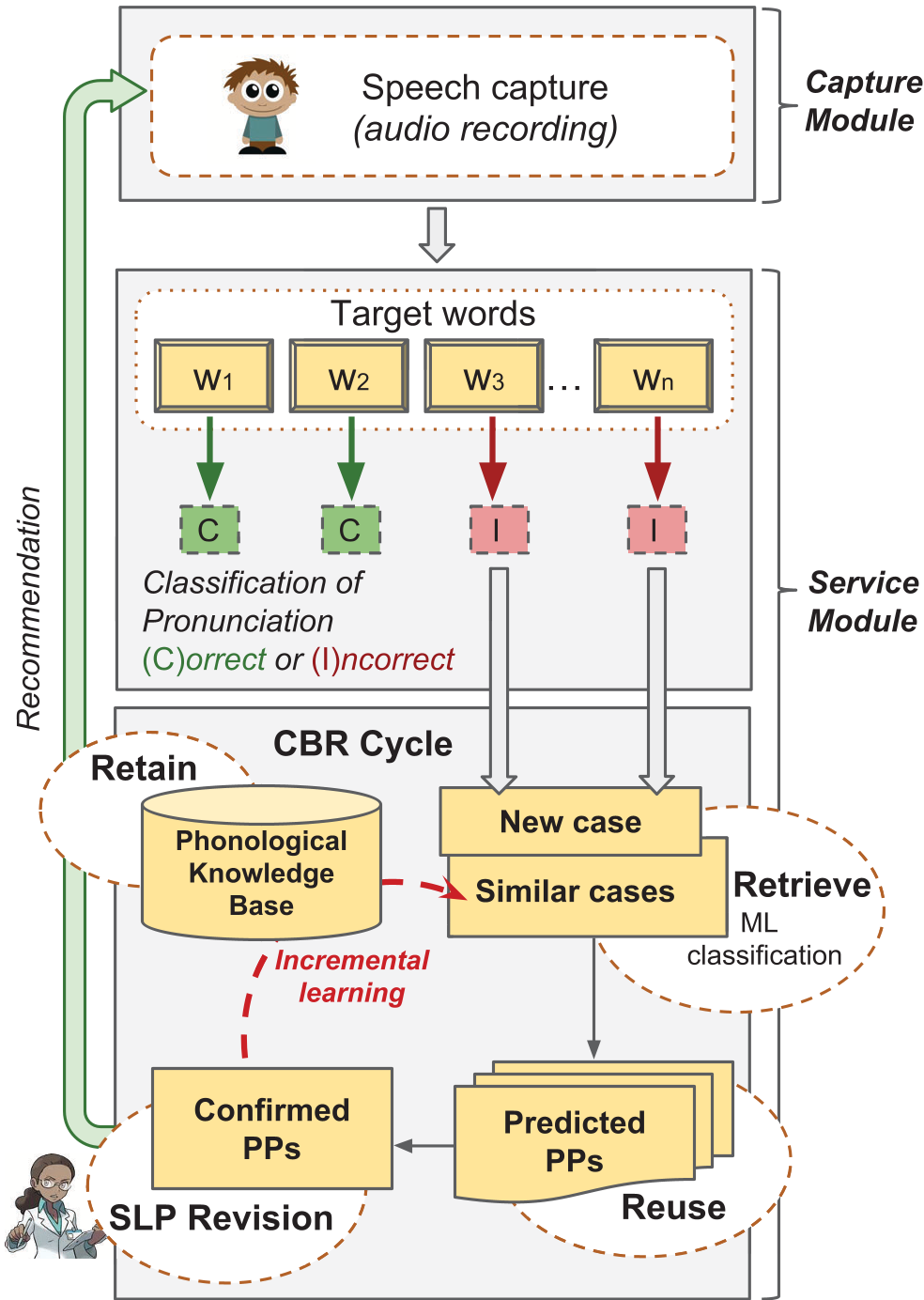 Figure 1: The proposed architecture integrating audio capture with the four-stage CBR cycle.
Experimental Results: Precision through Data
The study utilized a massive dataset of 93,576 audio files from over 1,000 children. This scale allowed the authors to test several Machine Learning "engines" within the CBR framework.
- Classification Phase: The Decision Tree classifier reached 92.5% accuracy in distinguishing correct vs. incorrect speech.
- Pattern Identification Phase: As the Knowledge Base grew, the accuracy for identifying specific PPs increased significantly. While Stochastic Gradient Descent (SGD) was used for its incremental learning properties (reaching ~90%), the Random Forest classifier ultimately took the lead with 93.43%.
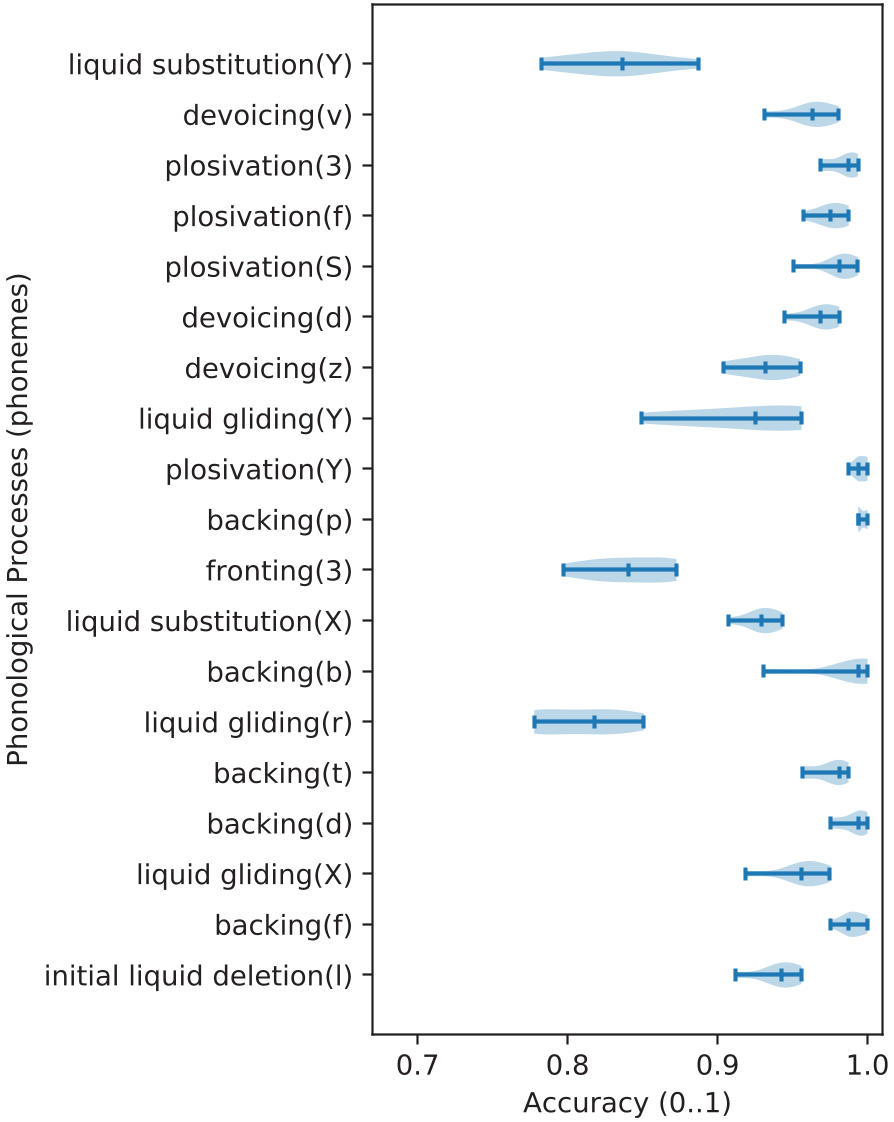 Figure 2: Performance metrics across different Phonological Processes, showing how accuracy stabilizes as more cases are added.
Deep Insights & Clinical Value
The real strength of this work lies in its Inductive Bias. By structuring the knowledge base around known linguistic PPh (Phonological Process + Phoneme pairs), the model doesn't have to learn from scratch; it uses the structured logic of speech therapy.
Key Takeaways:
- Data-Driven Evolution: The system gets smarter with every child it assesses, making it a "living" clinical tool.
- Visual Strategy: Converting audio to spectrograms allows the use of mature Computer Vision techniques (like LBP) for speech analysis.
- Human-in-the-loop: The system is designed to support SLPs by flagging probable error patterns, not to replace the nuanced judgment of a clinician.
Conclusion
This case-based approach marks a shift from "black-box" speech recognition to interpretable clinical AI. By focusing on Phonological Processes, the researchers have provided a roadmap for how AI can handle the complexities of child language acquisition, potentially transforming early intervention for speech sound disorders globally.