
From Tweets to Features: Bridging Brand Personality and Requirements Engineering
Case-Based Development of Consumer Preferences Using Brand Personality and Values Co-creation
The paper introduces a methodological expansion of the Consumer Preference Meta-Model (CPMM) to incorporate "Brand Personality" and "Value Co-creation" into Information Systems (IS) development. By leveraging Aaker’s 5-factor model and Kano’s quality framework, the authors bridge the gap between marketing-driven brand perception and Requirements Engineering (RE) through a case study of Twitter sentiment analysis.
TL;DR
Modern Information Systems (IS) often fail because they focus on functional utility while ignoring the emotional bond between the user and the brand. This paper presents a methodology to capture "Brand Personality" from social media (Twitter) and systematically map it to software features using an expanded Consumer Preference Meta-Model (CPMM). By integrating marketing theory with requirements engineering, the authors show how companies can co-create value with their customers even during technical crises.
Problem & Motivation: The Gap Between Psychology and Software
In the current market, consumer preferences are rarely dictated by pure economic logic. They are driven by identity, status, and emotional resonance—concepts captured by marketing as "Brand Personality."
The bottleneck in Software Engineering is translation. Systems analysts lack a rigorous way to turn an abstract concept like "Brand Competence" into a specific system requirement. When a crisis hits—like the major airline router failure analyzed in this study—the delta between what a brand claims to be and what its software allows becomes painfully visible. The authors' insight is to treat these consumer outcries on social media as an "autonomous co-creation" of value that dictates the future feature set of the system.
Methodology: The CPMM Translation Engine
The core of the paper is the instantiation of the Consumer Preference Meta-Model (CPMM), treated as a dynamic taxonomy.
1. The Mapping Mechanism
The authors use a "Mapping" association class to bridge different psychological and marketing frameworks. For example:
- Marketing Facet: Aaker’s Competence (Reliable, Intelligent, Successful).
- Consumer Value: Holbrook’s Efficiency (Active/Extrinsic/Self-oriented).
- System Realization: Features that prioritize speed, accuracy, and reliability in flight status updates.
2. The Workflow
The process follows a six-step cycle based on Nickerson's taxonomy development:
- Instantiate CPMM: Define the "Consumer Driver" as the meta-characteristic.
- Modeling Perspectives: Define Business (Value Exchange), Segment (Target Audience), and Consumer (Roles).
- Refine Meta-Class: Narrow down specific value frameworks (e.g., Brand Personality).
- Decide Approach: Choosing "Empirical-to-Conceptual" when working with real-world data like Twitter feeds.
- Map Frameworks: Linking Brand Personality to Consumer Values.
- Consistency Check: Iterating until the taxonomy is complete.
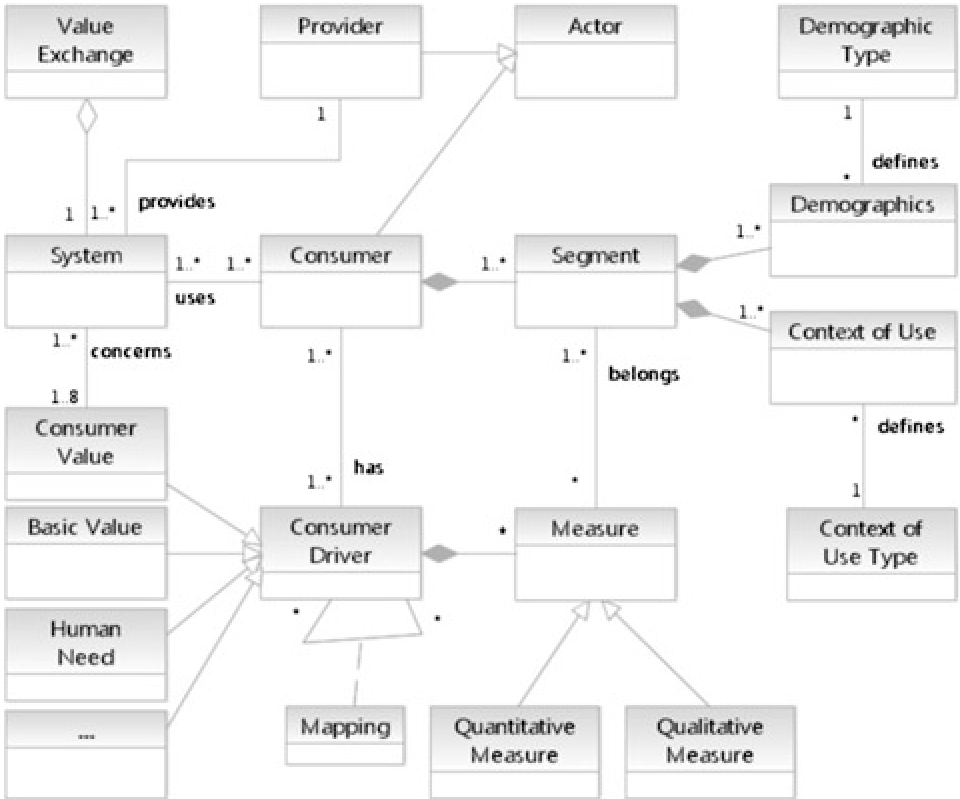 Figure 1: The CPMM Meta-model illustrating the interaction between Value frameworks and Mapping classes.
Real-World Case: The United Airlines Twitter Crisis
The authors monitored United Airlines' Twitter feed during a 5-hour router failure that grounded their fleet. By analyzing 6,873 tweets, they applied the Kano Quality Framework to classify user sentiments into:
- Must-be (M): Expected features whose absence causes extreme dissatisfaction.
- One-dimensional (O): Features where more is better (e.g., faster updates).
- Attractive (A): Features that delight but aren't expected.
From Sentiment to Feature Model
The results showed that consumers were effectively "designing" the system through their complaints. For instance, the need for a "Flight Rebooking" feature that interacts with both ticketing and baggage systems was extracted directly from the distress of travelers in transit.
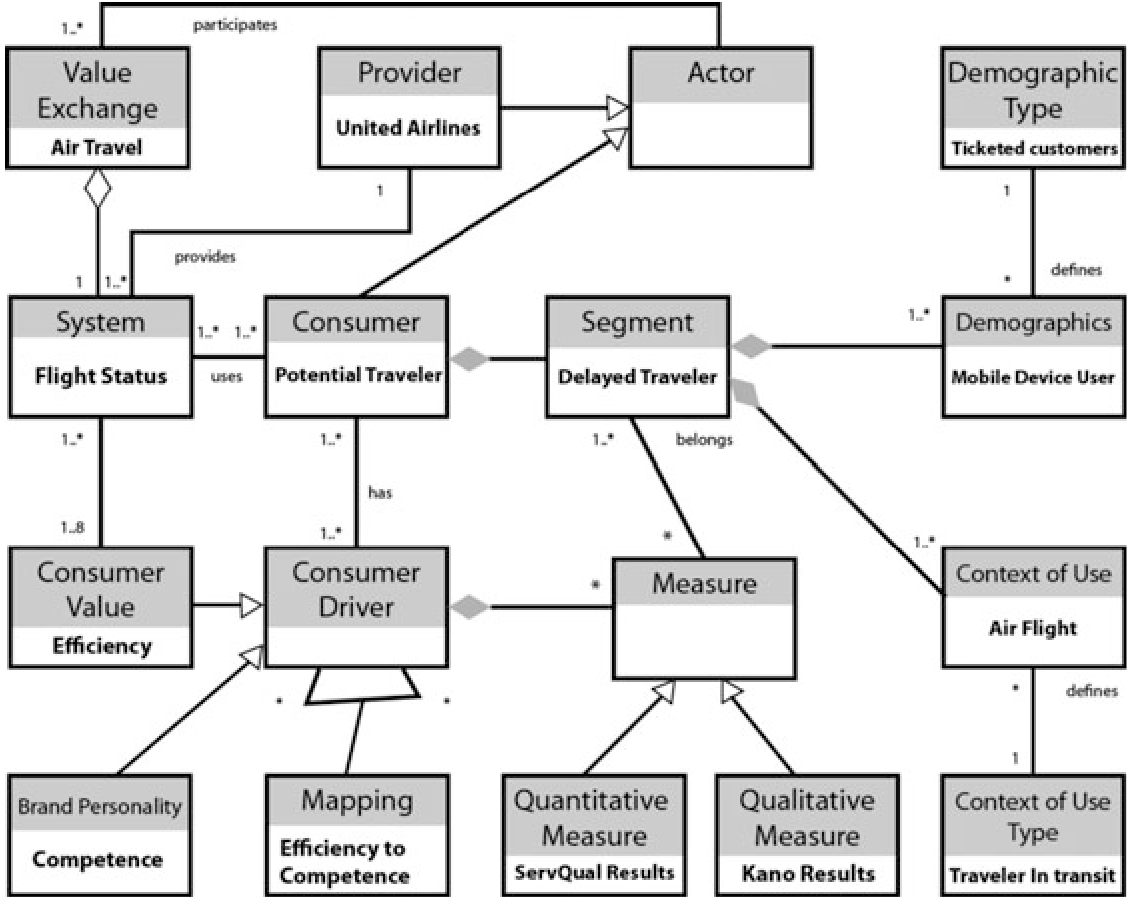 Figure 2: Instantiation of CPMM for the airline case study, linking Brand Personality to Segment Modeling.
Experiments & Results: Deriving the Feature Model
The final output is a Feature Model derived from the taxonomy. By mapping "Competence" from Brand Personality into "Efficiency" in the IS domain, the authors identified mandatory features for a proposed "Flight Status System."
- Mandatory Features: Flight rebooking, Baggage System integration, Ticketing system access.
- Contextual Constraints: Mobile device usage (Demographics) and "In-Transit" status (Context of Use).
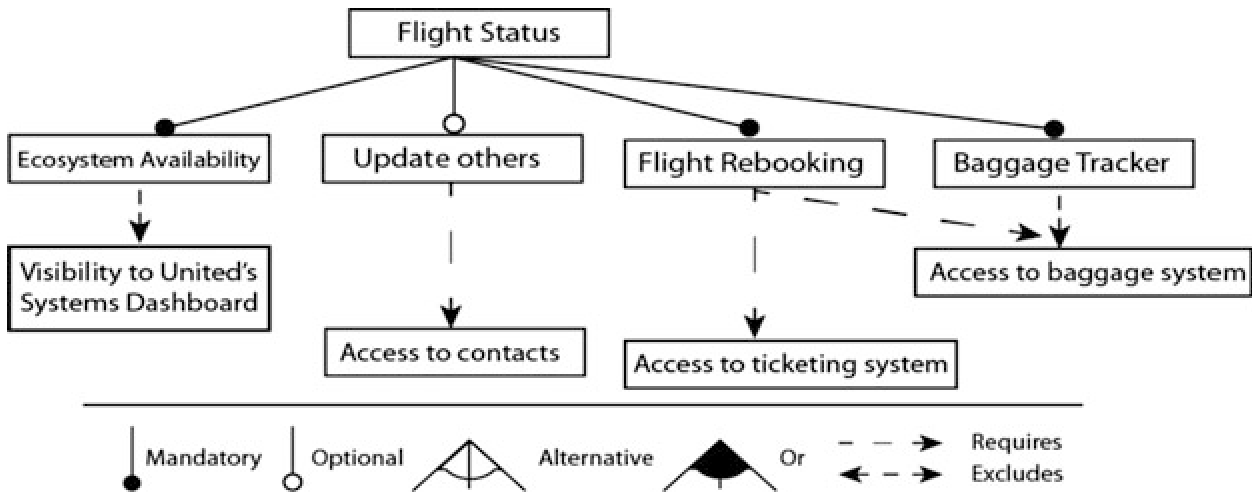 Figure 3: A sample Feature Model derived from the qualitative analysis of consumer tweets.
Deep Insight & Conclusion
Takeaway
The paper argues that software is the modern "embodiment" of a brand. If a brand's personality is "Expert" and "Reliable," its software cannot be "glitchy" or "disconnected." The CPMM provides the formal bridge to ensure that Requirements Engineering respects the emotional and psychological contract between a corporation and its crowd.
Critical Analysis
- Strengths: Strong interdisciplinary approach; use of real-time crisis data provides a high-stakes validation of the model.
- Limitations: The "Mapping" step remains highly dependent on the systems analyst's subjective judgment. Automating the mapping between "Brand Personality" and "Consumer Values" via NLP or LLMs would be the logical next step to handle larger datasets.
- Future Outlook: Integrating CPMM with Enterprise Architecture frameworks like TOGAF will allow organizations to align their high-level business strategy with low-level software requirements across the entire enterprise.