
TA 3 IVF: Bridging Clinical Judgment and Machine Intelligence through Case-Based Reasoning
Case-based reasoning in IVF: prediction and knowledge mining
The paper introduces TA 3 IVF, a Case-Based Reasoning (CBR) system designed to optimize In Vitro Fertilization (IVF) treatment plans. By utilizing a "context-based relevance assessment," the system retrieves past clinical cases to predict ideal hormonal dosages and pregnancy outcomes, achieving high accuracy in a historically unpredictable domain.
TL;DR
Predicting the success of In Vitro Fertilization (IVF) has long been considered more of an "art" than a science due to the sheer volume of biological variables involved. This paper presents TA 3 IVF, a sophisticated Case-Based Reasoning (CBR) system that mimics human "clinical judgment" by retrieving and adapting past successful patient cases. By using a novel context-based relevance model, the system helps doctors optimize hormonal therapies and predict pregnancy outcomes with an accuracy that scales as more data becomes available.
The "Complexity Wall" in Reproductive Medicine
Despite decades of advancement, IVF success rates have historically plateaued around 30%. The bottleneck isn't just the biology; it's the data. A single IVF cycle involves dozens of dependent variables:
- Patient Profile: Age, diagnosis of infertility, ovarian size.
- Stimulation Data: Type and dose of fertility drugs (HMG), suppression methods (GnRH).
- Embryological Factors: Oocyte dysmorphism, cleavage rates, endometrial thickness.
Existing statistical models often fail because they are too rigid. Doctors, however, rely on experience—recalling a "similar patient" who succeeded with a specific dosage. TA 3 IVF formalizes this intuitive process into a computational framework.
Methodology: The Power of Contextual Relevance
The core innovation of TA 3 is its departure from standard "nearest-neighbor" matching. The authors argue that "similarity" is not a fixed metric but depends on the context of the clinical task.
1. Case Representation
Cases are represented as sets of attribute-value pairs, but grouped into Telos-style categories. This allows the system to treat categories (like "Estrogen Levels" or "Patient History") with different weights and constraints.
2. Flexible Retrieval & Incremental Transformation
Instead of a single search, TA 3 allows for Retrieval by Reformulation. If too many or too few cases are found, the system performs:
- Relaxation (Generalization/Reduction): Loosening constraints to find "mostly similar" cases when an exact match doesn't exist.
- Restriction (Specialization/Expansion): Tightening constraints when too many irrelevant cases clutter the results.
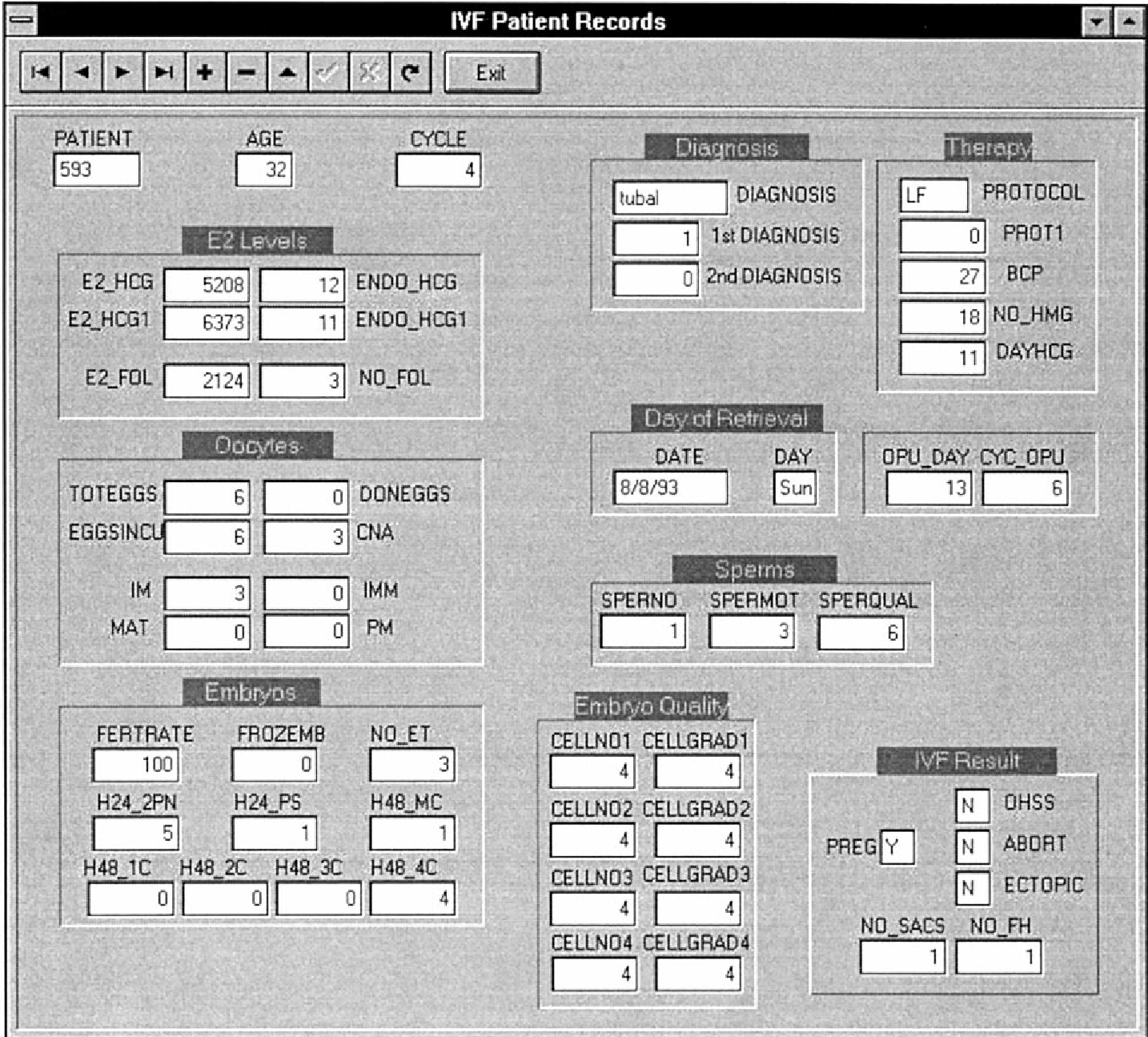 Figure 1: The TA 3 interface showing how doctors define the "Context" (relevant attributes) for a specific patient query.
3. Knowledge Mining
TA 3 doesn't just retrieve; it learns. Using Factor Analysis, the system identifies which attributes have low variability among successful cases (indicating high predictive power) and which are just noise.
Performance: Moving the Needle
The researchers used a "leave-one-out" validation method on a database of 788 clinical cases.
| Task | Metric | Performance |
|---|---|---|
| Hormonal Dosage (NO_HMG) | Relative Error | 0.15 ± 0.09 |
| Trigger Day (DAY_HCG) | Absolute Error | 0.9 ± 0.5 days |
| Pregnancy Prediction | Accuracy | Up to 71.2% |
A critical finding was that the system's accuracy jumped nearly 11% when "Estrogen (E2) Level Series" were added to the case representation. This proves the system's ability to accommodate case representation evolution—as medical science discovers new biomarkers, TA 3 can integrate them without rebuilding the core logic.
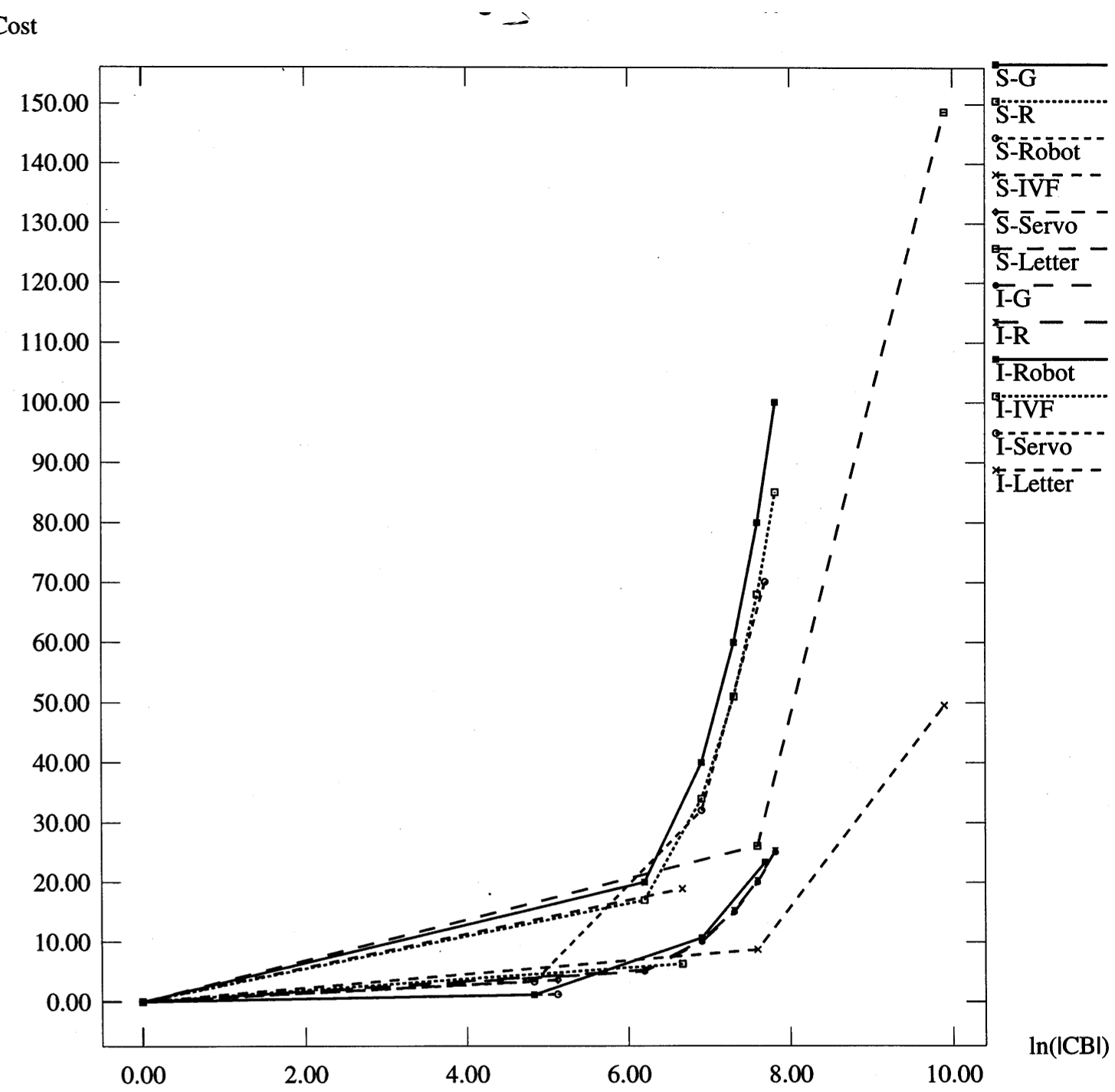 Figure 2: Performance benchmarks showing that TA 3's incremental retrieval remains computationally efficient even as the case base grows (logarithmic scale).
Deep Insight: Why This Matters
The brilliance of TA 3 IVF lies in its Monotonicity in Relevance. By allowing the user to guide the search, it prevents the "Black Box" problem common in Neural Networks of that era. When the system suggests a 71% success rate, a doctor can actually browse the 3 or 4 specific cases (see Table below) that informed that prediction, maintaining transparency and trust in the clinical setting.
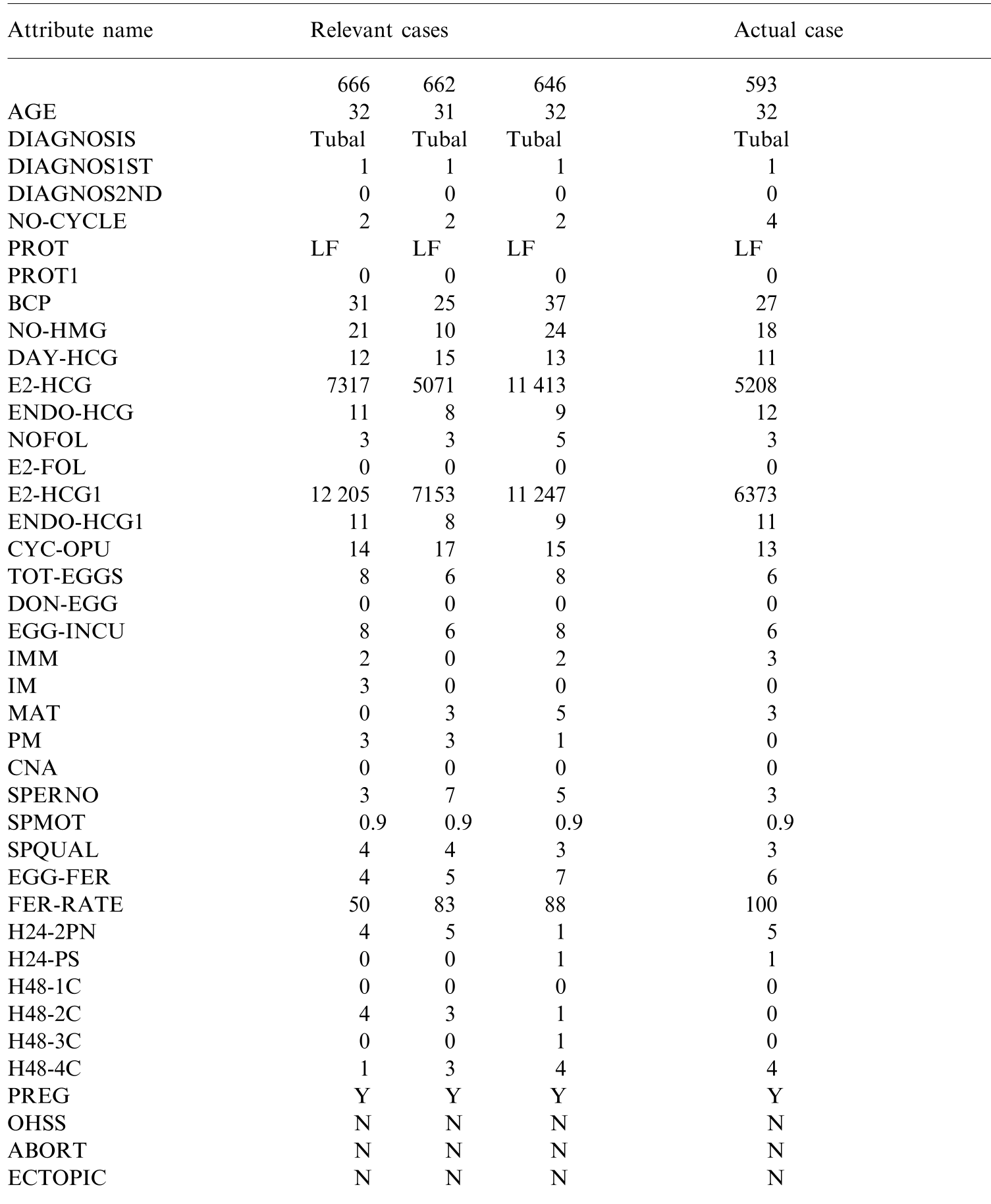 Table 1: Example of retrieved "Relevant Cases" used to predict outcome for a target patient (Case 593).
Conclusion & Future Outlook
TA 3 IVF serves as a landmark study in how AI can augment human expertise in "weak-theory domains"—fields where we have lots of data but no perfect mathematical formula. By focusing on similarity, context, and incremental learning, it offers a blueprint for decision support that is both accurate and explainable.
Limitations: While powerful, the system's dependency on high-quality historical data means it may struggle with "Cold Start" problems in new clinics until a baseline case base of 500-1000 records is established.
Key Takeaway: In medicine, a "similar case" is worth a thousand rules. Systems that can find those cases efficiently will define the future of personalized healthcare.