
From Static Cases to Dynamic Traces: The Evolution of Experience-Based AI
FROM CASE-BASED REASONING TO TRACES-BASED REASONING
This paper provides a comprehensive tutorial on Case-Based Reasoning (CBR) and introduces Trace-Based Reasoning (TBR) as a significant evolution. It details the classical CBR cycle (Retrieve, Reuse, Revise, Retain) and proposes TBR to handle unstructured, temporally situated experience by mining computer use traces.
TL;DR
This seminal work by Alain Mille bridges the gap between classical Case-Based Reasoning (CBR) and the more fluid Trace-Based Reasoning (TBR). While CBR focuses on adapting solutions from a library of discrete "cases," TBR treats the continuous stream of user-computer interactions—traces—as the primary container of knowledge. This shift allows AI to move beyond rigid, predefined problem contexts and into dynamic, real-world "Experience Management."
The "Frame" Problem: Why Fixed Cases Fail
In the classical AI paradigm, knowledge is often structured into "Frames" (Minsky) or "Scripts" (Schank). Case-Based Reasoning grew from this, operating on the logic that if you solved a problem once, you can adapt that solution for a similar new problem.
However, CBR faces a fundamental technical bottleneck: The Context Rigidity.
- Predefined Descriptors: You must decide what matters (the "case structure") before you record the experience.
- The Frame Problem: Real-world situations are messy. A case that works today might fail tomorrow because the "context" changed in a way your descriptors didn't capture.
- Granularity: Traditional CBR treats episodes as independent, often ignoring the temporal flow and the evolving nature of human-machine interaction.
Methodology: The Core of CBR and the Shift to TBR
1. The Anatomy of a Case
Mille defines a case as a pair of . The reasoning cycle revolves around the similarity of adaptability. As shown in the paper, the retrieval isn't just about finding the "closest" match, but the "easiest to adapt."
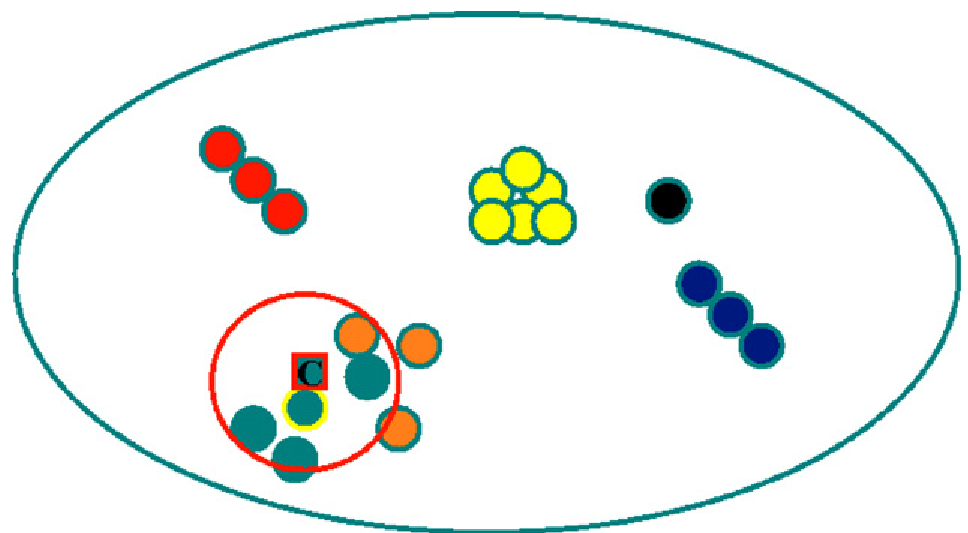 Figure: The enriched CBR cycle, including the critical 'Elaborate' step.
2. The Adaptation Logic
The paper provides a mathematical foundation for adaptation. Instead of a "black box" transformation, it proposes an Influence Equation:
This captures the physical intuition that a change in the target solution () should be proportional to the difference in the problem descriptors (), scaled by an "influence weight" (). This makes the reasoning process transparent and quantifiable.
3. Introducing Trace-Based Reasoning (TBR)
TBR represents the "Generalization" of CBR. In TBR, we don't store "cases"; we store traces.
- Dynamic Case Building: Instead of a fixed library, the system "elaborates" an episode only when a task signature is identified.
- Temporal Continuity: It preserves the sequence of events, which is vital for complex tasks like industrial supervision or collaborative design.
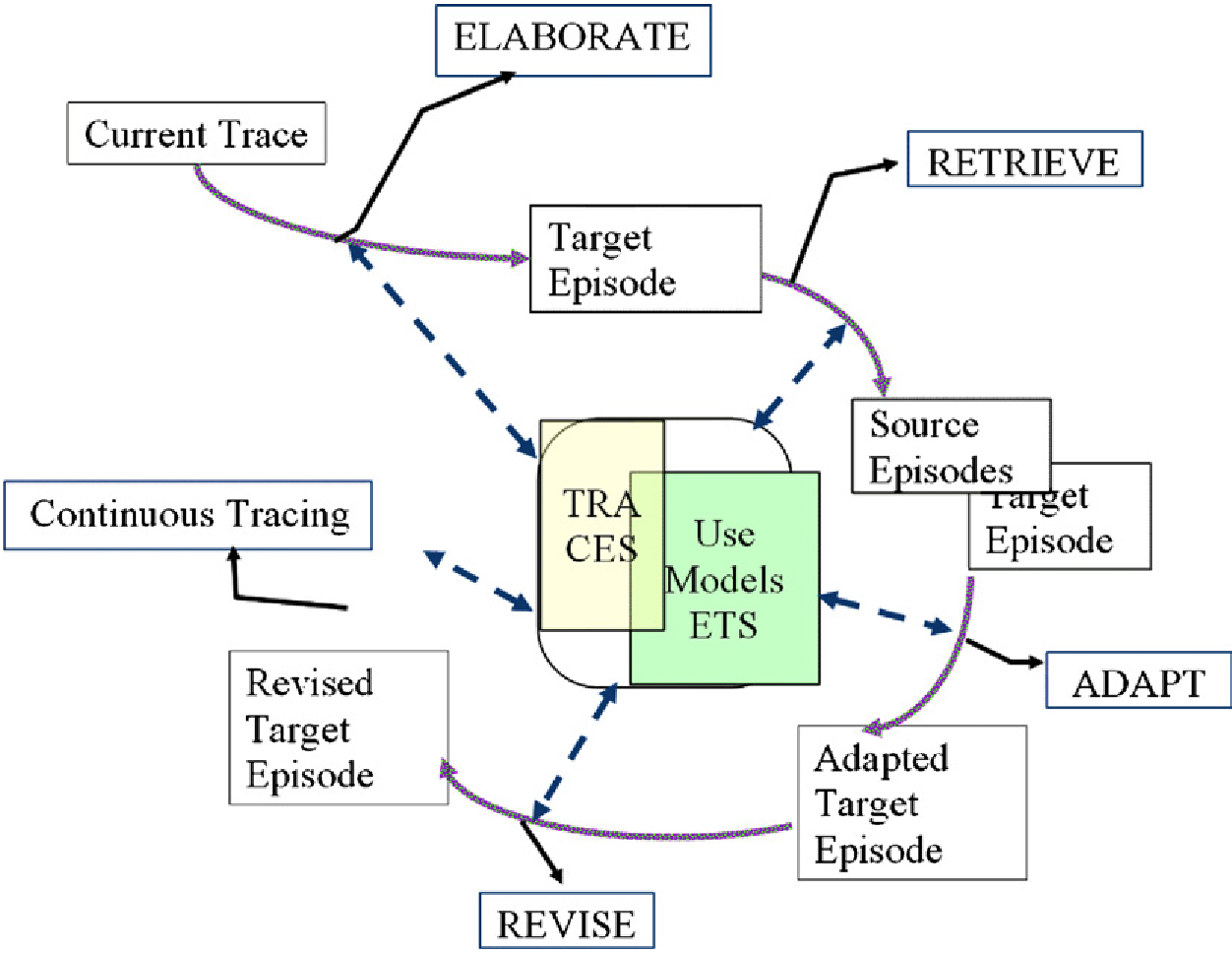 Figure: TBR extends the CBR cycle by dynamically mining traces rather than querying static case bases.
Experiments and Insights: Similarity vs. Adaptability
The paper emphasizes that Similarity != Proximity. In many tasks, like car sales or technical diagnosis, two problems might look similar in Euclidean space but require completely different "repair" or "adaptation" strategies.
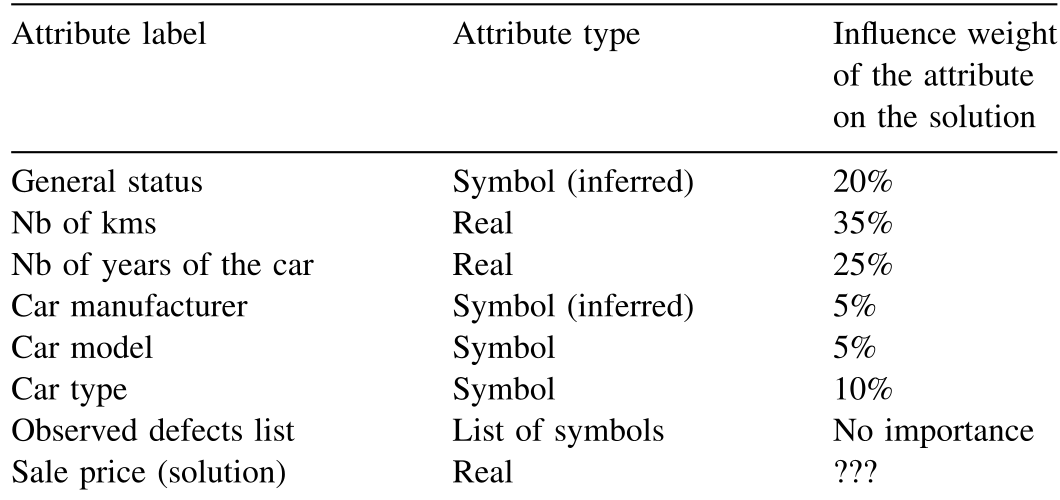 Table: In CBR, specific attributes (like mileage) carry far more influence on the final solution (price) than others (like a list of minor defects).
By applying Influence Weights, the author demonstrates that AI can focus its reasoning budget on variables that actually impact the solution, a concept now widely used in Attention Mechanisms and Feature Importance in modern machine learning.
Critical Analysis & Conclusion
Alain Mille’s work is a pivot point in AI history. It moved us away from "Static Expertise" (Expert Systems) toward "Dynamic Experience."
Takeaways:
- Experience as a Trace: For developers building agents, the most valuable data is the trace of how a human solves a problem, not just the final result.
- Context is Dynamic: AI shouldn't rely on fixed schemas. It should learn to "slice" history into episodes based on the current goal.
Limitations:
While TBR is theoretically superior, the computational cost of mining raw traces in real-time was a significant challenge in 2006. With today's high-speed vector databases and Transformers, we are finally reaching the hardware capacity required to truly implement Mille's vision of Trace-Based Reasoning.
Future Outlook
As we look toward Artificial General Intelligence (AGI), the ability to "learn from a single trace of experience" (Few-shot learning via history) will be the bridge that allows machines to collaborate with humans as true peers, not just as static tools.