
From Static Cases to Living Traces: The Evolution of Experience-Based AI
FROM CASE-BASED REASONING TO TRACES-BASED REASONING
Deeply rooted in AI's cognitive history, this paper explores the transition from Case-Based Reasoning (CBR) to Trace-Based Reasoning (TBR). It formalizes the CBR cycle (Retrieve, Reuse, Revise, Retain) and proposes TBR as a dynamic generalization that extracts problem-solving episodes from continuous computer-use traces.
TL;DR
This seminal tutorial by Alain Mille charts the path from Case-Based Reasoning (CBR)—the AI paradigm of solving new problems by adapting past solutions—to the more fluid Trace-Based Reasoning (TBR). While CBR revolutionized fields like diagnosis and design, TBR breaks the "frame problem" by treating computer-use history as a continuous, dynamic knowledge source.
The Core Intuition: Why Experience Matters
In the quest for Artificial Intelligence, we often oscillate between rigid logic and statistical patterns. CBR occupies a unique middle ground: Analogical Reasoning. Instead of deriving rules from scratch, CBR mimics human cognition by asking: "Have I seen something like this before, and how did I fix it then?"
However, the author identifies a critical friction point: The Frame Problem. Traditional CBR requires a fixed vocabulary and a predefined context. If your "case" wasn't built to include a specific variable, the system is blind to it.
Methodology: The CBR Cycle and the TBR Leap
1. The Classic CBR Cycle
The paper elaborates on the refined Aamodt and Plaza cycle, which consists of four (now five) key stages:
- Elaborate (Index): Determining which descriptors are actually "adaptable."
- Retrieve: Finding the "Nearest Neighbors" using weighted similarity measures.
- Adapt: The most complex part—calculating how to tweak an old solution to fit a new problem.
- Revise & Memorize: Learning from the new outcome to enrich the case base.
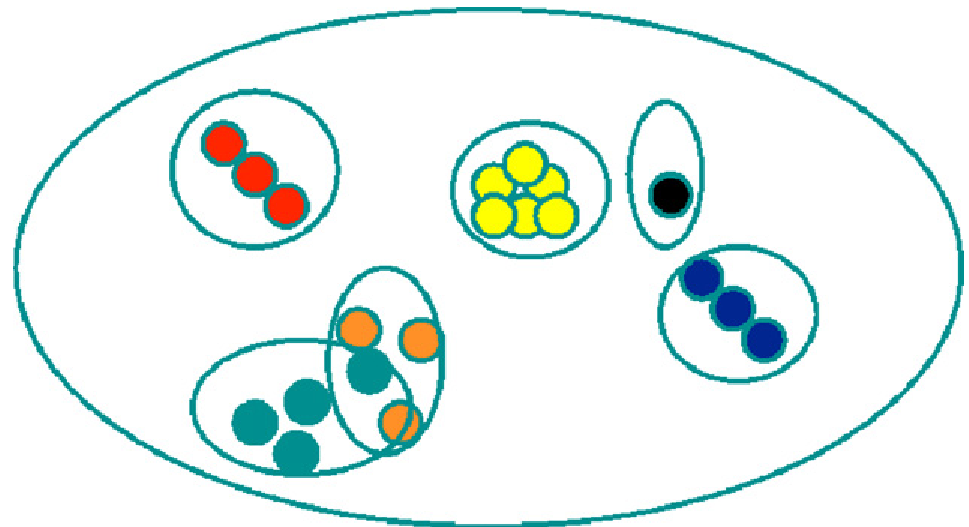 Fig 1: Clustering cases by types of adaptation processes to select the most relevant "neighbor."
2. The Mathematical Engine of Adaptation
The paper moves beyond hand-wavy descriptions to provide concrete adaptation logic. The essence of the adaptation is the "influence" function:
This formula suggests that the target solution () is the source solution () adjusted by the integrated influence () of the differences between the current problem and the past problem (). This allows for a "virtuous spiral" where the system learns the weight of different factors over time.
3. Trace-Based Reasoning (TBR): The Paradigm Shift
The paper's breakthrough is the introduction of TBR. In TBR, we no longer store "cases." We store Traces—temporal sequences of events.
- Context on the Fly: Unlike CBR, which has a fixed context, TBR builds a case dynamically based on the current task signature.
- Unstructured to Structured: It transforms raw computer logs into meaningful problem-solving episodes only when needed.
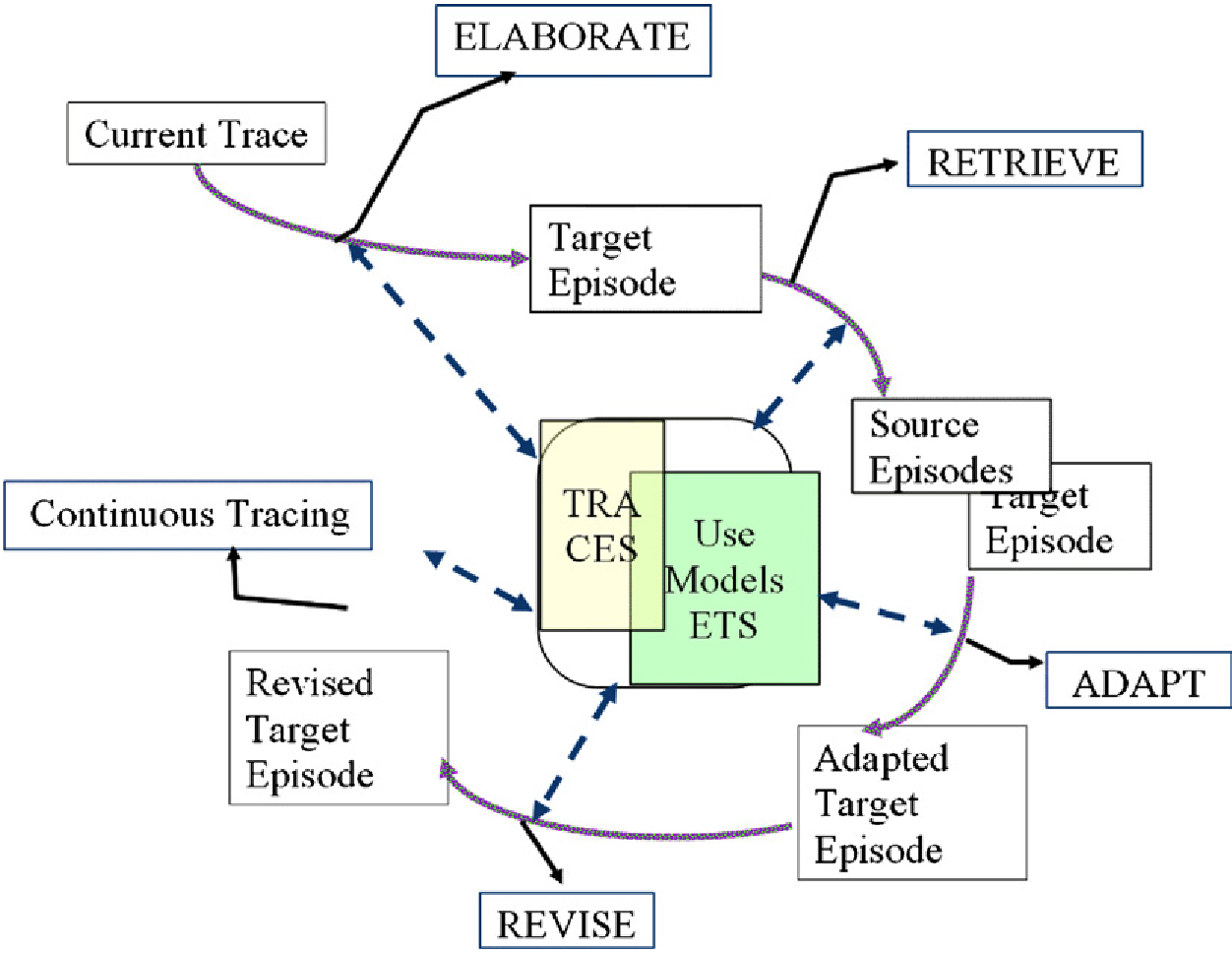 Fig 2: The conceptual leap from a static Case Base (CBR) to a dynamic Trace Container (TBR).
Experimental Insights: Solving the "Flat Price" and "Car Diagnosis"
The author uses practical examples to validate the theory:
- Real Estate: How attributes like location (symbolic) and surface area (real) are weighted to estimate prices.
- Car Repair: Using influence rules (e.g., "Each 1k km adds/subtracts from the price") to automate the "Revise" step of the cycle.
The "Adaptation Rule" (Fig 11 in the paper) demonstrates how a knowledge engineer can translate expert intuition into a format the machine can execute, bridging the gap between human experience and algorithmic reliability.
Critical Analysis & Conclusion
Alain Mille’s work is a foundational call for Experience Management.
Key Takeaways:
- CBR is "Lazy Learning": It avoids the cost of pre-computation by doing the work only when a new problem arises.
- Traces are richer than Cases: Traces preserve the temporal "story" of a problem, which is often lost in vectorized case formats.
Limitations: The paper acknowledges that managing different structures of past cases is still a hurdle. Furthermore, the "Inference of Influence" still requires significant domain knowledge to set up initially.
Future Outlook: In the era of LLMs, TBR provides a fascinating blueprint for "Long-Context" memory. Rather than just fine-tuning models, we should look at how AI can "trace" our interaction history to build higher-order reasoning capabilities dynamically.