
Cantonese Porcelain & WebAR: Bridging the Gap Between Tangible Touch and Intangible Heritage
Case Study: Creating Embodied Interaction with Learning Intangible Cultural Heritage through WebAR
This paper presents a case study on a WebAR-based application designed for learning Intangible Cultural Heritage (ICH), specifically Cantonese Porcelain. By integrating mobile AR with a tangible plate model, the study highlights how "embodied interaction" enhances user engagement and knowledge transfer compared to traditional digital displays.
TL;DR
Preserving heritage isn't just about scanning old vases; it's about capturing the "intangible" soul of the craft. This case study introduces a WebAR application that uses Embodied Interaction to teach the art of Cantonese Porcelain. By combining a physical plate with a smartphone, users don't just watch videos—they engage their whole bodies to learn the situated knowledge of a master craftsman.
The Motivation: Why Virtual Displays Aren't Enough
Intangible Cultural Heritage (ICH) is notoriously difficult to digitize. Unlike a building, a craft like Cantonese Porcelain lives in the movement of the hands and the texture of the glaze. Existing solutions often fall into two traps:
- Passive Observation: Watching a video on a screen lacks the sensory feedback of the material.
- High Barriers: High-end VR/AR setups are expensive and localized to specific museums.
The authors identified that the missing link is Embodiment. We learn better when we move, touch, and interact within a physical space.
Methodology: The "Embodied" WebAR Framework
The researchers didn't just build an app; they built a bridge between the physical and digital worlds. Their prototype consists of three core layers:
- The Physical Anchor: A physical plate model that provides tactile feedback.
- The WebAR Layer: Built using Three.js and ARtoolkit, ensuring the application can be accessed via a simple web browser without downloading heavy apps.
- The Interaction Logic: Users "slide" through the crafting process on their mobile screen while physically holding and rotating the plate, creating a spatial connection between the hands and the eyes.
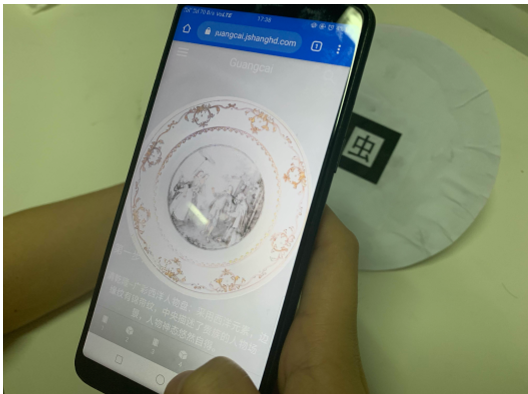 Figure: Learning Cantonese Porcelain making through interactive models in the WebAR prototype.
From Theory to Practice: Evaluation
The study involved recruiting 10 novices to test the system. The qualitative findings was divided into two Research Questions:
- RQ1 (WebAR Engagement): WebAR acted as a "demonstrator." Users noted that sliding through steps while seeing 3D overlays felt like a "dialogue" with the craft.
- RQ2 (Embodied Impact): The "Coupling" of the physical plate and the digital device enabled users to perceive physical characteristics while understanding the narrative context.
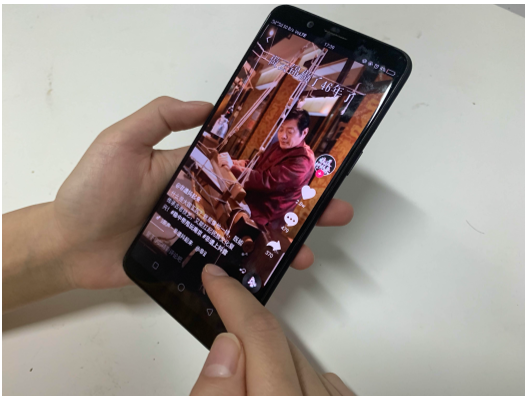 Figure: The prototype allows users to slide through livestreaming-like content or interactive models to simulate craftsman knowledge.
Depth Insight: Why This Works
The brilliance of this work lies in its Inductive Bias toward physical presence. Instead of trying to replace the physical object with a "digital twin," it uses the digital layer to augment the physical experience. This aligns with Paul Dourish’s theory of Embodied Interaction, where the world we inhabit is not just a source of data, but a site of meaning-making through action.
The use of WebAR (as opposed to native AR) is a strategic choice for accessibility. It allows this educational tool to be deployed in schools, local workshops, or even at home, requiring only a smartphone and a marker.
Critical Analysis & Conclusion
Takeaway: This study proves that "Intangible" heritage needs "Tangible" interaction to be understood. The coupling of low-cost physical props with high-accessibility WebAR creates a powerful "narrative catalyst."
Limitations:
- The sample size (n=10) is small and limited to a specific age group (20-25).
- The physical prop (the plate) is simple; more complex ICH tasks (like weaving or calligraphy) might require more sophisticated tracking.
Future Outlook: The next step for this research is "Holistic Collaborative Design." Imagine a classroom where multiple students interact with the same WebAR scene, sharing the embodied experience of a craft that has survived for centuries, now preserved in the cloud.