
Initiative Mapper: Bridging the Social Gap in e-Participation for Minorities
A case study on using social media for e-participation: design of initiative mapper web service
This paper presents the design and prototyping of Initiative Mapper, a social web service tailored for the e-participation of immigrants and linguistic minorities. By leveraging Multi-Dimensional Scaling (MDS) and user-prioritized initiatives, the system visualizes social proximity to facilitate community building and collaborative policy-making.
TL;DR
The Initiative Mapper is a specialized social web service designed to boost the civic involvement of immigrants by helping them find like-minded peers. Unlike traditional e-government portals that act as static silos, this platform uses multidimensional visualization to show users "who is like them" based on shared policy goals, transforming individual frustration into collective action.
The Problem: Why Traditional e-Participation Fails Minorities
Inclusion and participation are two sides of the same coin. However, for immigrants—often referred to as "cultural and linguistic minorities"—the barrier to entry is double-edged. Not only do they face typical citizen apathy, but they also grapple with:
- Language Barriers: Difficulty navigating official governmental portals.
- Information Silos: Lack of connection with others facing similar niche issues (e.g., visa bureaucracy or specific educational needs).
- Feedback Loops: A historical lack of evidence that individual voices actually influence change, leading to a "drop-off" in platform usage.
The authors argue that social media shouldn't just be for staying in touch with one's home country; it should be the substrate for grass-roots e-participation.
Methodology: From Personas to Algorithms
To ensure the tool wasn't built in a vacuum, the researchers utilized Design-Based Research (DBR). They interviewed state officials and various minority groups (from English-speaking consultants to Ukrainian educators) to create "Personas."
The "Jeremy" Scenario
One archetype, Jeremy (a US expat in Estonia), wants to change school entrance policies. Isolated, he doesn't know who else cares. Through Initiative Mapper, his personal preferences are translated into a vector in an "Ontospace."
Technical Core: Multidimensional Scaling (MDS)
The system doesn't just list people; it maps them. By calculating the "distance" between users' prioritized lists of initiatives, it uses MDS to project these complex relationships onto a simple 2D map.
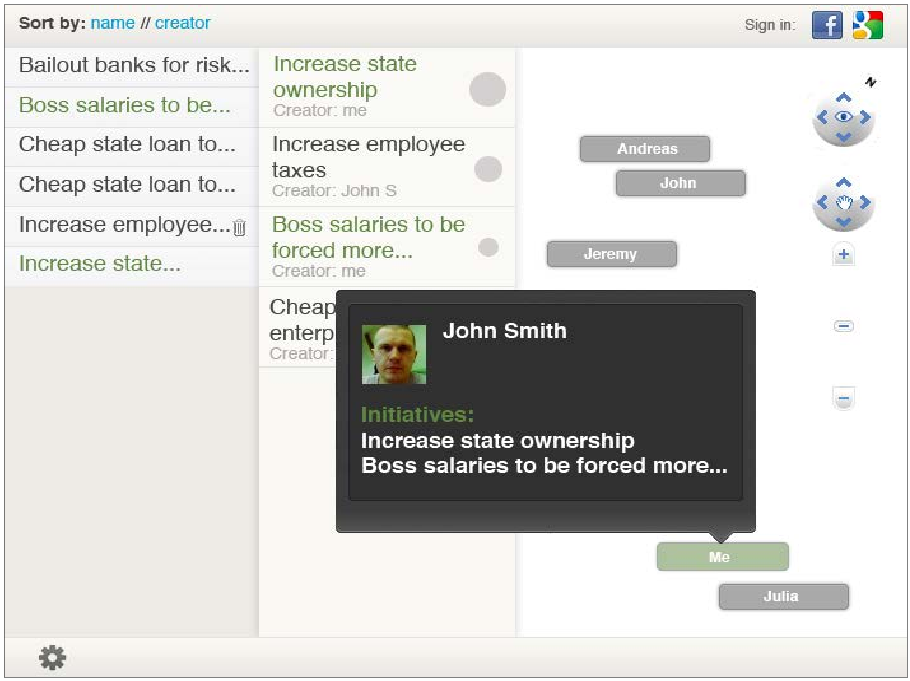 Figure 1: MDS analysis displays the closeness of users, based on their prioritized list of initiatives. If two points are close, these users share similar civic priorities.
Bridging Connectivity and Action
The prototype allows a user to "draw a circle" around their neighbors on the map. This action triggers the creation of a virtual collaboration space (e.g., a Wiki, a Facebook group, or a Google Doc).
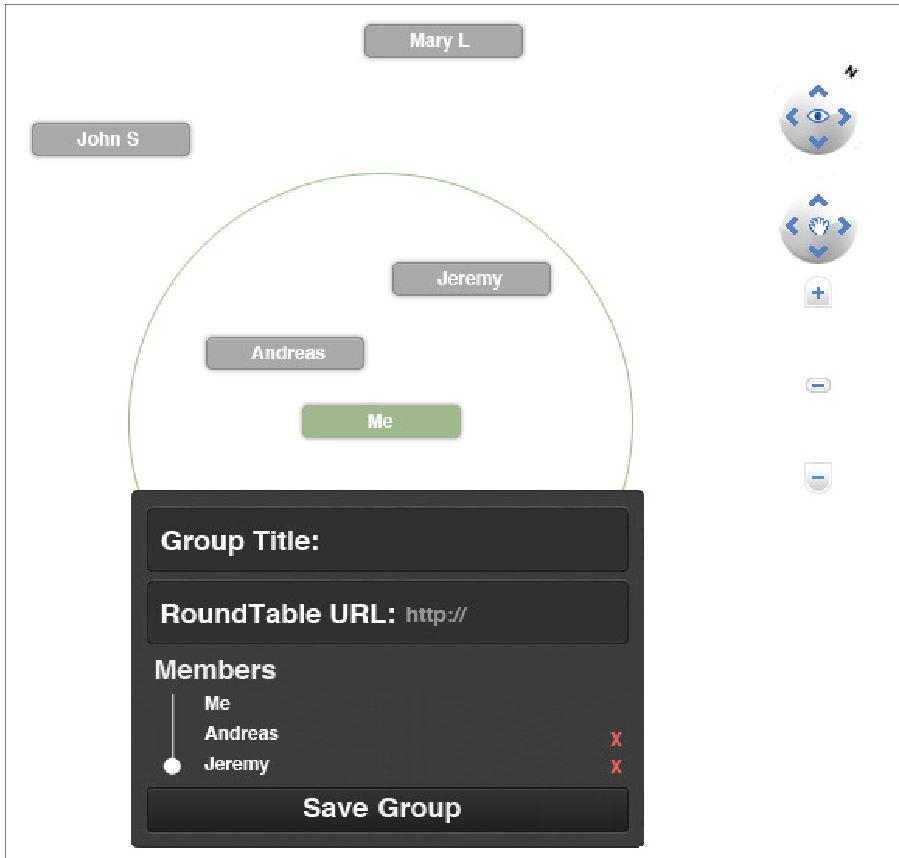 Figure 2: Turning similarity into solidarity. Users can define a radius to invite nearby potential partners into a dedicated working group.
This approach shifts the role of the user from a passive "submitter of ideas" to an active community organizer.
Conclusion and Outlook
Initiative Mapper proves that for marginalized groups, the "social" aspect of social media is its most potent tool for governance. By visualizing ideological proximity, the platform reduces the friction of finding allies.
Limitations: While the prototype is promising, it still requires a critical mass of users to be effective (the "Network Effect"). Furthermore, the translation from a "Working Group" to an actual "Legislative Change" remains dependent on the government's willingness to listen—a hurdle no software can solve alone.
The Future: As we move toward 2026, integrating AI-driven translation and automated policy summarization could further lower the barrier for the "cultural and linguistic minorities" highlighted in this pioneering 2011 study.