
Smart Glasses: Bridging Human Context and Social Networks via Face Recognition
Categories and Subject Descriptors
This paper presents "Smart Glasses," a mobile Augmented Reality (AR) architecture that bridges real-world interactions with social networks via face recognition. The system leverages a hybrid processing model, combining local face detection on Android devices with cloud-based identification against personal contact lists.
TL;DR
Published in 2011, this paper outlines a visionary architecture for Augmented Reality (AR) glasses that solve a universal social pain point: forgetting names. By combining local mobile processing with cloud-based face recognition, the authors created a system that identifies contacts in real-time and overlays their latest social media activity directly onto the wearer's field of view.
Background Positioning
In the landscape of 2011, "AR" was mostly synonymous with GPS-based overlays on smartphones. This paper represents a transition from simple Location-Based AR to Computer Vision-Based AR. It sits at the intersection of mobile computing and social networking, anticipating the current "Social AR" trend by over a decade.
The Core Problem: The Complexity Barrier
The authors identify two major hurdles in the early 2010s AR scene:
- Hardware Polarization: AR was either limited to low-fidelity smartphone apps or tethered to bulky, "clumsy" liquid-cooled notebook rigs.
- Development Friction: Creating an AR app required developers to build the entire stack—from image processing to backend integration—from scratch.
The "Smart Glasses" project aimed to provide a Runtime Environment (RTE) that abstracted the environmental sensing, allowing developers to focus purely on the service logic.
Methodology: Hybrid Cloud Architecture
The architecture (Figure 2) follows a strategic split-processing model to handle the limitations of 2011-era mobile hardware:
- Local Tasks (On-Device): Face detection and tracking. This ensures the "green box" around a face stays locked in real-time without needing a round-trip to the server.
- Cloud Tasks (Backend): The actual extraction of facial features and comparison against the "Gallery" (contact list). This offloads the heavy memory and compute requirements of biometric matching.
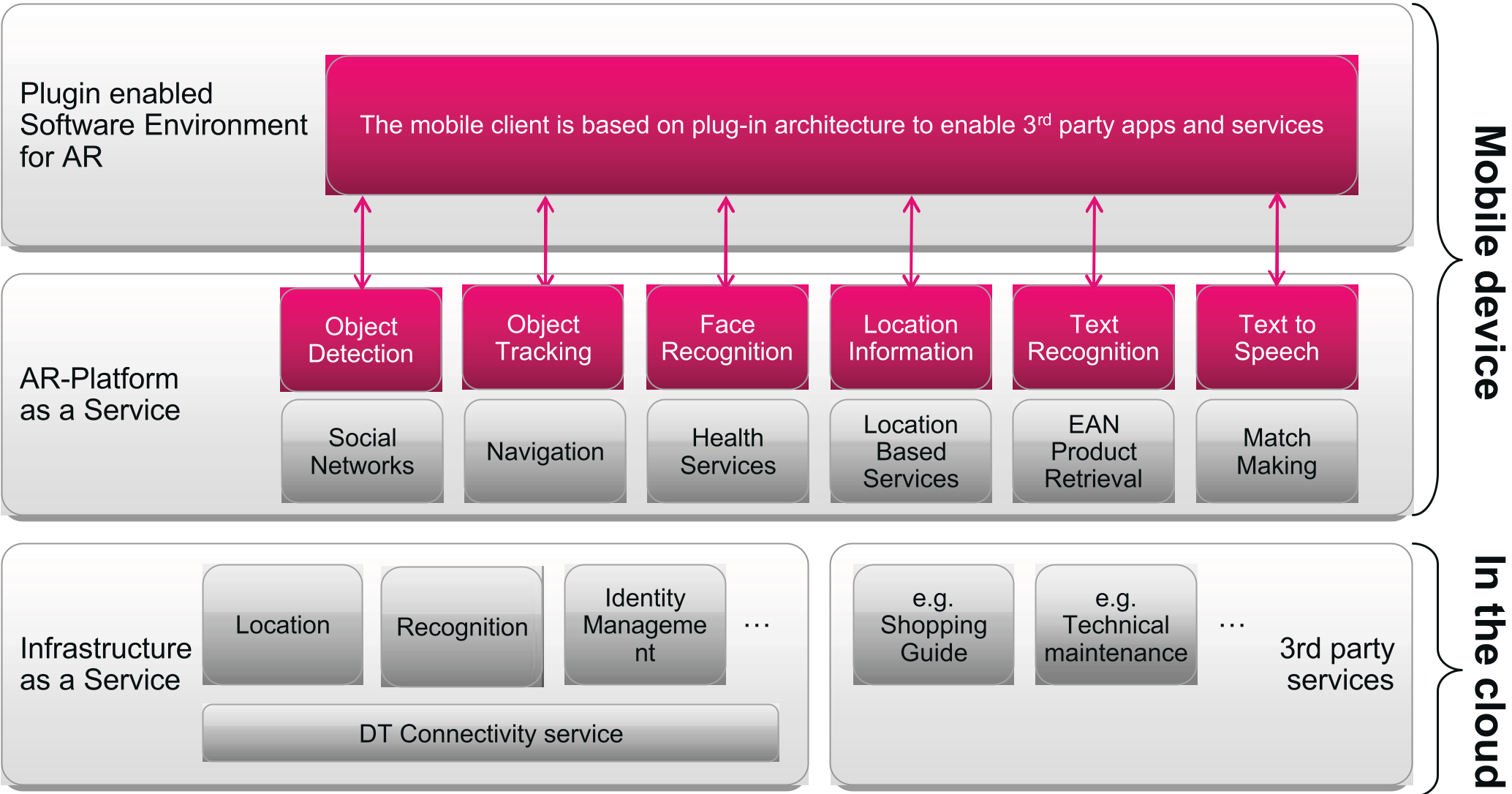 Figure 2: The system architecture showing the link between the Android client, the AR display, and the Cloud Services.
Experiments and Multi-Platform Support
The study demonstrated three distinct hardware configurations:
- Android Smartphone: Serving as both the sensor and the display.
- Microvision Nomad: A monocular wearable display.
- Prototype Goggles: Integrated see-through displays for a more "invisible" footprint.
By using a plugin-based architecture, the authors showed that the same backend could serve diverse "social" information, from professional affiliations to the latest status updates on social networks.
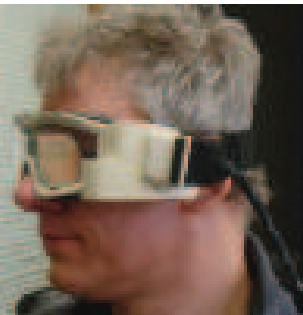 Figure 1: Comparison between the smartphone UI (left) and the HUD view in the AR goggles (right).
Critical Analysis & Conclusion
Takeaway
The paper is a masterclass in pragmatic AR design. By recognizing that mobile CPUs of the time were too weak for high-accuracy face matching, the authors focused on an "Open Architecture" that leveraged the cloud, a precursor to the modern "API-first" approach in AI.
Limitations & Future Outlook
While technically sound for 2011, the paper glosses over Privacy and Consent—a topic that eventually led to the social backlash against Google Glass a few years later. Furthermore, the reliance on a "personal contact list" gallery mitigated some recognition difficulty, but scaling this to "open-world" recognition remains a challenge even today.
Ultimately, this work laid the groundwork for an ecosystem where AR isn't just about seeing gadgets in the air, but about contextualizing the humans we interact with every day.