
From Caveman to Gentleman: Revolutionizing NPC Social Dynamics in AAA Games
From caveman to gentleman: a CiF-based social interaction model applied to conan exiles
This paper introduces Comme il Faut - Exiles (CiF-Ex), an advanced social interaction model for NPCs based on the CiF architecture. Implemented as a mod for the AAA game Conan Exiles, it integrates the OCC emotion model and a nuanced belief system to enable non-scripted, emergent social behaviors.
TL;DR
Researchers have developed CiF-Ex, a social interaction framework implemented in the AAA title Conan Exiles. By moving away from rigid dialogue trees and adopting a rule-based engine that accounts for emotions (OCC model) and social beliefs, they created NPCs that react dynamically to players and each other. The result? A 57% increase in player engagement time and a significant jump in character believability.
The Problem: The "Cardboard" NPC Syndrome
In most modern RPGs, you can save the world, but you can't have a meaningful, unscripted conversation with a village elder. Dialogue is usually a "one-and-done" branching tree. Once you've clicked all the options, the NPC reverts to a static loop.
The authors argue that the bottleneck is Authoring Burden. Creating a unique reaction for every possible combination of player choices is an exponential problem. To solve this, we need a system that calculates social reactions on the fly—not a script that predicts them.
Methodology: Building a Social Brain
CiF-Ex (Comme il Faut - Exiles) isn't just a list of lines; it’s a simulation of social state. The architecture rests on three unique pillars that improve upon previous iterations (like the original CiF and CiF-CK):
- Emotional Granularity (OCC Model): Instead of an NPC just being "Angry" (Boolean), they have a scalar value for Anger that decays over time. Using the OCC Model of Emotion, the system tracks 22 different emotional states, including complex ones like Resentment or Gloating.
- Theory of Mind (Social Network Beliefs): In previous models, an NPC knew how they felt about you. In CiF-Ex, NPC A can have a belief about how NPC B feels about NPC C. This enables behaviors like Envy—if Lydia thinks Benor is flirting with the person she loves, she will actively initiate negative interactions with him.
- The "Neutral" Ground: Real life isn't binary. CiF-Ex adds a "Neutral" outcome to social exchanges, preventing NPCs from always giving extreme positive or negative reactions.
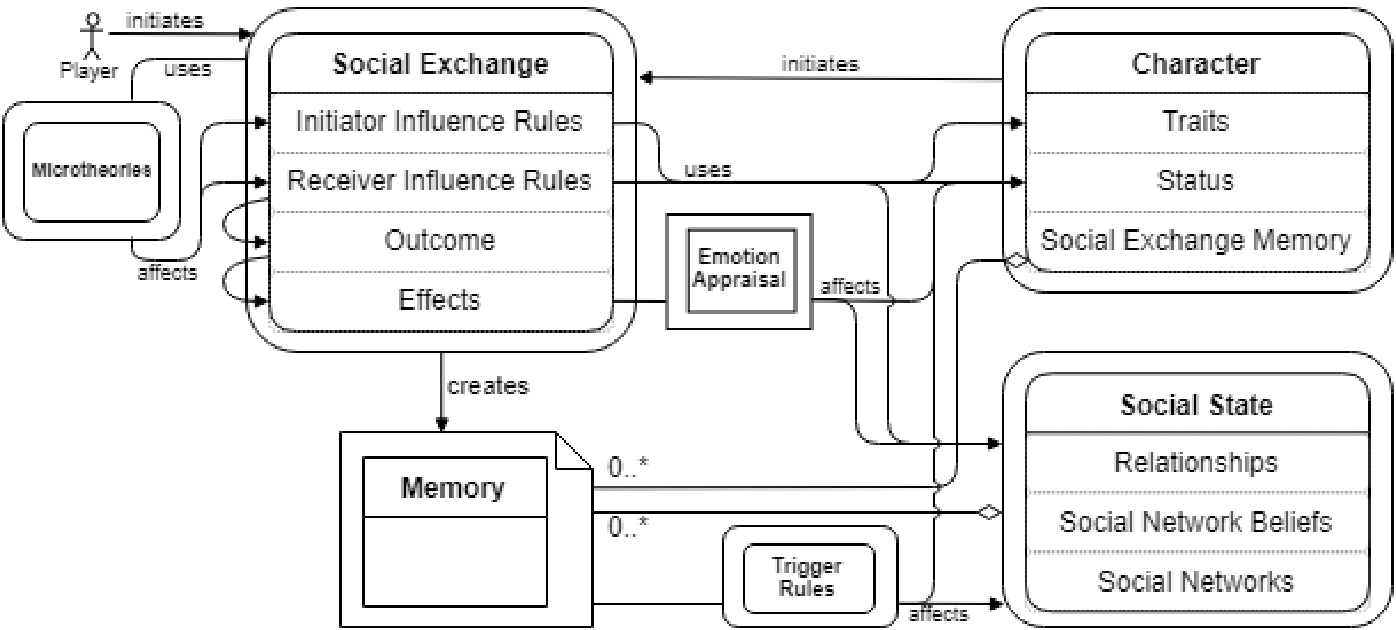 Figure 1: The interaction between Social State, Trigger Rules, and the internal Desire Formation of characters.
Why it Works: The Emotion Appraisal Loop
When a "Social Exchange" (SE)—like a compliment or an insult—occurs, the system triggers a CiF Cycle:
- Desire Formation: The NPC looks at its traits (e.g., "Shy"), its current status (e.g., "Hungry"), and its history with you to decide what it wants to do.
- Performance: The action is carried out via dialogue and animation.
- Social Fallout: This is the secret sauce. The system broadcasts the event to everyone nearby. Witnesses update their beliefs and emotional status based on what they saw, creating a ripple effect in the social fabric of the camp.
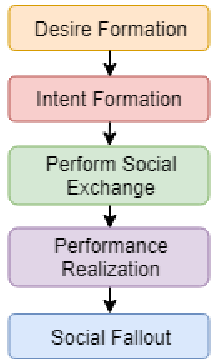 Figure 2: The iterative process of Intent and Social Fallout.
Experimental Results: Proving the Value
The researchers tested CiF-Ex against the "Vanilla" NPCs in Conan Exiles. Despite the vanilla NPCs having high-quality professional voice acting, players overwhelmingly preferred the CiF-Ex NPCs.
- Enjoyment: Increased significantly (p=0.007).
- Believability: Players found the CiF-Ex characters more "human-like" and significantly less predictable in a boring way, but still logically consistent.
- Bonfire Time: This was the most striking metric. Players spent 57% more time hanging out near the NPCs' campfire, suggesting that the "social life" of the NPCs made the location itself more valuable.
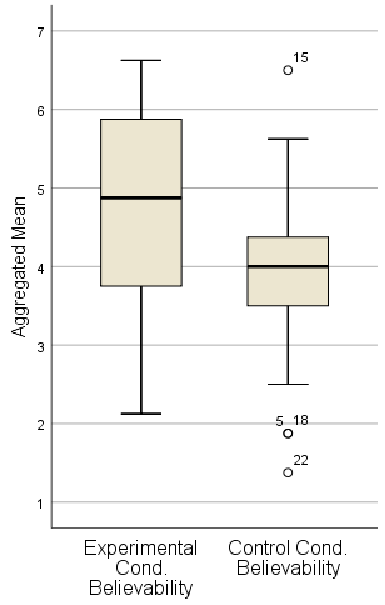 Figure 3: Statistically significant improvement in NPC Believability compared to vanilla game logic.
Critical Insight & Future Outlook
The brilliance of CiF-Ex is that it treats socializing as a survival mechanic. By linking primary needs (Hunger/Thirst) with social actions (Ask for Food), the NPCs have a reason to talk to you beyond just being lore dispensers.
Limitations: The study was short (15-30 mins), meaning the "novelty effect" might have influenced results. Furthermore, while the model manages social logic perfectly, it doesn't solve the natural language problem—dialogue lines are still pre-authored.
The Future: Imagine CiF-Ex paired with a Large Language Model (LLM). The CiF-Ex framework could serve as the "Social Reasoner" (choosing the emotional intent), while the LLM acts as the "Speech Synthesizer" (generating the specific words). This combination could finally bridge the gap between "scripted cavemen" and "unscripted gentlemen."