
Centrality-Weighted Opinion Dynamics: Bridging Social Influence and Network Topology
Centrality-Weighted Opinion Dynamics: Disagreement and Social Network Partition
This paper introduces a centrality-weighted opinion dynamics model that integrates social network topology with nodal importance. By weighting individual influence based on network centrality (specifically degree centrality), the author develops a spectral partition algorithm that identifies social clusters based on opinion disagreement.
TL;DR
This research presents a novel mathematical framework for social network partitioning by weighting human influence through network centrality. By evolving opinions over a "centrality-weighted" graph, the author provides a spectral algorithm that captures the "disagreement state" of a group, achieving perfect accuracy on classic benchmarks like the Zachary’s Karate Club.
Motivation: Why Degree Matters
In any social ecosystem—be it academic citations or Twitter feeds—opinions are not treated equally. A "retweet" from a highly connected influencer carries more weight than one from a peripheral user.
Existing models like the DeGroot model rely on an "influence matrix," but they rarely explain how this matrix is formed. The author addresses this by injecting social conformity and heterogeneity into the dynamics:
- Individuals move their opinions toward their neighbors.
- Neighbors with higher degree centrality (more connections) exert more pressure.
Methodology: The Weighted Influence Matrix
The core of the paper lies in the construction of the influence matrix and its Laplacian . Unlike the standard symmetric Laplacian used in most spectral clustering, this model uses:
While is asymmetric, the author rigorously proves that if the underlying social graph is connected and undirected, remains diagonalizable with real eigenvalues. This is a crucial finding, as it allows us to use spectral decomposition just like the standard Fiedler method, but with the added "intelligence" of nodal importance.
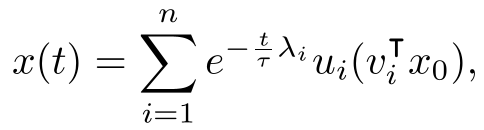 The solution to the opinion evolution is a sum of decaying modes, where the slowest decay (the smallest non-zero eigenvalue) represents the most persistent disagreement.
Identifying Groups via Disagreement
The author's Social Choice Algorithm works by identifying the "disagreement state"—the projection of opinions into the subspace orthogonal to the consensus.
- Step 1: Find the eigenvector associated with the smallest non-zero eigenvalue .
- Step 2: The signs of the components in determine the cluster.
Experimental Validation: Zachary’s Karate Club
The Zachary’s Karate Club is the "MNIST" of social network analysis, representing a real-life split of a club into two factions.
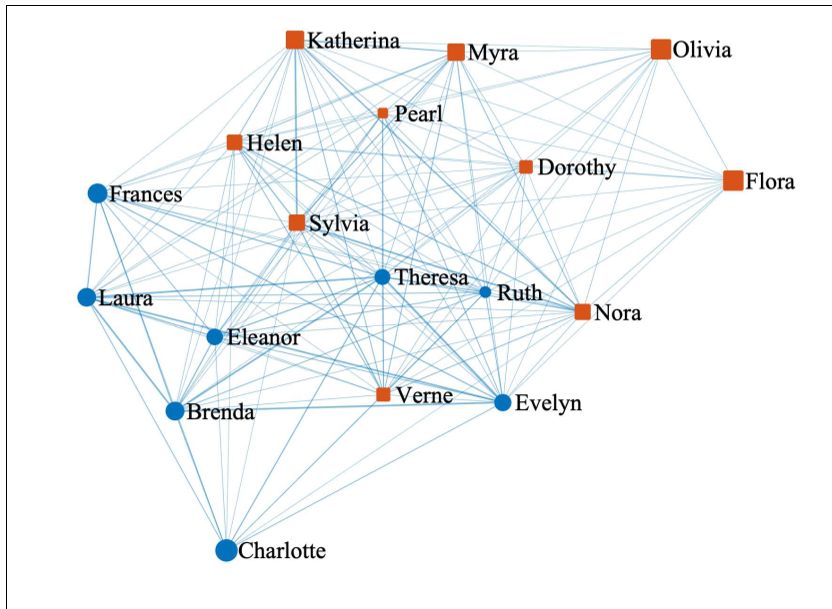 Fig 1: The model correctly assigns every single member to their actual post-split group. Notably, it outperforms the standard Fielder vector, which typically misclassifies Node 3.
Critical Analysis & Insight
The brilliance of this work is the physical intuition that disagreement is the residual of a dynamical process. Most clustering algorithms are static; they look at a snapshot of a graph. By treating clustering as the result of a thwarted consensus, the author aligns the math with the psychological reality of group fission.
Limitations
- Initial States: When eigenvalues have high multiplicity (e.g., in highly symmetric graphs like complete graphs), the partition becomes dependent on the initial opinion , which is often unknown.
- Directed Graphs: The current proofs for real eigenvalues rely on the symmetry of the original adjacency matrix . Real-world social media (Twitter/X) is directed, requiring further theoretical extension.
Conclusion
Centrality-weighted opinion dynamics offer a powerful lens for understanding social polarization and community structure. It proves that who you are connected to (Topology) and how important those connections are (Centrality) are inseparable when predicting how a group will eventually split.