
Centralized Nucleation: Why Social Inequality is the Secret to Network Survival
Centralized nucleation in online networks leads to high social inequality
This study investigates the structural dynamics of 10,122 online communities, revealing that long-term network survival depends on a specific "nucleus-to-periphery" architecture. Using over a decade of interaction data, the authors identify that stable networks maintain a core-shell structure where a small, dense nucleus supports a large, transient periphery.
TL;DR
In the digital age, we often champion equality, but new research suggests that for an online community to survive, it needs a specific type of inequality. By analyzing 10,000+ communities over 12 years, researchers discovered that stable networks consist of a "nucleus" of elite, long-term users surrounded by a "periphery" of short-lived newcomers. The magic ratio for survival? Roughly one nucleus member for every three peripheral members.
The "Broken Ladder" of Social Mobility
Most of us assume that if we join a community and stay active, we will eventually become "core" members. The data tells a different story.
The researchers found that social mobility is predominately negative. It is far easier to lose status (in-degree) than to gain it. This creates a "glass ceiling" where most users stay in the sparse outer shells (the periphery) and eventually churn, while a tiny fraction remains locked in a nearly impenetrable, highly active nucleus.
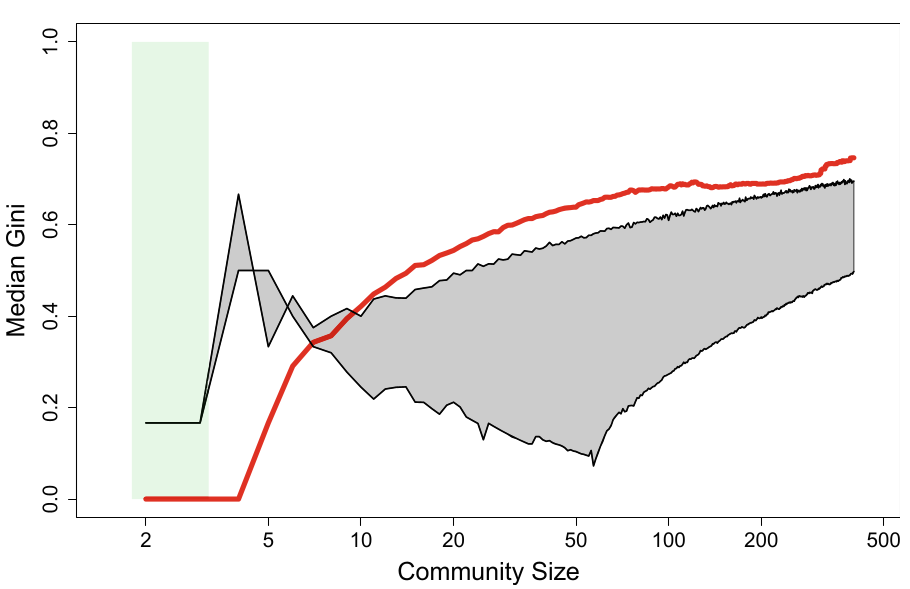 Figure 1: The transition matrix shows a strong negative drift; the green stripe below the diagonal indicates that most users lose connectivity over time.
The Nucleus-to-Periphery Ratio: The Metric of Success
Why doesn't every network just collapse if mobility is so hard? The answer lies in the Nucleus-to-Periphery ratio ().
The study defines the "Nucleus" as a group where users are embedded in fully connected neighborhoods (clustering coefficient of 1). The "Periphery" is the cloud of less-connected actors.
The researchers discovered a "Goldilocks zone":
- (1:3 Ratio): This is the sweet spot. Networks with this proportion of elite-to-casual users show the highest future activity levels.
- Too much Nucleus: The community becomes an insular echo chamber with no "audience" or new ideas, leading to stagnation.
- Too much Periphery: The community lacks a stable "glue" to hold it together, leading to fragmentation and collapse.
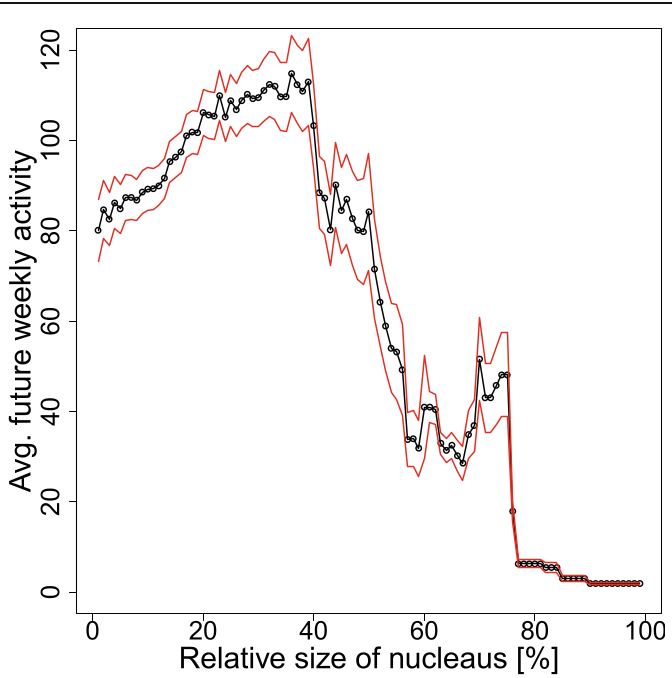 Figure 2: Future activity peaks at a specific ratio. Deviating from this balance—especially toward a heavy nucleus—signals an impending collapse.
Methodology: Beyond Preferential Attachment
While the "Rich Get Richer" (Preferential Attachment) model explains some growth, it fails at the extremes. This study shows that:
- Small Groups are Egalitarian: In groups of <5 people, connectivity is distributed equally.
- Size Breeds Inequality: As soon as a group grows beyond the "Dunbar-like" seed stage, Gini coefficients skyrocket to 0.8 (higher than the wealth inequality of any real-world country).
Critical Insight: The "Fertilization" Effect
The most profound takeaway is the value of the "peripheral" user. Though they are short-lived and have low centrality, they act as the "fertilizer" for the nucleus. They provide the audience for the elite members and bring in external information (weak ties) that keeps the core engaged.
Academic Takeaway
If you are building or studying a social system, don't just focus on the "power users." The longevity of the elite is paradoxically dependent on the constant turnover of the "commoners." A healthy network isn't one where everyone is equal; it's one that balances a stable, elite core with a vibrant, rotating fringe.
Conclusion
This research provides a new lens for understanding the "physics" of social networks. High social inequality isn't a bug; in the context of network nucleation, it’s a structural feature that enables long-term survival—provided the ratio remains balanced.