
Beyond Symbols: Why Empathy is the Missing Link in Intercultural KDD and HCI Design
Challenges from Cross-Disciplinary Learning Relevant for KDD Methods in Intercultural HCI Design
This paper explores the cross-disciplinary challenges of integrating Knowledge Discovery in Databases (KDD) within Intercultural Human-Computer Interaction (HCI) design. It proposes a conceptual framework centered on empathy and a common conversation code to bridge the gap between technical data mining and cultural user experience.
TL;DR
Intercultural HCI is often reduced to "translating text," but this paper argues that true global design requires a deep, cross-disciplinary alignment of mentalities. By integrating empathy and a common conversation code, the author provides a roadmap for using KDD (Knowledge Discovery in Databases) methods to uncover cultural nuances that data alone cannot explain.
Background: The Specialist-Generalist Paradox
In the modern information age, we face a crisis of knowledge quality. Experts are becoming "numerically overwhelmed," leading to hyper-specialization (losing sight of interdependencies) or superficial generalism. This research positions itself as a theoretical bridge, aiming to fill the gaps in "interconnection knowledge" specifically where cultural studies meet computer science.
The Problem: The Failure of "Surface-Level" Localization
Most UI localization focuses on the "what": different colors, symbols, or currencies. However, the author points out that successful design must address the "why":
- Thought Patterns: Linear vs. Non-linear logic.
- Power Structures: How hierarchical vs. flat societies interact with authority-driven software features.
- The Interpretation Gap: KDD methods often fail because the "knowledge" discovered is interpreted through the developer's cultural lens, not the user's.
Methodology: The Hierarchy of Intercultural Success
The paper proposes a layered approach where Intercultural Communication serves as the bedrock for all technical engineering.
1. The Common Conversation Code
To prevent "frictional loss" in interdisciplinary teams, the author suggests a matrix that aligns:
- Terminology: Ensuring a "Philosopher" and a "Data Scientist" mean the same thing when they say "User Experience."
- Empathy as a Tool: Utilizing the Principle of Charity—assuming the best possible interpretation of the other's meaning—to navigate the "Web of Belief."
2. The Intercultural HCI Design Model
The author references a developed matrix that tracks variables such as:
- Cognitive Style & State
- Idiolect & Mother Tongue
- Role & Status in Society
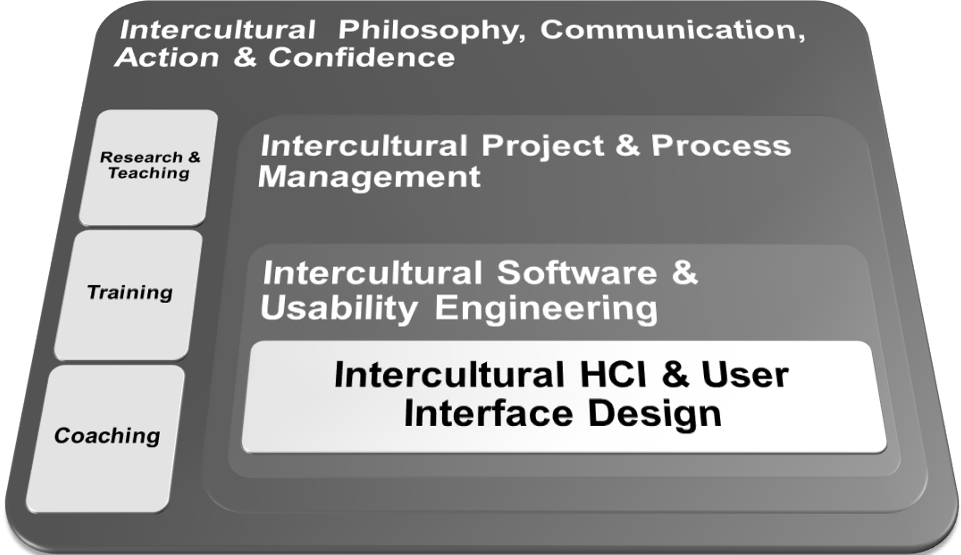 Figure 1: The levels of intercultural know-how essential for successful product design.
Experiments and Insights: The Hard Problem of AI
The paper discusses why computers cannot yet "solve" intercultural design automatically:
- Lack of Environmental Sensors: Machines lack the "qualia" (subjective sensations) of cultural experience.
- The Bootstrapping Problem: An adaptive system cannot adapt to a user it has never met before; it lacks the initial cultural context to begin learning.
Key Recommendation:
Designers should not only use an inductive approach (building theories from collected data) but also a deductive approach (deriving hypotheses based on cultural universals and testing them empirically).
Critical Analysis: A Human-Centric Future for KDD
The author concludes that while KDD can handle "Big Data," the "Knowledge Discovery" part remains a human-empathy task. The integration of usability into the software development lifecycle remains "widely unresolved" in international projects because we treat it as a technical challenge rather than a communicative one.
Limitations: The paper is primarily conceptual and philosophical. While it provides a robust logical framework, specific quantitative benchmarks (e.g., actual speed-up or error reduction in UI tasks) are left for "outstanding future studies."
Conclusion
This work is a call to action for the KDD community: Data is not culturally neutral. To build systems that truly resonate across borders, we must move beyond data mining and into "meaning mining," using empathy as our primary sensor.