
From Art to Science: Masterminding the Data Crowdsourcing Pipeline
Challenges in Data Crowdsourcing
This paper provides a comprehensive taxonomic overview of "Data Crowdsourcing," a paradigm that integrates human intelligence into data management pipelines. It defines a multi-dimensional design space and proposes a systematic four-step framework (Preparation, Decomposition, Management, External Integration) to optimize the fundamental trade-offs between accuracy, cost, and latency.
TL;DR
While AI continues to advance, certain data tasks—like aesthetic judgment, entity matching, and nuanced content moderation—remain firmly in the human domain. This paper by Hector Garcia-Molina and his colleagues at Stanford and UIUC deconstructs "Data Crowdsourcing" into a technical discipline. It provides a blueprint for building systems where computers act as the coordinators and humans provide the "natural intelligence" needed to clean, augment, and process complex datasets.
The "Iron Triangle" of Crowdsourced Data
The fundamental challenge of data crowdsourcing is a three-way tug-of-war between Accuracy (Uncertainty), Cost, and Latency.
- Uncertainty: Humans make mistakes, are biased, or may be "spammers."
- Cost: Every human "processor cycle" costs real money.
- Latency: Recruiting and waiting for human responses is orders of magnitude slower than millisecond-level CPU operations.
The authors argue that the goal isn't just to get the job done, but to optimize the "bang-for-the-buck" by intelligently routing tasks and aggregating noisy results.
Methodology: The Architecture of Human Computation
The paper formalizes the crowdsourcing space across dimensions like workers, coordinators, and output types. Most crucially, it outlines a systematic workflow for designing a solution:
1. The Building Blocks (Preparation)
Before a single task is issued, designers must decide on the Task Interface. How a worker sees the data (e.g., zooming into a photo or ranking a list) directly impacts error rates. This is where "Dark Arts" meets data science—psychological factors like pop-out and anchoring can make or break a project.
2. The Current State Evaluator (Decomposition)
Rather than just taking a simple majority vote, sophisticated systems use a Current State Evaluator. This component takes all available evidence—worker reliability history, incoming answers, and external data—to calculate a confidence score. If the score is high enough, the system stops (saving money); if not, it identifies which specific task will most likely resolve the remaining ambiguity.
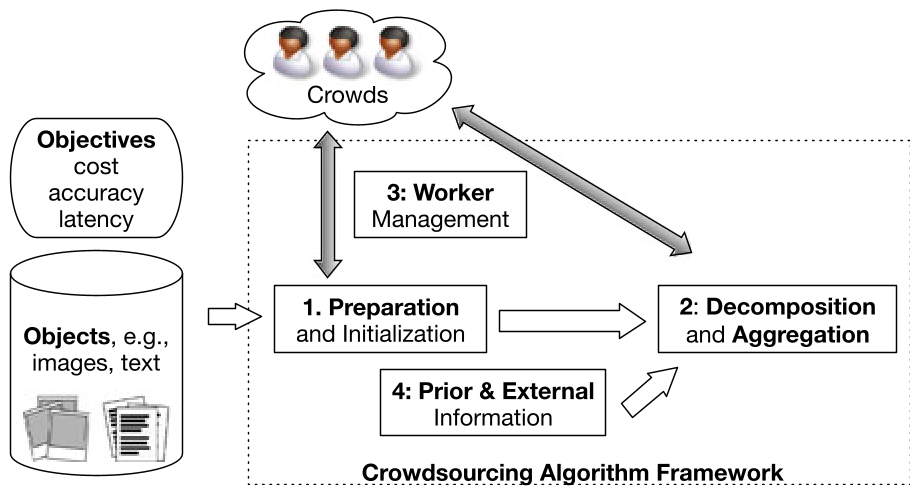 Figure 1: The Iterative Design Process for Crowdsourced Solutions.
Case Study: The "Maximum" Problem
Consider finding the "best" candidate for a job among 32 applicants. A brute-force approach might require hundreds of comparisons. Using the paper's Elimination Stage methodology, the system groups records into pairs, asks for comparisons, eliminates the losers, and moves to the next stage. This logarithmic reduction in tasks ensures that the most expensive "human cycles" are spent only on the most difficult, high-value comparisons.
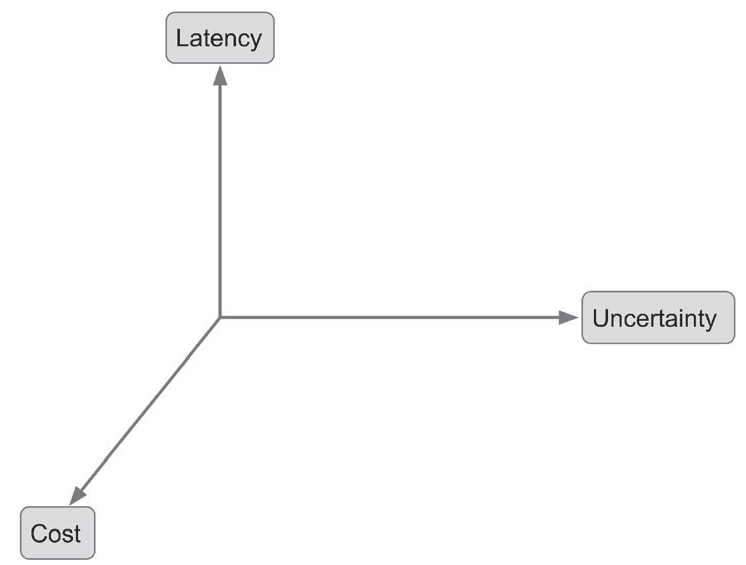 Figure 2: The Crowdsourcing Space: (a) Roles, (b) Granularity, and (c) Fundamental Trade-offs.
The Future: Beyond Mechanical Turk
The paper concludes by pointing out several "Elephant in the Room" challenges:
- Batching Bias: Workers often expect variety; if you show them 10 spam emails in a row, they might label the 11th as "not-spam" just because they've seen too much of the same.
- Fluidity: Marketplace demographics change by the hour. A task that gets 95% accuracy on Tuesday might hit 70% on a Saturday night.
- Active Learning Integration: The ultimate goal is a closed-loop system where a Machine Learning model identifies its own "blind spots" and automatically recruits humans to provide labels for exactly those points.
Critical Insight
This work signals a transition in the industry. We are moving away from "throwing tasks over the wall" to platforms like Amazon Mechanical Turk. Instead, we are entering an era of hybrid architectures where human intelligence is treated as a high-latency, high-variance, but incredibly flexible "API call" within a larger automated system.
Conclusion: If you are building data products in 2026, crowdsourcing is no longer a manual backup plan; it is a first-class citizen in the data engineering stack that requires rigorous algorithmic management.