
Bridging the Empathy Gap: The Real-World Challenges of Emotion Al in Video Calls
Challenges of Emotion Detection Using Facial Expressions and Emotion Visualisation in Remote Communication
This paper explores the technical and social challenges of real-time emotion detection during video conferencing. The authors developed a custom web-based tool using WebRTC and face-api.js to detect facial expressions and provide instant visual feedback via colors or emojis to study interpersonal empathy in remote communication.
TL;DR
As remote communication becomes the default, we lose the subtle "body language" that facilitates empathy. This paper dives into the development of a real-time emotion detection system for video conferencing, revealing that while we can visualize emotions using colors and emojis, current AI still struggles with environmental noise (lighting/resolution) and the complexity of human "neutral" states.
Contextualizing Content: The Affective Wall
In the post-pandemic era, Video-Mediated Communication (VMC) often feels "flat." We lose the peripheral cues that help us sense a colleague's frustration or a friend's joy. The field of Affective Computing seeks to bridge this by using AI to decode facial micro-expressions. However, moving these systems from controlled labs to messy, real-world living rooms introduces a host of technical and psychological friction.
The Problem: Why Emotion AI Fails in the Wild
The authors identify four critical bottlenecks hindering current emotion detection:
- Inconsistent Data Quality: Ambient light variations and pixelated video streams (due to unstable bandwidth) drastically reduce the accuracy of landmark detection.
- The Ground Truth Paradox: How do we know what someone really feels? Self-reporting is subjective and intrusive, often interrupting the very conversation being measured.
- Visualization Ambiguity: Is "Yellow" always "Happy"? Emojis and colors are interpreted differently across cultures and individuals.
- Hardware Inconsistency: Differences in webcams lead to disparate feature extraction results.
Methodology: Building the Affective Feedback Loop
The researchers built a web application utilizing WebRTC for peer-to-peer streaming and face-api.js for browser-side inference.
The Tech Stack
- Face-api.js: A JavaScript module utilizing a 68-point Face Landmark Detection Model.
- Inference: It maps points around the eyes, eyebrows, nose, and mouth to calculate probabilities for 7 states: Anger, Disgust, Fear, Happiness, Sadness, Surprise, and Neutral.
- Visualization: The winning emotion is broadcast back to the partner using either a background color shift or a floating emoji.
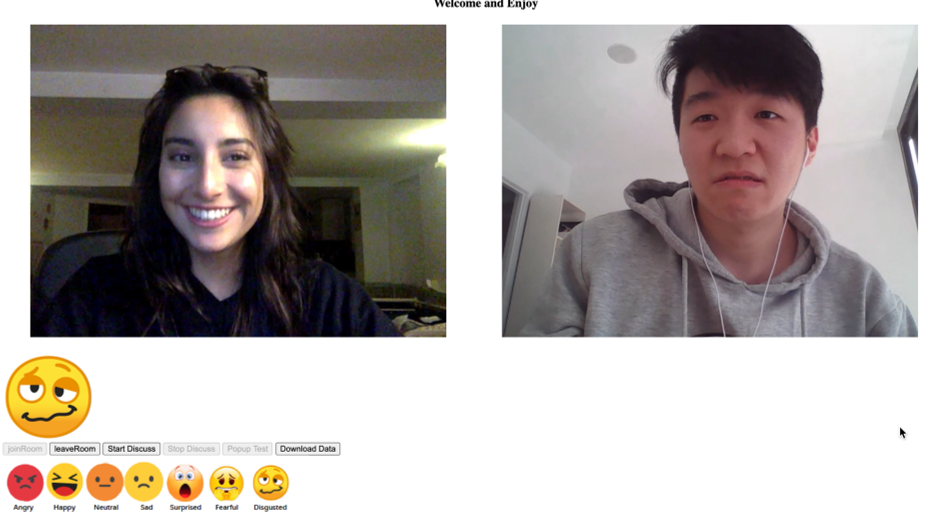 Figure 1: Comparison of Emoji-based (left) and Color-based (right) emotional feedback.
Experimental Insights
In a study with 12 participants, the team analyzed over 140,000 data points. Their findings highlight the "Neutral Bias":
- System Accuracy: The AI matched the user's self-reported emotion only 54.1% of the time.
- The "Neutral" Trap: 73.5% of the system's errors were due to the AI predicting a "neutral" state when the user actually felt a specific emotion. This suggests that humans in professional or remote settings often "mask" their facial intensity.
- Modality performance: There was no winner between colors and emojis. Both helped users identify their partner’s feelings with ~67% accuracy, suggesting the presence of feedback matters more than the format.
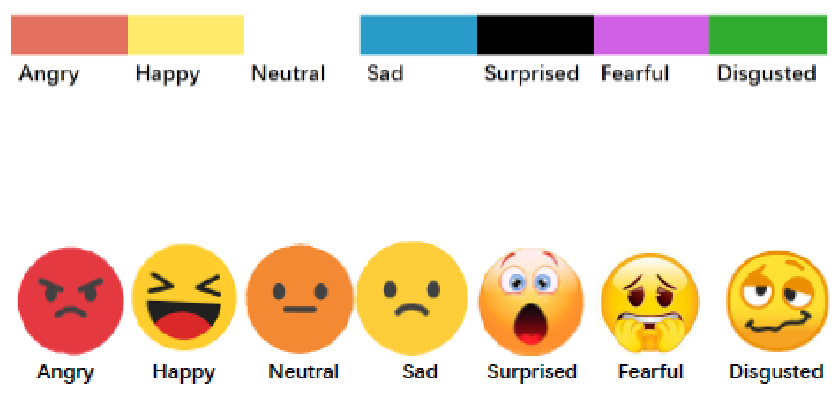 Figure 2: Real-time interaction showing the background color changing to yellow to represent a detected 'Happy' state.
Critical Analysis & Future Outlook
The study’s most profound insight is the Inductive Bias of the models—they are trained on high-intensity datasets (like actors making faces) but struggle with the subtle, low-intensity expressions of a standard video call.
Future Work must integrate:
- Physiological Data: Utilizing PPG (heart rate) and skin temperature to validate facial cues.
- Context Awareness: Incorporating environmental factors (noise, time of day) into the emotion model.
- Longitudinal Sensing: Understanding that an emotion isn't a single frame, but a trajectory over time.
Ultimately, the goal isn't just to "detect" but to "connect." As we move toward VR/AR communication, these affective loops will be the key to making digital presence feel human again.
Conclusion
This research serves as a reality check for Affective Computing. While the tech is accessible via simple JS libraries, the path to a truly empathetic interface requires solving the "Neutral" detection problem and creating visualization standards that transcend individual preference.