
Beyond Substitution: The Rise of the "AI Supervisor" in Hospitality
Challenges in re-designing operations and jobs to embody AI and robotics in services. Findings from a case in the hospitality industry
This paper presents a longitudinal action research study on the implementation of the humanoid robot "Pepper" at an Italian resort's reception. It investigates how AI and robotics serve as an augmentation force in hospitality, introducing the novel professional role of the "AI Supervisor" for frontline employees.
TL;DR
Integrating AI into services isn't just about "plug and play." This action research study at an Italian resort reveals that humanoid robots like Pepper work best as an augmentation force. The real breakthrough isn't the robot’s hardware, but the emergence of the "AI Supervisor"—a new frontline role responsible for training the machine and enabling the customer.
Problem & Motivation: The Myth of the "Turnkey" Robot
Most managers view AI and robotics through the lens of cost-cutting—replacing expensive human labor with tireless machines. However, the hospitality industry relies on "thick" social interactions that "narrow AI" cannot yet replicate.
The researchers noticed a massive gap: while many papers theorize about robots, very few look at the messy reality of a hotel lobby. Why do guests find robots "creepy" or "useless"? The insight here is that Automated Social Presence (ASP) fails without human mediation. The problem isn't the technology; it's the lack of an organizational bridge between the machine's learning process and the guest's service expectations.
Methodology: Action Research with "Pepper"
The study followed a year-long deployment of the Pepper robot at a resort near Lake Garda. Unlike static software, this AI used supervised machine learning, meaning it required a "teacher."
The Operational Framework
The researchers tracked the transition of roles using a tripartite lens: Augmentation, Substitution, and Network Facilitation.
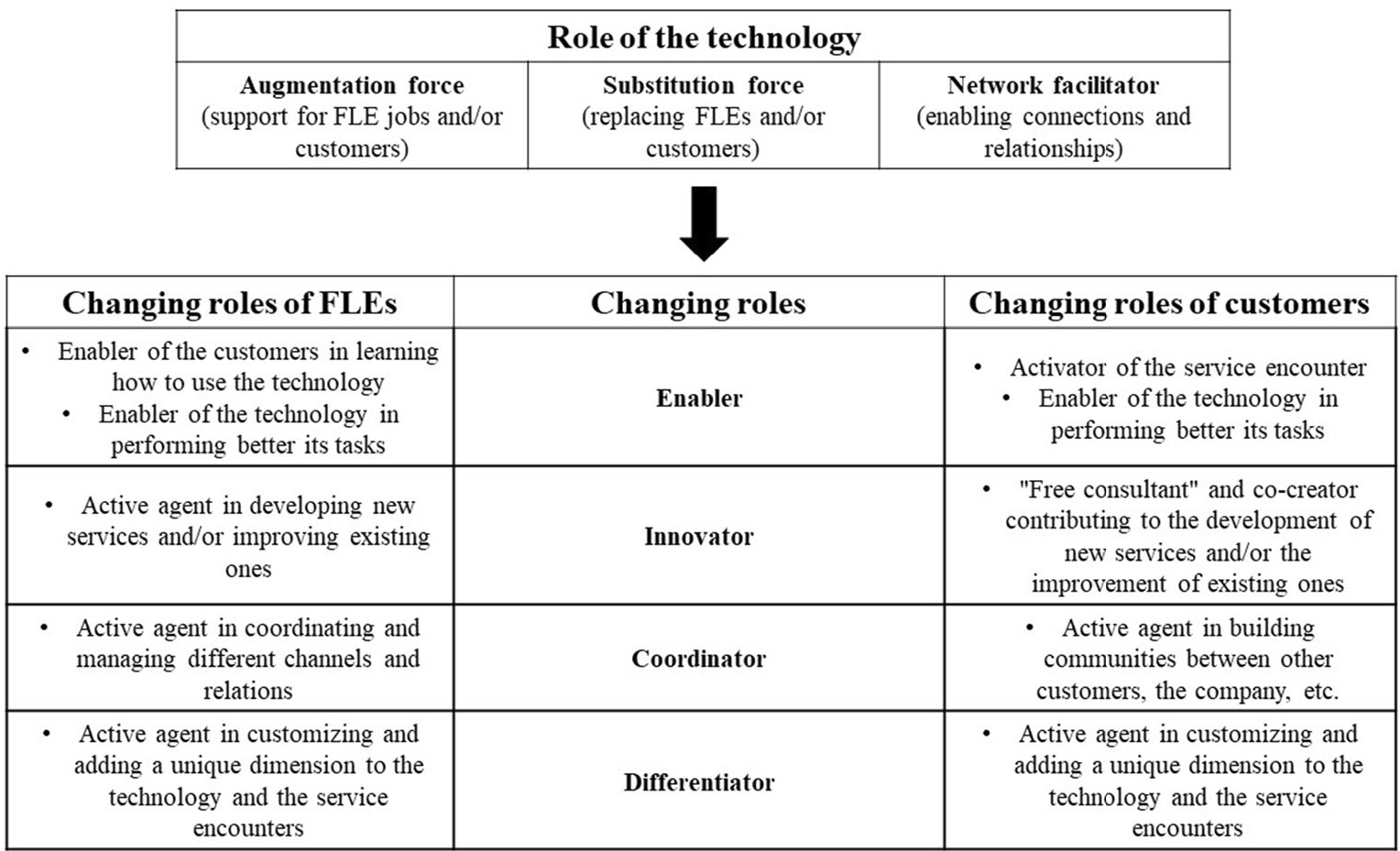 Figure 1: Conceptual framework of changing roles for technology, employees, and customers.
Methodology: The Core Architecture of Adoption
The implementation wasn't just technical; it was an organizational redesign across three phases:
- Context Mapping: Identifying the 280 most frequent guest questions.
- AI Training: Setting up the supervised learning flow.
- Monitoring & Mentoring: Observing 41,600 interactions to see where the "human-machine" handoff failed.
Key Finding: Introducing the "AI Supervisor"
The most significant contribution of this work is the definition of the AI Supervisor. This isn't an IT role; it’s a Frontline Employee (FLE) role.
- The Enabler Logic: The AI Supervisor supports the technology by checking if it understands the "tone" and "brand" of the hotel.
- The Bridge: They identify "non-coherent" questions (e.g., "Can you dance?") and retrain the AI to redirect users toward service-oriented goals.
- The Impact: Once FLEs started acting as enablers—introducing the robot during check-in rather than letting it sit as a toy—successful guest interactions jumped from 58% to 88%.
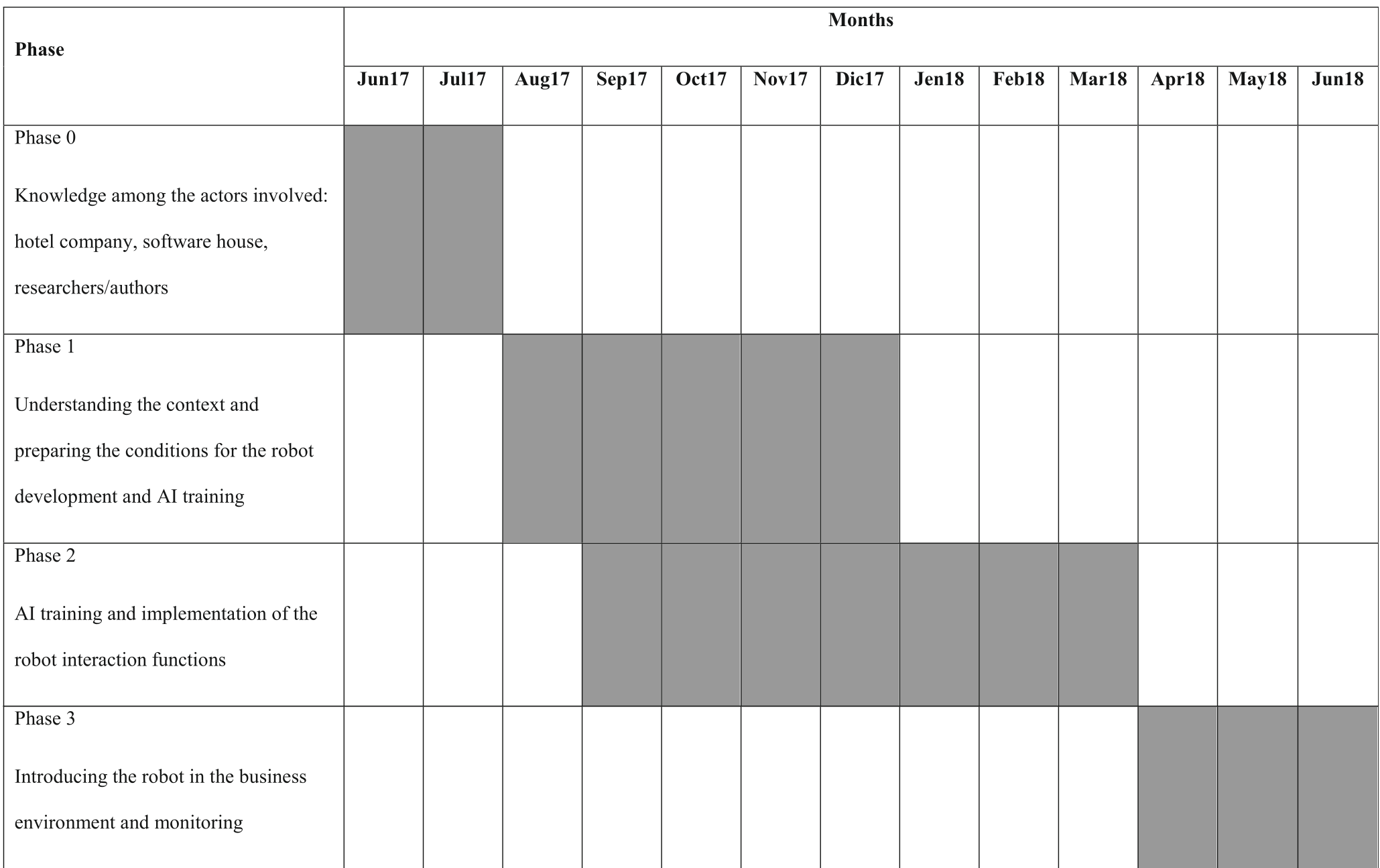 Table 1: The multi-month rollout showing the heavy emphasis on monitoring and role-redefinition.
Experiments & Results: Quantitative Success
The "learning" aspect of the AI was measurable. Initially, the AI was a mediocre performer, but through human supervision, its precision surged.
- AI Precision: 51.57% (April) → 75.33% (June).
- Customer Satisfaction: 1.83 → 4.10 (7-point scale).
- Interaction Quality: Consistent (relevant) questions increased from 32% to 52%.
The data proves that customers are co-creators. They only became "enablers" of the technology when the human staff "educated" them on the robot's purpose.
Critical Analysis & Conclusion
Takeaways
- Augmentation > Substitution: In high-touch industries, robots don't delete jobs; they shift them toward "coordination" and "innovation."
- The New Job Description: Recruitment for hospitality should now look for "Technology Readiness" (TR) alongside traditional soft skills.
Limitations & Future Work
The study was limited by a hardware failure (Pepper needed repairs) and the relatively short monitor window. Future research must ask: What if the AI Supervisor role is outsourced? If a software company trains the AI remotely, the "local flavor" of the service encounter might vanish, leading to a hollow, standardized guest experience.
Final Thought: The future of service isn't a choice between humans or robots—it's the management of the space between them.