
From Fans to Voters: How Election Discourse Evolves on Social Media
Changes in Referents and Emotions over Time in Election-Related Social Networking Dialog
This paper investigates the evolution of political discourse on Facebook during the 2008 U.S. Presidential election. By analyzing wall postings of major candidates (Obama, Clinton, and McCain) using LIWC, it identifies significant shifts in linguistic referents and emotional sentiment as the election deadline approached.
TL;DR
The 2008 U.S. Presidential election marked a turning point for digital democracy. This study reveals that Facebook "wall" conversations aren't static; they evolve from personal, positive reflections into competitive, balanced, and "other-directed" debates. As the election day nears, the language shifts from "I" and "You" to "Them," and the initial wave of optimism makes way for a gritty mix of praise and criticism.
Background: The Digital Public Sphere
Is social media a healthy "Public Sphere" for democratic deliberation, or a chaotic ground for irrational "Social Choice"? Positioning itself between Habermas’s optimism and social choice theory's skepticism, this paper examines the 2008 Facebook landscape to see how the nature of political talk matures over a two-year campaign cycle.
The "Reflection-to-Selection" Intuition
The author proposes that voters go through a psychological journey:
- Reflection: Early on, voters establish their own identity and rapport with a candidate ("I support this," "You are our hope").
- Selection: As the contest heats up, voters turn outward to engage the opposition and discuss other candidates ("He said this," "They are wrong").
Methodology: Decoding the Language of 680,000+ Posts
Using the Linguistic Inquiry and Word Count (LIWC) tool, the study analyzed nearly 20 million words across the Facebook pages of Barack Obama, Hillary Clinton, and John McCain.
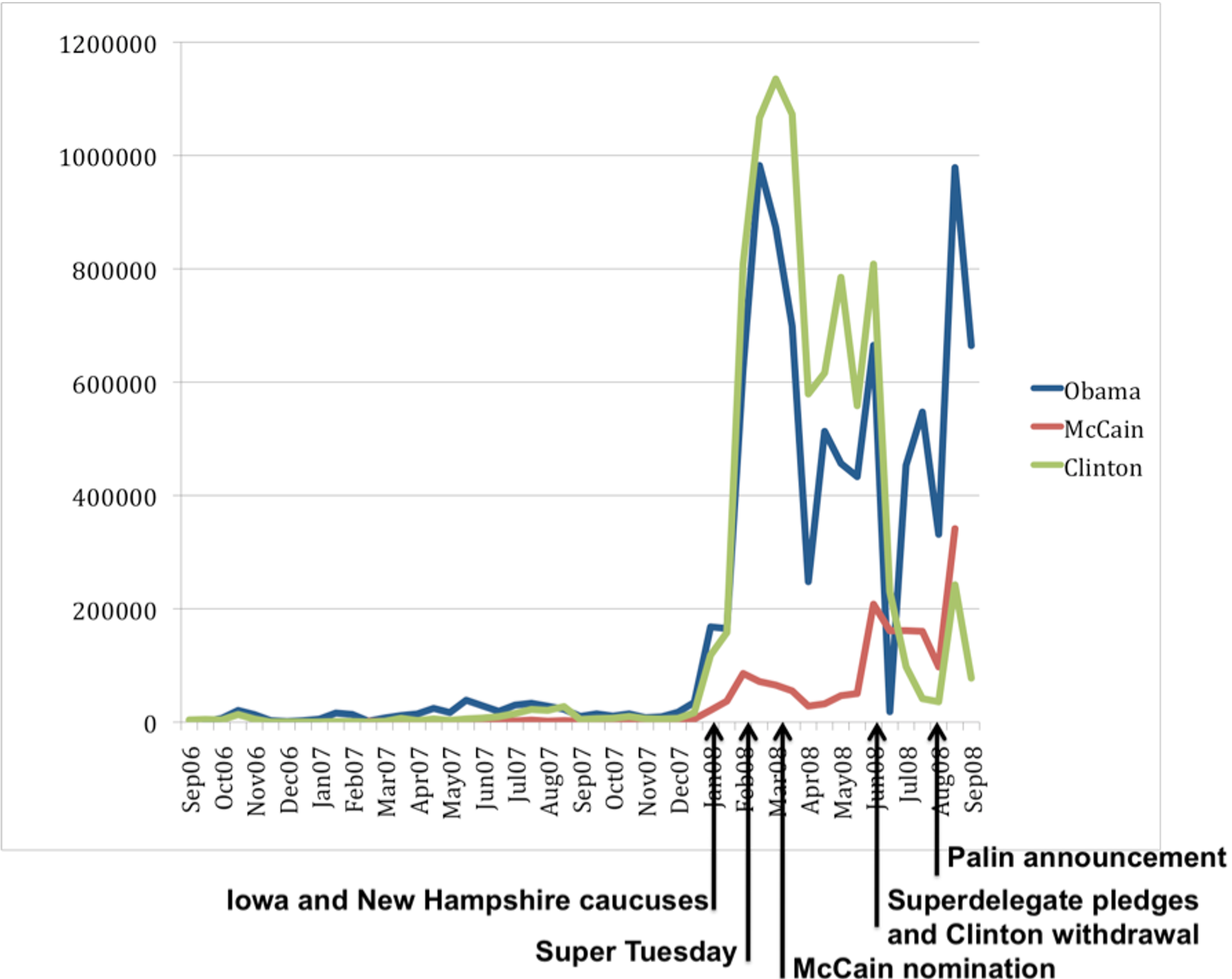 Figure 2: The dramatic surge in word count corresponds to key primary dates and the general election kickoff.
Key Finding 1: The Shift in Referents
The data confirms the Reflection-to-Selection hypothesis. In the early stages, first-person ("I", "We") and second-person ("You") pronouns dominate. However, as the election approaches, these decline sharply while third-person pronouns ("He", "She", "They") soar.
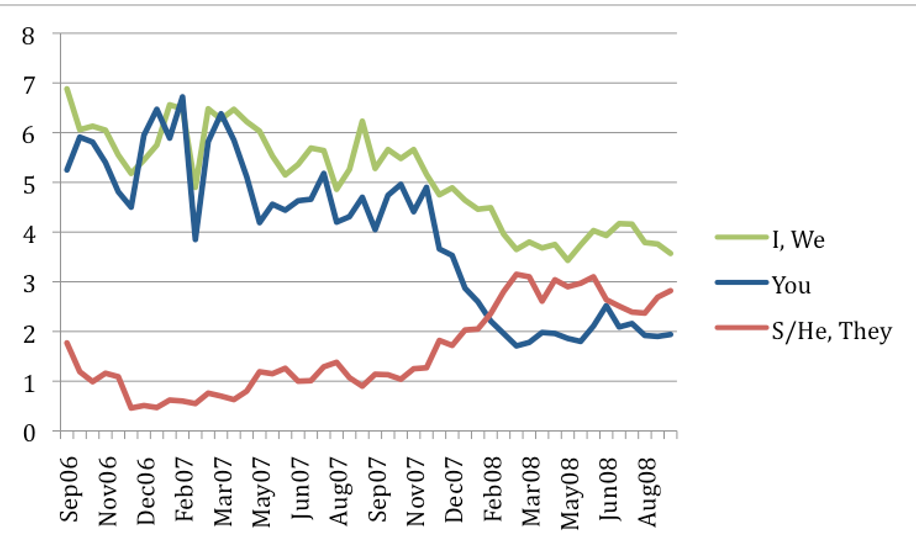 Figure 3: For all candidates, the three pronoun categories eventually converge, signifying a shift from self-expression to candidate-focused comparison.
Key Finding 2: Sentiment Convergence
Forget the idea that campaigns just get "meaner." The study suggests a Converging Sentiment model. Early discourse is "overwhelmingly positive." As the election nears, positive sentiment drops and negative sentiment rises until they are almost equal.
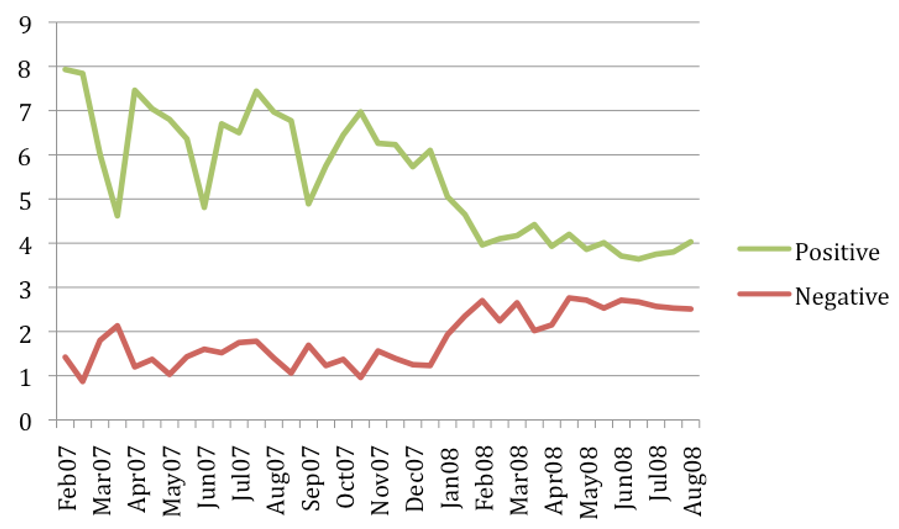 Figure 4: The gap between "cheerleading" and "critiquing" closes as the final decision looms.
Deep Insights & Implications
- Not a Monolith: We cannot treat an entire year of social media data as a single block. The timing of a post is just as important as its content.
- The Sarah Palin Effect: The data captured a massive spike in activity across all walls following the Sarah Palin announcement, showing how specific events flip the "off" switch on some candidates (Clinton) and "on" for others (McCain).
- Strategic Campaigning: For campaigns, this suggests that "inward-looking" messages are best for early phases, while "outward-looking" comparative ads might better match the voter's mindset closer to Election Day.
Conclusion
This paper provides a psychometric roadmap of the voter's journey. It proves that online political discourse is a structured process that moves from personal identity to collective decision-making. While the 2008 data is historical, the patterns of linguistic convergence remain a fundamental benchmark for understanding modern digital politics.