
Beyond the Black Box: Characterizing Social Networks via Internal Node Processes
Characterizing social networks based on interior processes of nodes
This paper introduces a structural characterization of Social Networks by shifting the focus from external graph topology to the internal processes of individual nodes. Utilizing the Flowthing Model (FM), it categorizes nodes based on six generic processes: creation, release, transfer, arrival, acceptance, and processing, successfully identifying distinct roles like creators, responders, and "bus boys" in an educational social network.
TL;DR
Social Network Analysis (SNA) has long been obsessed with the links between people, often ignoring what actually happens inside the person (or node) during an interaction. This paper proposes a paradigm shift: using the Flowthing Model (FM) to map the internal mechanics of nodes. By breaking down actions into six stages—Creation, Processing, Release, Transfer, Arrival, and Acceptance—we can finally distinguish the "thought leaders" from the "mailmen."
The "Graph Metric" Trap
Traditional engineering and scientific approaches toward social networks focus on metrics like degree distribution, diameter, and clustering coefficients. While useful for high-level statistical laws, these metrics are often blind to the actual social phenomena.
The authors argue that two networks could have identical graph statistics but fundamentally different behaviors. For instance, a "Broker" node might be perceived as powerful due to high centrality, but in reality, it may act as a mere "bus boy," passing data without adding value. The pain point is clear: Graph theory treats nodes as black boxes, obscuring their true functional importance.
Methodology: The Flowthing Model (FM)
To peek inside the black box, the authors employ the Flowthing Model. This conceptual framework views any segment of reality as a web of interrelated flows. A "flowthing" (an artifact like a message, photo, or opinion) moves through a flowsystem consisting of six discontinuities.
The Six Stages of a Node
- Creation: The birth of a new artifact.
- Processing: Modifying the form (e.g., translating a message).
- Release/Transfer: Sending the artifact to another sphere.
- Arrival/Acceptance: Receiving and admitting the artifact into the node's system.
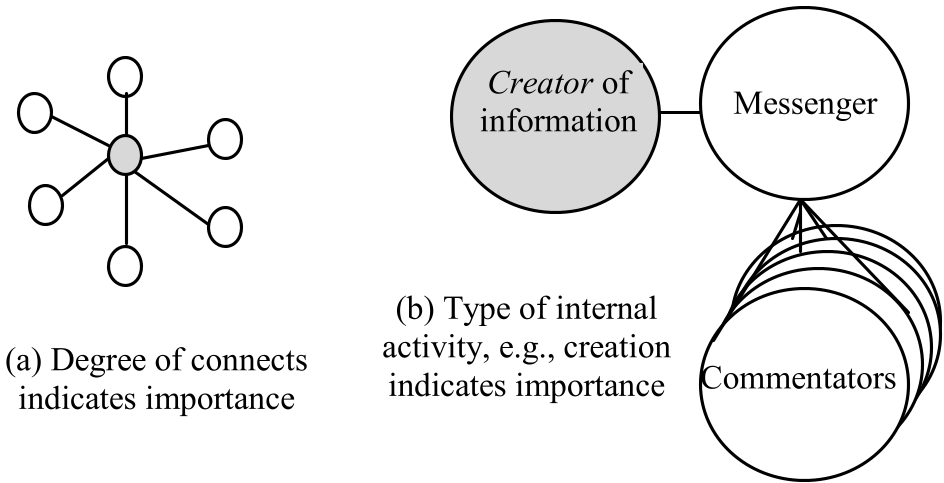 Figure 3: The standard Flowsystem showing the six exclusive stages of a flowthing.
The brilliance of this model lies in its exclusivity: a flowthing can only be in one state at a time. This allows researchers to distinguish between a node that creates knowledge and one that merely processes it—a distinction lost in traditional "edge-based" diagrams.
Deep Dive: Redefining Relationships
The paper re-evaluates classic social structures through the lens of FM:
- Knowledge Sharing: In an organizational chart, "shared knowledge" is often just a line. FM reveals how "Hussain" creates data, "Cole" processes it into information, and "Williams" transforms it into knowledge.
- Brokerage: FM uncovers that a broker can be a "Messenger" (Arrival -> Release), an "Active Agent" (Arrival -> Process -> Release), or a "Creator" (Arrival -> Trigger Creation).
- Reciprocity: Beyond "I like you, you like me," FM models the complex internal triggering of feelings and actions, showing that social "back-and-forth" is a series of internal creations and releases.
Experimental Case Study: An Educational Social Network
The authors analyzed an educational forum in Oman consisting of 24 members. Using manual data extraction, they mapped the activities of all nodes into the FM categories.
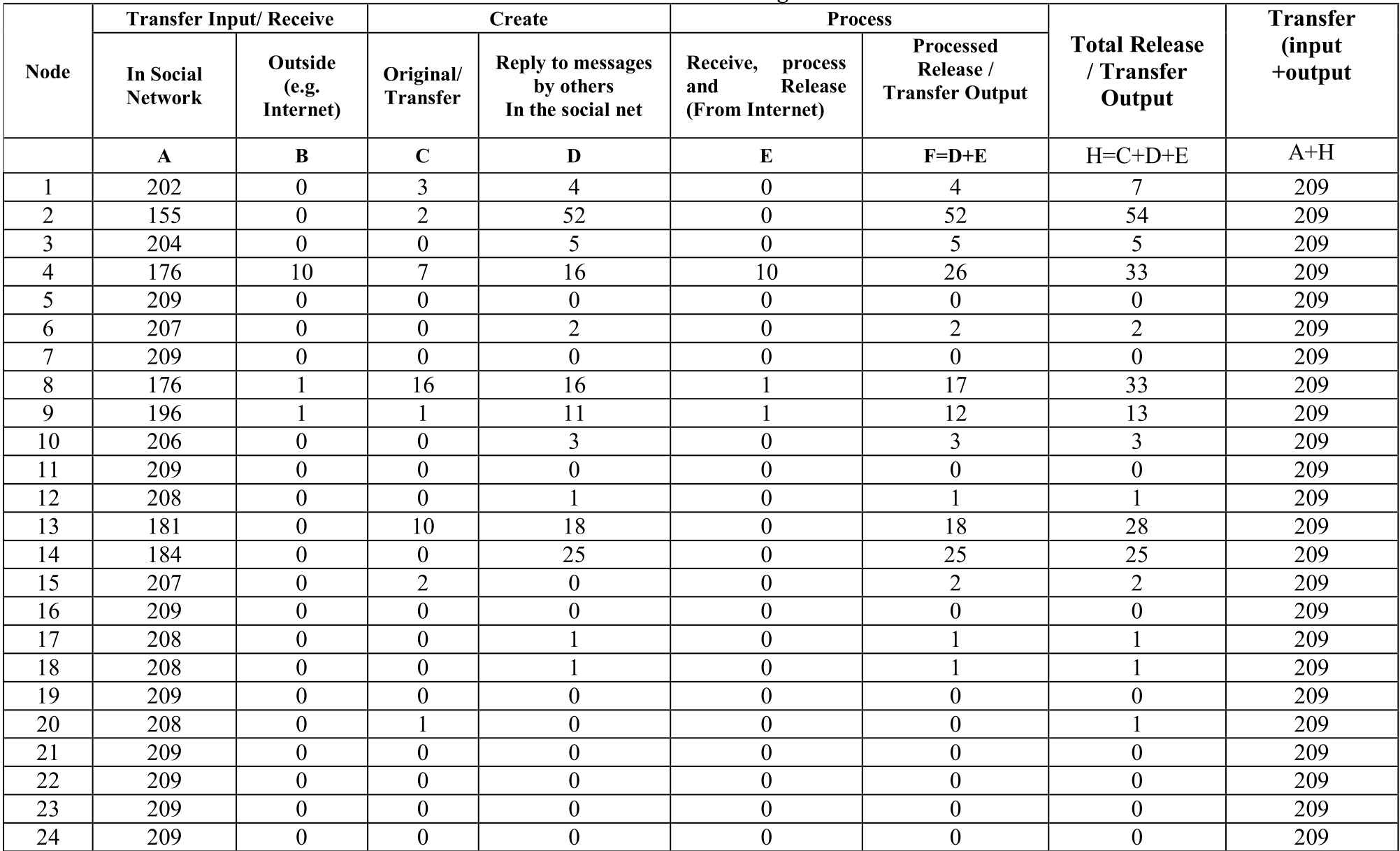 Table 1: Quantitative breakdown of node activities based on FM processes.
Key Findings
- The 80/20 Rule: The network was dominated by only 3 "Creators" (Nodes 8, 13, and 4) who generated the topics.
- Hidden Roles: Nodes 2, 9, and 14 were identified as "Responders." While they had high activity, their "Creation" was almost exclusively triggered by others' messages.
- The "Silent" Majority: Many nodes appeared active in terms of "Transfer" (receiving data) but were functionally inactive in terms of "Processing" or "Creation."
Critical Insight & Conclusion
This research provides a much-needed "micro" perspective to complement the "macro" view of graph theory. By characterizing the Interior Processes, we can better predict network stability. A network might look robust on a graph, but if the few "Creators" leave, the "Bus Boys" will have nothing to carry, and the network will collapse.
Limitations: The current methodology relies on manual classification of content to determine the FM stage. Future work must focus on automated NLP-driven extraction to apply this model to the millions of nodes found in modern OSNs like X (Twitter) or LinkedIn.
The Takeaway: Stop counting links; start counting creations. The true health of a social network lies in its internal processing power, not just its connectivity.