
Decoding the Social DNA: How Personality and Behavior Drive Information Propagation
Characterizing user behavior and information propagation on a social multimedia network
This paper presents a comprehensive study on Facebook user behavior by clustering individuals based on 12 distinct activity features and correlating these with demographic and "Big Five" personality profiles. The authors identify five latent roles—ranging from "Multimedia-Savvy & Engaged" to "Low Engagement" users—and analyze the propagation of multimedia content to determine what makes social media broadcasts successful.
TL;DR
Researchers have mapped the bridge between who we are (personality) and what we do online (behavior). By clustering Facebook users into five "latent roles"—such as Multimedia Specialists and Low Engagement Users—this study reveals that our digital footprints are deeply correlated with our demographics and psychological traits like Neuroticism and Conscientiousness. Furthermore, it identifies that photo-based broadcasts and specific privacy settings are the primary engines of "going viral."
The Missing Link in Social Media Analysis
Why do some users post constantly while others merely lurk? Why does a specific photo go viral while another vanishes? Prior work often treated these as separate questions of network structure or content analysis. The authors of this paper argue that to truly understand social dynamics, we must look at Latent Roles: the unofficial functions users perform (e.g., information broker, content consumer) that emerge from their behavior. The challenge lies in connecting these digital behaviors to real-world psychological profiles without violating user privacy.
Methodology: From Raw Clicks to Psychological Clusters
The team developed a privacy-preserving tool to scrape data from consenting participants, replacing text with integers to prevent reconstruction. They extracted 12 key features, including:
- Broadcast Frequency: Average posts per day.
- Topic Diversity: Measured via Latent Dirichlet Allocation (LDA) to see if a user sticks to one subject or many.
- Privacy Ratio: The balance between public and private sharing.
Using these features, they employed K-means clustering to segments users.
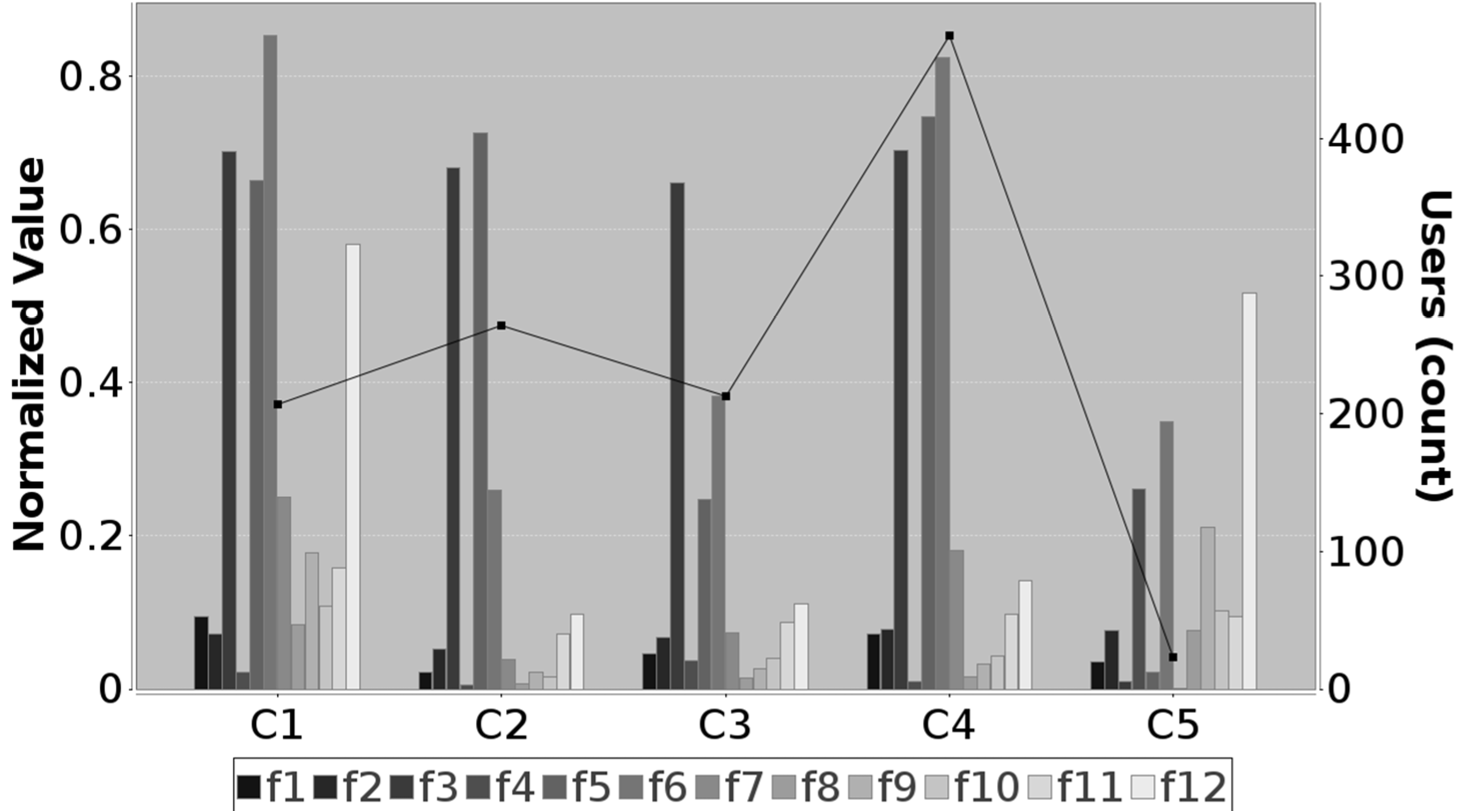
Identifying the 5 Latent Roles
The analysis yielded five distinct personas:
- Multimedia-Savvy & Engaged: The "super-broadcasters" who post everything. Surprisingly, they score high in Neuroticism, perhaps using the platform for validation or emotional expression.
- Low Engagement Users: Primarily observers. They are often highly educated and report lower stress levels.
- Private Broadcasters: Older, employed users who share selectively.
- High Engagement (Text-focused): These users prefer status updates over photos. They are typically younger and more public with their thoughts.
- Multimedia Specialists: Younger females who primarily share photos/videos privately.
What Makes a Broadcast "Viral"?
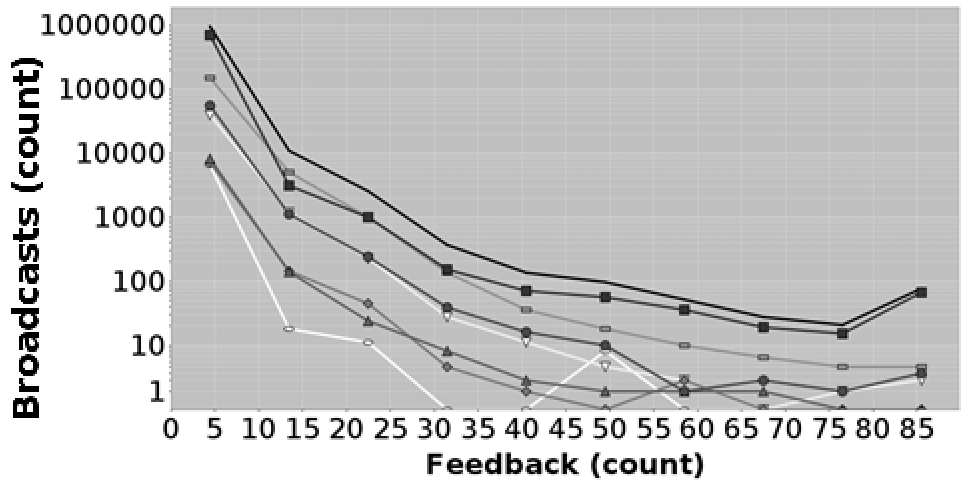
The study also analyzed what drives "Likes" and "Comments." The evidence points to a "V-shaped" success strategy:
- Publicity: Public broadcasts reach the widest audience.
- Intimacy: Private broadcasts with close friends maximize engagement through relevance.
Interestingly, while tagging friends is common, the most popular photos often had no tags, implying that high-quality, "general appeal" content travels further than niche, friend-specific content.
Deep Insight & Future Outlook
The most striking takeaway is the subversion of offline expectations. One might assume that Extraversion is the primary driver of online activity, but this study shows that Conscientiousness and Neuroticism are equally powerful predictors of certain "Super-user" behaviors.
Limitations: The study is based on a specific Facebook dataset (up to 2012-2013 context), and the "viral" landscape has changed with the rise of algorithmic feeds (like TikTok). However, the methodology of using behavioral clusters to identify "insider threats" or anomalous behavior remains highly relevant for corporate security and psychological research.
Conclusion: Our online roles are not just random habits; they are reflections of our psychological makeup. By understanding these clusters, researchers can better predict how information spreads and identify when a user's behavior deviates from their established "latent role."