
Chatbots as Conversational Healthcare Services: From Scripted Interfaces to Socially Intelligent Partners
Chatbots as Conversational Healthcare Services
This paper presents a systematic analysis of 158 publicly available healthcare chatbots to identify salient service provision archetypes and assess design choices. The authors categorize these AI agents into roles of Diagnosis, Prevention, and Therapy, evaluating them against a multi-dimensional framework covering conversational style, user understanding, and accountability.
TL;DR
This research provides a comprehensive audit of the healthcare chatbot landscape, identifying three core roles: Diagnosis, Prevention, and Therapy. While these bots are becoming more accessible via smartphones, the study highlights a critical "trust gap"—most current systems are rigid, lack empathy, and fail to explain why they make specific medical recommendations.
Background & Motivation
The paradigm of digital healthcare is shifting from passive records to active, personalized assistants. Chatbots are the "face" of this shift, offering an intuitive, turn-taking metaphor that mimics doctor-patient interactions. However, as development becomes democratized, we face a wild-west scenario: how reliable are these bots? Do they actually understand the user, or are they just glorified FAQ trees?
The Analytical Framework: Measuring AI Maturity
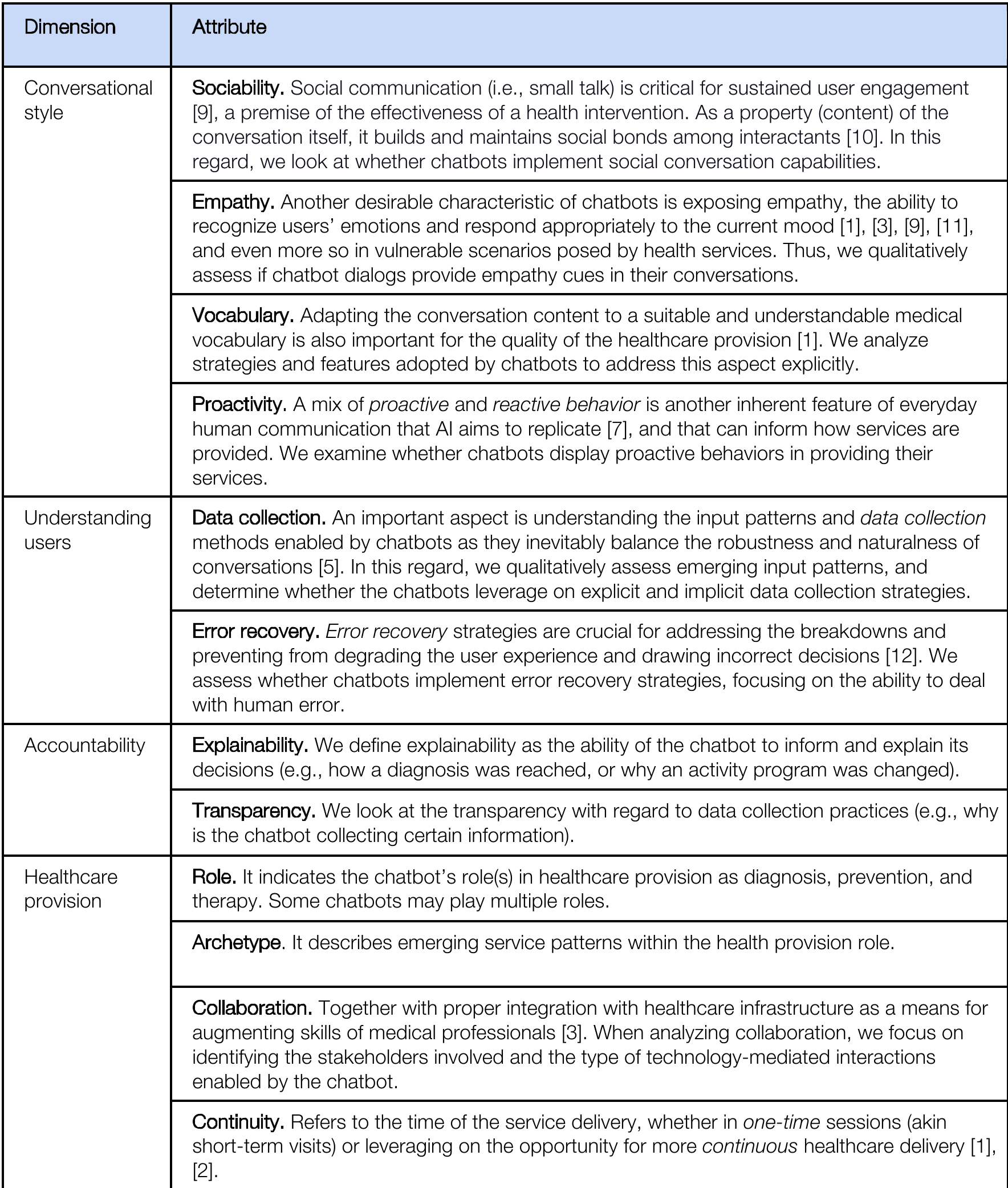
The authors propose a layered framework to disassemble the anatomy of a health chatbot:
- Knowledge Layer: The medical databases.
- Service Layer: The "brain" making healthcare decisions.
- Dialog Layer: The conversational engine (Rule-based vs. Probabilistic).
- Presentation Layer: The UI/UX.
The study assesses these bots across dimensions such as Sociability, Empathy, Error Recovery, and Explainability.
Archetypes of Healthcare Provision
1. Diagnosis: The Symptom Checkers
Diagnosis bots (like Ada or Babylon Health) follow a scripted interview style.
- The Problem: They are often one-time sessions. They don't remember you from last week.
- The Gap: Very few use "implicit data" (like your Apple Watch heart rate). They rely entirely on what you type, which is prone to human error.
2. Prevention: The Health Coaches
This is the most crowded space, featuring bots like FitCircle or Forksy.
- Insight: These bots are the most proactive. They nudge you to exercise or eat better.
- The Gap: "Transparency" is at an all-time low here. Users are rarely told why their data is being collected or how the bot decided on a specific workout plan.
3. Therapy: The Digital Confidants
Bots like Woebot and Wysa use Cognitive Behavioral Therapy (CBT) to support mental health.
- Strength: These are the only bots displaying "High" levels of empathy and sociability. They use probabilistic models to handle fluid, natural language.
- The Gap: They are still standalone "islands"—they don't talk to your real-world doctor.
Critical Findings: Where AI Falls Short
The most damning evidence from the study is the lack of Accountability. In a medical context, knowing "Why" is as important as knowing "What."
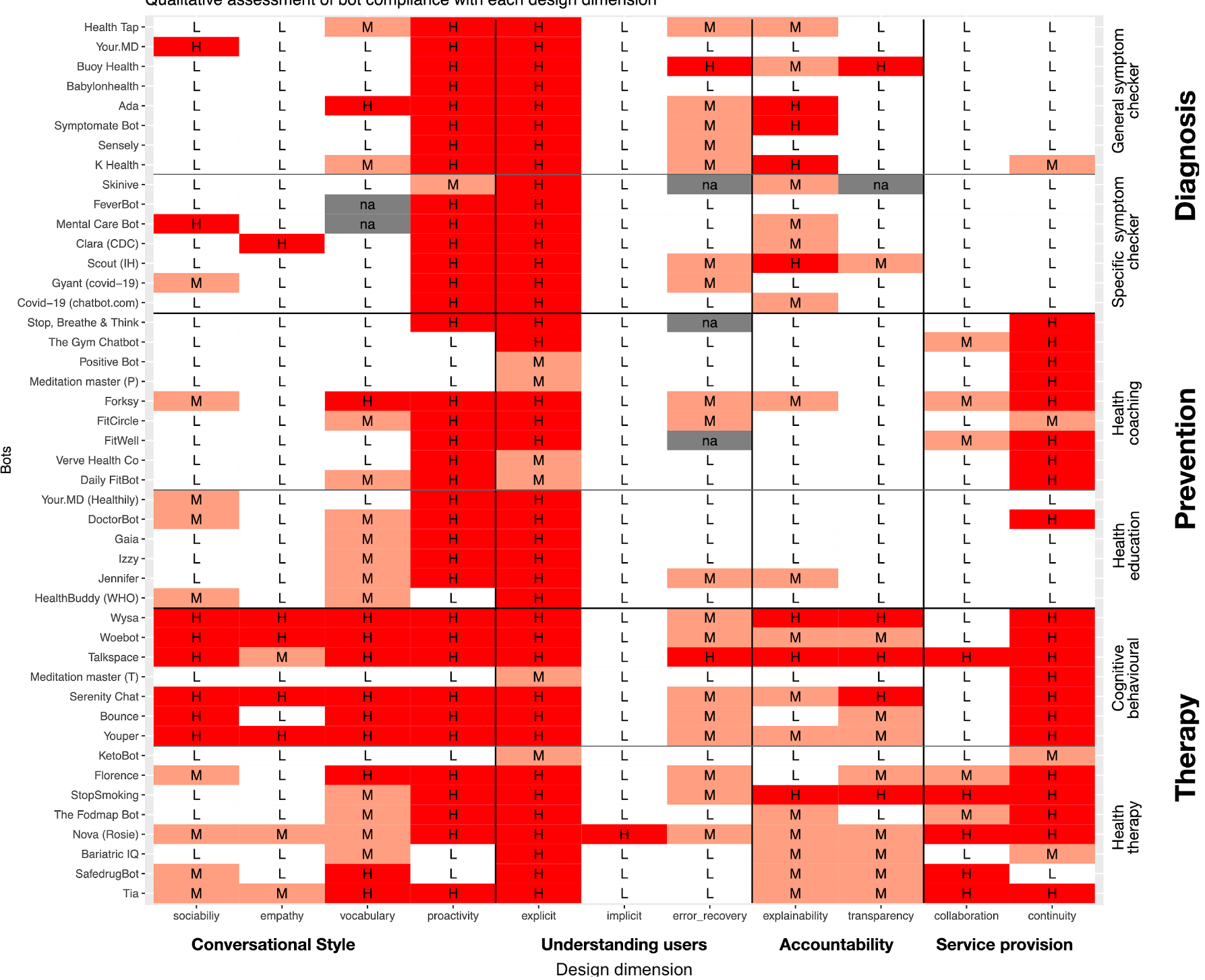 Figure 1: Notice the overwhelming "Low" (L) rankings in Explainability and Transparency across almost all archetypes.
The "Explainability" Crisis
If a bot tells you that your chest pain is likely indigestion but it's actually a heart attack, the stakes are life and death. The study found that most bots provide a list of potential causes but offer zero reasoning for how the AI reached that conclusion.
The "Broken" Dialog
Many bots still fail at basic Error Recovery. If a user makes a mistake and wants to backtrack, half of the diagnostic bots don't even have an "Edit" button. This forces users into a rigid "scripted interview" that feels more like an interrogation than a consultation.
Conclusion & Future Outlook
The research concludes that while healthcare chatbots are a cost-effective entry point for medical services, they are currently supplementary, not replacements for professionals.
The Road Ahead:
- Integration: Bots must move from standalone apps to being part of the healthcare infrastructure (connecting patients, doctors, and family).
- Social Intelligence: We need bots that can read clinical vocabulary but speak in "human" terms, adapting to the user's health literacy.
- Continuity: Moving from "one-off" symptom checks to long-term health monitoring using IoT and wearable sensors.
Ultimately, for AI to take an active role in therapy and diagnosis, it must move past the "Black Box" phase and become transparent, empathetic, and integrated.