
Streamlining Disability Diagnosis: How Data Mining Identifies Self-Care Challenges in Children
Analysis children with disabilities self-care problems based on selected data mining techniques
The paper utilizes the SCADI dataset and the WEKA platform to evaluate various data mining algorithms for classifying self-care problems in children with physical and motor disabilities. By applying feature selection techniques like Correlation-based Feature Subset Selection (CFS), the authors achieved a peak classification accuracy of 85.71% using a Naive Bayes classifier.
TL;DR
Researchers have developed a highly efficient way to classify self-care problems in children with motor disabilities. By using the SCADI dataset and advanced feature selection techniques, they reduced a massive list of 205 diagnostic variables down to just 19 critical markers, achieving a 85.71% accuracy rate with a Naive Bayes classifier.
The Diagnostic Bottleneck
In pediatric rehabilitation, understanding a child's ability to wash, dress, and eat (self-care) is vital for improving their quality of life. Traditionally, this requires therapists to navigate the complex ICF-CY (International Classification of Functioning, Disability and Health for Children and Youth) framework. This process is time-intensive and requires significant expertise. The core question of this research was: Can we use Machine Learning to simplify this diagnosis without losing accuracy?
Methodology: From 205 to 19 Characteristics
The study utilized 70 clinical instances from the SCADI dataset, encompassing various conditions like cerebral palsy and muscular dystrophy.
The researchers compared three different attribute models:
- Full Model: All 205 original attributes.
- Chi-Square Model: 39 selected attributes.
- CFS Model: 19 highly correlated attributes.
The Algorithm Face-off
Five distinct algorithms were tested: Naive Bayes, J48 (C4.5), PART, CART, and Multilayer Perceptron (MLP). This variety ensured that the results weren't just a fluke of one specific mathematical approach.
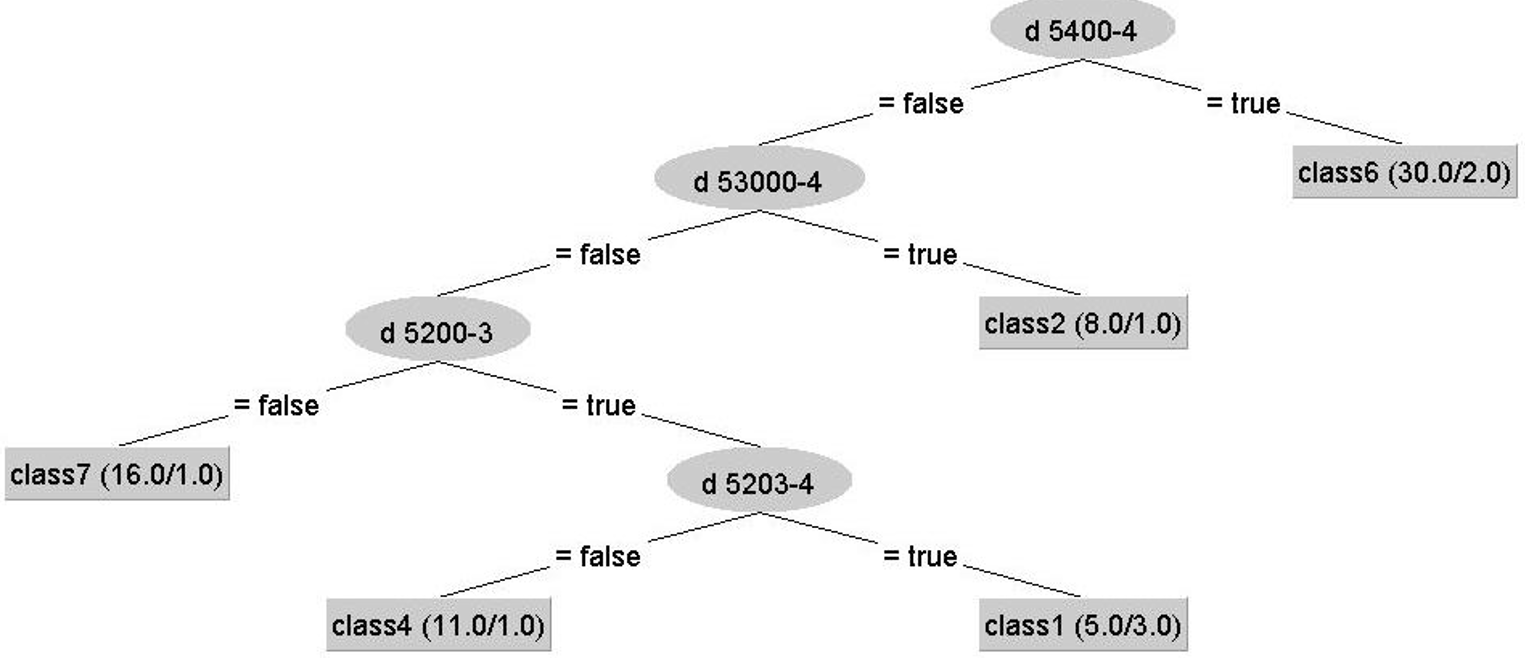 Figure 1: The J48 algorithm reveals the logical hierarchy of diagnosis, showing how specific impairments (like dressing or urination indication) lead to different disability classifications.
Key Results: Less is More
The experimental results were striking. Contrary to the intuition that "more data is better," the Model 3 (CFS) with only 19 variables performed the best.
- Naive Bayes Accuracy: 85.71% (Highest)
- Kappa Statistic: 0.80+ (Indicating very strong agreement with real-world clinical labels)
- Efficiency Gain: Reducing the feature set by 90% actually increased accuracy by 3%, likely by removing "noise" from the data.
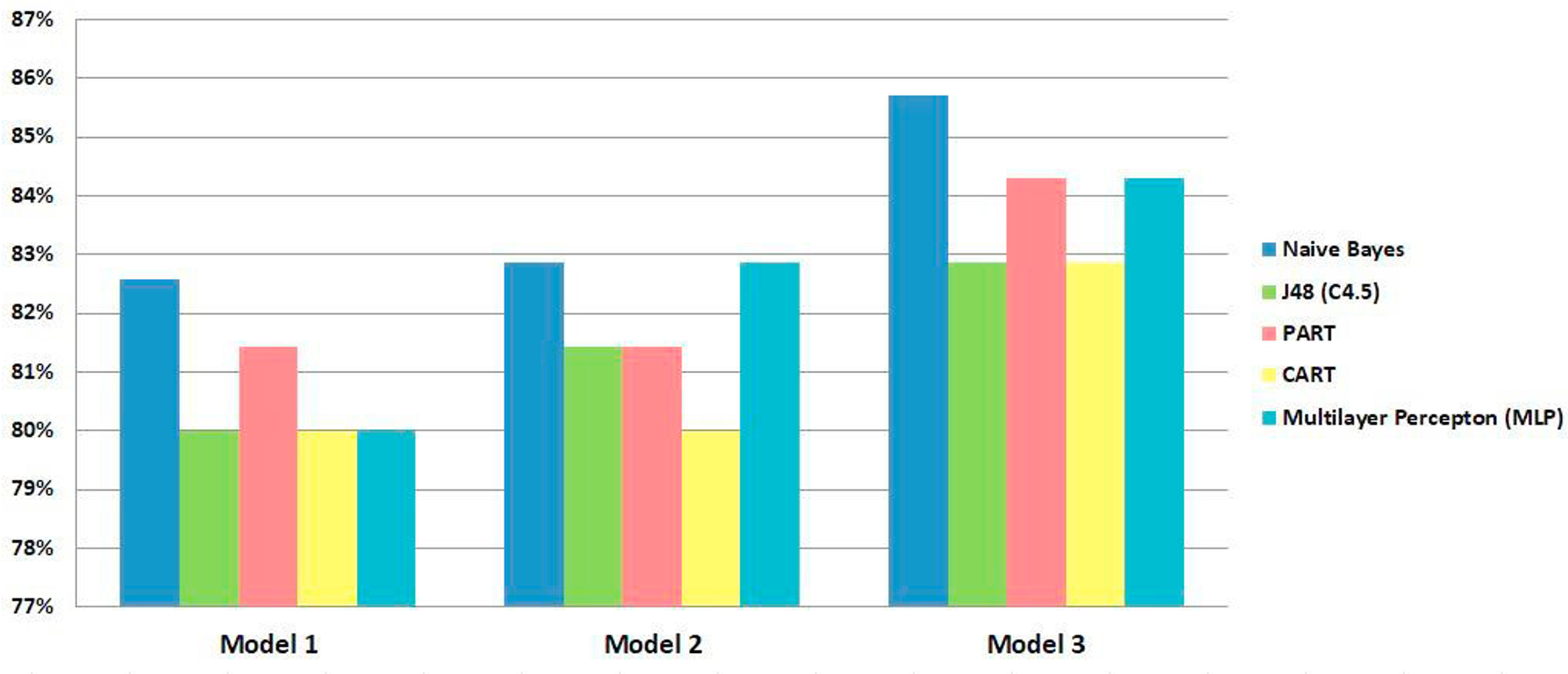 Figure 2: Performance comparison across the three feature models. Note the consistent performance boost when using the CFS-selected features.
Why It Works: The Intuition
Feature selection works here because certain physical limitations (like the inability to "choose appropriate clothing") are proxies for broader motor skill deficits. By identifying these "keystone" disabilities, the model can predict a global self-care profile without needing a 200-question survey.
Critical Analysis & Future Outlook
While the results are promising, the dataset size (70 instances) is relatively small. The next logical step would be to:
- Validate this 19-feature model on a larger, multi-national dataset.
- Integrate these rules into a "Smart Diagnostic Tool" for therapists, allowing them to input key observations and receive an immediate ICF-CY classification.
Conclusion: This study proves that data mining isn't just for tech giants; it is a powerful tool for making healthcare more accessible and precise, ensuring children with disabilities receive the targeted support they need faster.