
emama.mk: Bridging the Pediatric Gap with Semantic Ontologies
Prediction of children diseases using semantics
This paper introduces a semantic-based children's disease prediction tool integrated into the social network www.emama.mk. Using the CGDO (Children Group Disease Ontology) and SWRL rules, the system provides diagnostic initial screenings for common pediatric illnesses, focusing on rural areas in Macedonia.
TL;DR
Researchers have developed a specialized social network and diagnostic tool, www.emama.mk, designed to assist first-time parents in Macedonia. By combining localized medical knowledge with Semantic Web technology (Ontologies), the system predicts common childhood diseases with an accuracy that rivals pediatricians, specifically outperforming general-purpose logic used by global platforms like WebMD.
Problem & Motivation: The Knowledge Gap in Rural Healthcare
The healthcare landscape is often "information rich but knowledge poor." For parents in rural Macedonia, accessing immediate pediatric advice is hindered by distance and language barriers. While the internet is full of "symptom checkers," these tools often:
- Lack localized context (e.g., common regional childhood strains).
- Fail to account for specific patient metadata like vaccination history.
- Use "black-box" logic that doesn't align with local clinical practices.
The authors' intuition was simple: instead of just matching symptoms to a database, they needed to build a Knowledge Base (Ontology) that mimics a pediatrician's reasoning—prioritizing certain symptoms and logically excluding diseases for which the child has immunity.
Methodology: The Architecture of Semantic Prediction
The core of the system is the CGDO (Children Group Disease Ontology). Unlike a standard database, an ontology understands the relationships between concepts (e.g., "Symptom X is-a respiratory sign").
The Prediction Logic
The system follows a refined workflow:
- Data Acquisition: Parents fill out a 5-question survey (Age, Gender, Temp, Symptoms, Vaccines).
- Mapping: Data is mapped from MySQL to RDF/OWL format using D2RQ.
- Logical Inference: The system uses SWRL rules to calculate a "Possibility Factor." A key innovation here is the exclusionary logic: if a child is vaccinated for Disease A, the system automatically lowers its rank or removes it from the potential list.
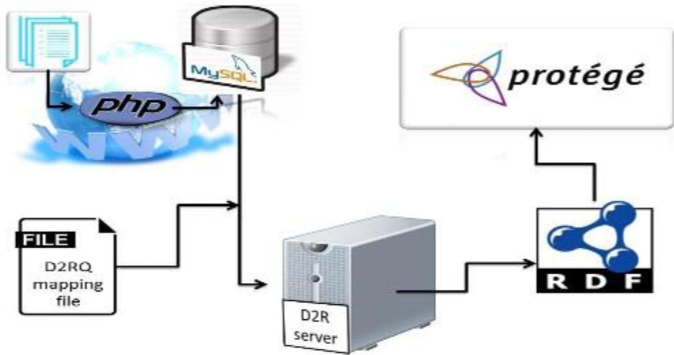 Figure 1: The architecture showing the flow from MySQL database to the Semantic Reasoner.
Experiments: Expert Precision vs. General Repositories
The researchers tested the model on 100 patient cases and benchmarked it against Isabel, WebMD, Healthline, and a live Pediatrician.
Key Findings:
- Higher Correlation: The CGDO-based tool's results were "more close to the pediatrician's" than any of the multi-million dollar global platforms.
- Specific Case Study: In a case of a child with a cough and runny nose, the system calculated a high "Factor" for Allergic Rhinitis (336) while correctly identifying Common Cold as an equally likely second, mirroring the clinical uncertainty a doctor would face.
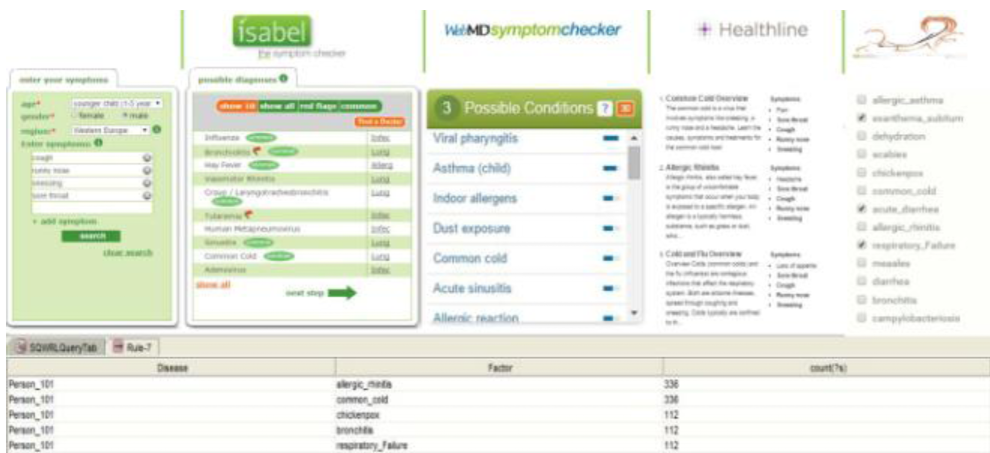 Figure 2: Example of prediction factors comparing different disease probabilities.
Critical Analysis & Conclusion
The strength of this work lies in its Inductive Bias—the system doesn't try to know every disease in the world; it tries to know the important ones for its specific users extremely well.
Limitations:
- Scale: The ontology currently contains a limited number of diseases. As the repository grows, maintaining rule consistency will become more computationally expensive.
- Validation: The results, though promising, rely on a small set of regional experts.
Future Outlook: This research highlights a shift toward localized AI. Instead of one-size-fits-all models, the future of digital health may lie in "Micro-Ontologies" that understand regional languages, local epidemiology, and specific community needs. For first-time mothers in rural areas, this semantic bridge isn't just a tech demo—it's a clinical lifeline.