
Sharenting: Balancing Parental Pride with Children's Digital Rights
Children’s Online Privacy from Parents’ Perspective
This paper investigates "Sharenting" behaviors and children's online privacy through a two-phase study: a global survey of 1,300 parents and the development of a game-based learning tool, "Social Sim Parents," to educate guardians on privacy risks.
TL;DR
Your child’s digital footprint might be starting before their first breath. This paper analyzes why parents—despite claiming to care about privacy—expose their children to massive risks like "digital kidnapping" and cyberbullying. Through a global survey and a custom-built social media simulator, the authors demonstrate that interactive, game-based learning is far more effective at changing behavior than traditional privacy policies.
The "Sharenting" Paradox: Why Awareness Isn't Enough
We live in an era where sonograms are the new birth announcements. But this "sharenting" (parental oversharing) creates a permanent digital record for a human being who has not yet reached the age of consent.
The authors identify a critical Pain Point: Most privacy research assumes the user is protecting their own data. In the case of children, the parent acts as both the gatekeeper (protector) and the narrator (broadcaster). This dual role often leads to a "Privacy Paradox" where parents report high concern for their child's safety but simultaneously post high-resolution photos of their children in vulnerable states (e.g., bath time, school locations, or medical updates).
Key Risks Identified:
- Digital Kidnapping: Strangers "stealing" children's photos to roleplay as their parents.
- Data Aggregation: Combining names, birthdates, and locations to facilitate identity theft.
- The "Ugly Baby" Phenomenon: Targeted cyberbullying in malicious online groups.
Methodology: From Survey to Simulation
The researchers didn't just want to observe; they wanted to educate.
Phase 1: The Global Survey
Spanning 51 countries, the study found that Facebook remains the primary platform for parental sharing. Alarmingly, 73% of parents in the 0-5 age group are the most active "sharers," yet this same group is the least likely to know how to use parental controls.
Phase 2: The Social Sim Parents Game
To fix the knowledge gap, the authors developed a web-based game. The core logic uses Granularity and Visibility to determine a "Safety Score."
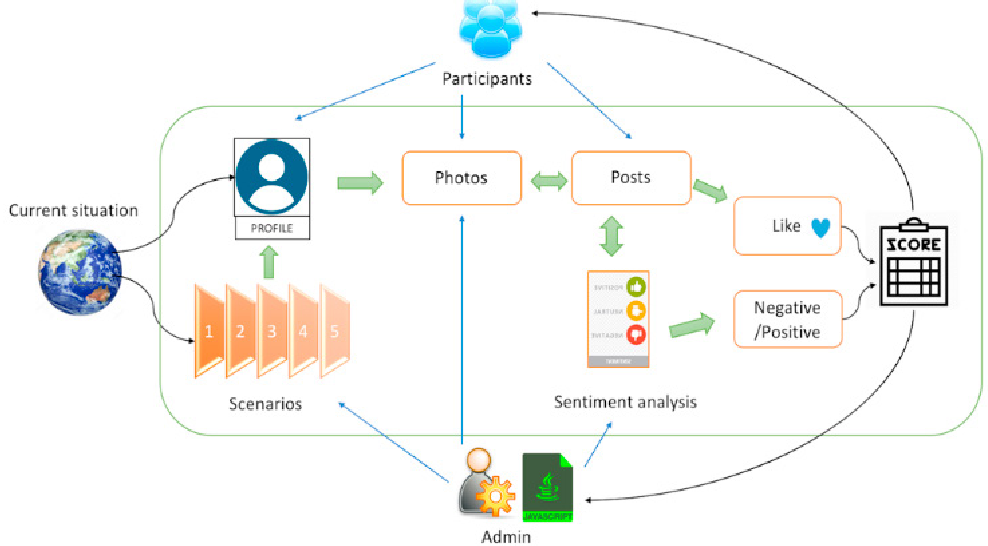
The Mechanics:
- Sentiment Analysis: The game uses Natural Language Processing (NLP) to analyze the "tone" of posts. Negative labels or sensitive disclosures (like a child's ADHD diagnosis) trigger score deductions.
- The "Like" Trap: The game mimics social media by giving "Likes" for public posts, creating a psychological tension between social validation and privacy preservation.
- Real-Time Feedback: If a player posts a photo of a child’s driver’s license, the game immediately explains the risk of PII exposure.
Experimental Insights
The results from the game simulation revealed a stark difference between "Intention" and "Action":
- Data Disclosure: Despite the game's privacy focus, 64% of participants still provided their full home address in the mock sign-up form.
- Learning Curve: Participants showed a marked improvement in "Self-Reported Knowledge" (11% increase in "Excellent" rating) after receiving the score-card feedback.
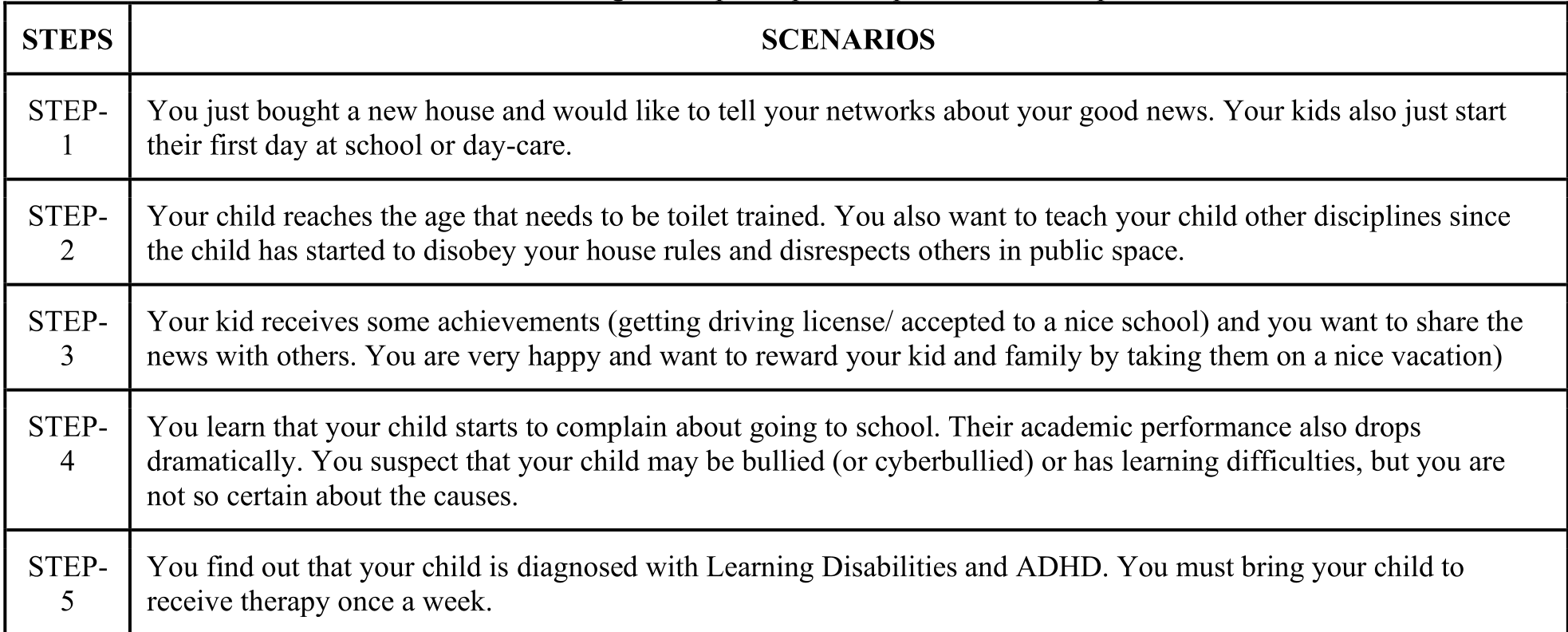
The scenarios tested (Table 1) ranged from "Buying a House" to "Medical Diagnoses." The study found that parents struggle most with "Grey Area" content—information that feels like "seeking support" (e.g., ADHD therapy) but actually violates the child's long-term right to medical privacy.
Critical Analysis & Conclusion
This work highlights a fundamental flaw in current social media platforms: Privacy policies are unreadable. 55% of parents explicitly asked for clearer, more concise statements.
The Takeaway: Educators and developers should stop relying on text-based warnings. Interactive simulations—where parents see their "Privacy Score" drop in real-time—are the only way to break the dopamine loop of social media "Likes" and protect the next generation's digital identity.
Future Work: The authors suggest that future AI-driven tools could act as a "Privacy Buffer," automatically blurring sensitive documents or warning parents before they hit 'Post' on a high-risk image.