
Chinese Ethnical Face Recognition: Bridging the Diversity Gap with Deep Learning
The Research of Chinese Ethnical Face Recognition Based on Deep Learning
This paper presents a comprehensive framework for Chinese Ethnical Face Recognition (CEFR) focusing on four groups: Han, Uygur, Tibetan, and Mongolian. The authors construct the CCEFI dataset using web crawling and employ a pipeline combining MTCNN for face detection/alignment with ResNet-50 for classification, achieving a 75% average precision.
Executive Summary
TL;DR: This paper tackles the under-represented task of Chinese Ethnical Face Recognition (CEFR) by constructing a 4,500-image dataset (CCEFI) and deploying a cascaded deep learning pipeline. By combining MTCNN for robust detection and ResNet-50 for classification, the research achieves a 75% accuracy across four ethnic groups (Han, Uygur, Tibetan, and Mongolian) and up to 90% in binary classification tasks.
Background: Within the landscape of Computer Vision, standard face recognition often suffers from "ethnic blindness" due to biased training data. This work is a targeted effort to build a specialized dataset and baseline for one of the world's most populous and multi-ethnic nations.
Problem & Motivation
Most industrial face recognition systems are trained on massive Western or Han-majority datasets. When applied to multi-ethnic scenarios, these systems often fail to distinguish between subtle physiological variations in facial structure, skin tone, and features like the "internal pleats" or "humerus prominence" characteristic of different Chinese minorities.
The authors identify three primary hurdles:
- Data Scarcity: Lack of public standard datasets for Chinese minorities.
- Ethnic Blurring: Societal integration makes distinct feature extraction harder.
- Complex Constraints: Real-world images include variations in lighting, makeup (especially for ethnic performers), and pose that traditional hand-crafted features cannot handle.
Methodology: The Cascaded Pipeline
The authors propose a two-stage architecture that mimics the human visual system's "find then identify" process.
1. Unified Face Detection and Alignment (MTCNN)
Instead of treating detection and alignment as separate tasks, the paper uses Multi-task Cascaded Convolutional Networks (MTCNN). This involves three stages of CNNs (P-Net, R-Net, and O-Net) that refine candidate windows and find five key landmarks: eyes, nose, and mouth corners.

2. Deep Residual Learning for Recognition
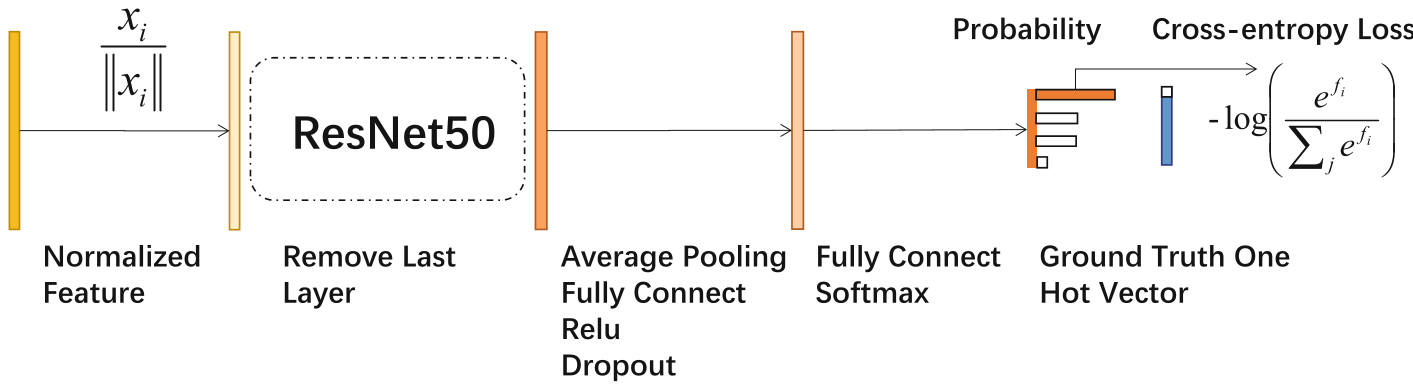
The core innovation lies in using ResNet-50 to extract representations. The "Shortcut Connections" in ResNet allow the model to learn residual mappings, preventing accuracy degradation as the network gets deeper. This is crucial for capturing the high-level semantic features required to distinguish between closely related ethnic groups.
Experiments & Results
The authors compared four major architectures: ResNet-50, VGG19, Inception-V3, and Inception-ResNet-V2.
Key Performance Metrics:
- The Winner: ResNet-50 offered the best balance, achieving 74.06% accuracy with significantly faster training times than Inception-based models.
- The Baseline: VGG19 lagged behind at roughly 62.5%, proving that "shallower" or older CNN architectures struggle with the fine-grained nature of ethnic classification.
- Binary Success: When reduced to a two-class problem (Han vs. Uygur), the accuracy surged to 90%, indicating high practical utility for specific regional applications.
The "Confusion" Analysis
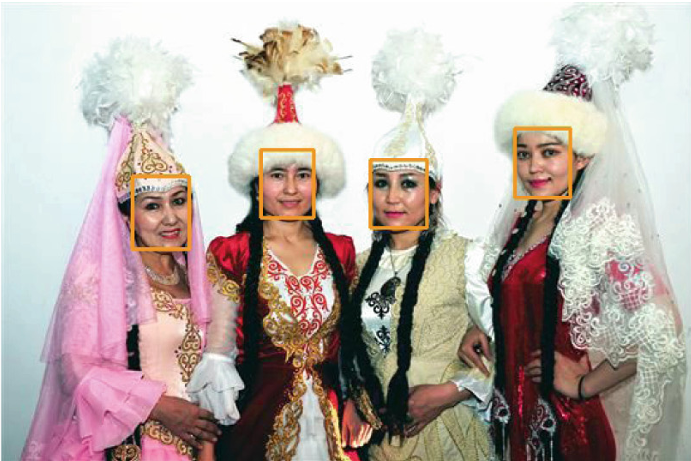
A fascinating finding in the ablation study was the confusion between Mongolian and Tibetan faces. The authors traced this back to the data source: many images were crawled from "ethnic singers." These performers often wear heavy makeup or traditional costumes that overlap across cultures, introducing "noise" into the learned ethnical features.
Critical Analysis & Conclusion
Takeaway: This paper is a vital step toward inclusive AI in East Asian contexts. It proves that deep residual architectures can quantificationally analyze ethnic traits that were previously only described in anthropological texts.
Limitations:
- Dataset Size: 4,500 images is relatively small for deep learning, leading to some over-fitting.
- Class Imbalance: The Mongolian group had the fewest samples (620), which was reflected in its lower identification stability.
Future Work: Expanding the CCEFI dataset to all 56 ethnic groups and employing unsupervised pre-training could further break the 75% accuracy bottleneck, moving from "academic proof-of-concept" to "robust industrial application."