
The SHARE Challenge: Empowering Citizens to Redefine Sustainable Tourism through Hackathons
Citizen Engagement and Entrepreneurship: Implications for Sustainable Tourism Development
This paper investigates the role of hackathons as a crowdsourcing tool for citizen engagement in sustainable tourism and entrepreneurship using the "SHARE Challenge" in South Australia as a case study. The study performs a content analysis on 88 eligible ideas, revealing that the tourism and agriculture sectors are primary drivers for sharing economy ventures that utilize underused physical and human resources.
TL;DR
This paper explores how the South Australian government used the SHARE Challenge, a crowdsourcing hackathon, to transform passive citizens into active entrepreneurs. By leveraging the Sharing Economy, the initiative successfully identified 88 ventures aimed at solving social issues like unemployment and asset wastage, with a strong focus on tourism and agriculture.
The Motivation: Moving Beyond Top-Down Governance
In the quest for sustainable tourism, local authorities often struggle with the "NIMBY" (Not In My Backyard) syndrome or a lack of local buy-in. The authors argue that governments do not hold all the answers to complex city challenges. The core insight is that Citizen Engagement acts as a bridge; by using hackathons—traditionally a tool for software developers—governments can tap into the collective intelligence of the community to solve environmental and economic pain points.
Methodology: Analysis of the SHARE Case
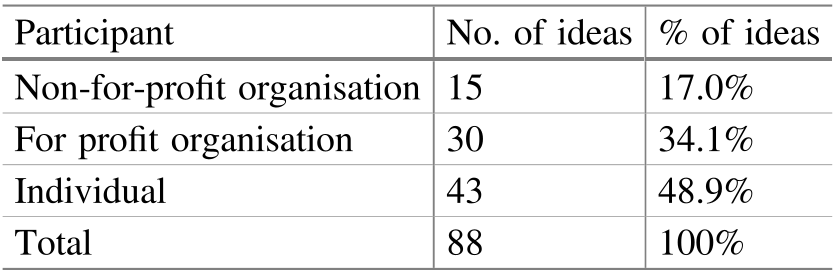
The researchers conducted a deep-dive content analysis of the 88 ideas submitted during the 2017 SHARE Challenge. They looked at who was submitting, what they were sharing, and why.
Participant Profile Breakdown
The study highlights that participation was nearly equal between individuals and corporate entities, demonstrating that the "collaborative economy" is an accessible entry point for diverse stakeholders.
The Core: What Resources are Being Shared?
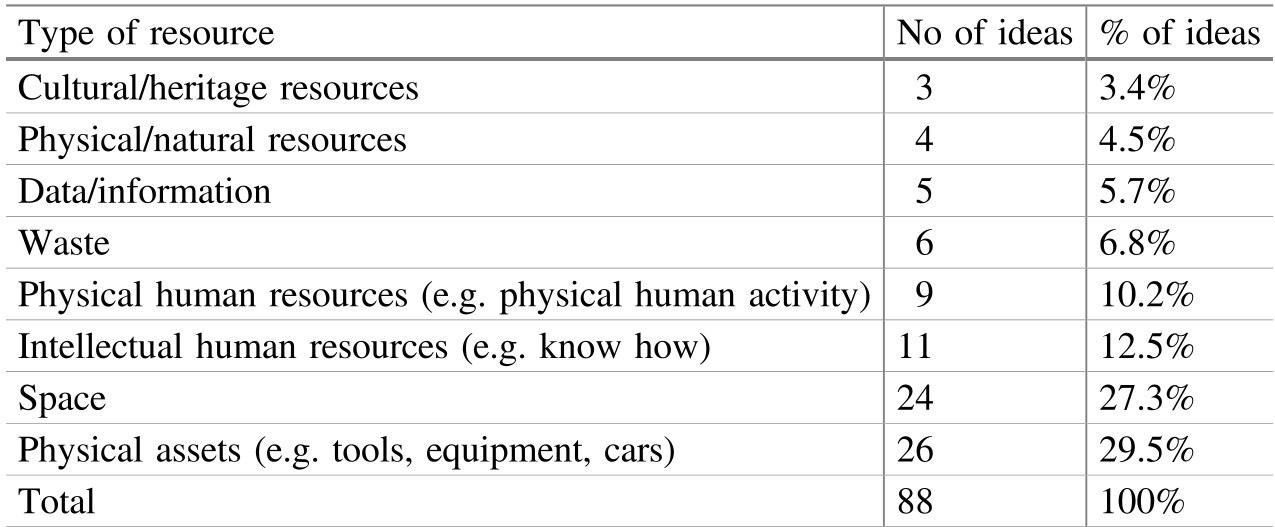
The findings reveal a heavy emphasis on tangible assets (space, tools, cars) and human resources (intellectual and physical activity).
- Space & Assets (56.8% combined): Heavily influenced by the "Airbnb/Uber effect," citizens showed a high awareness of how to monetize underused property.
- The "Data Myopia": Interestingly, the study found a lack of ideas utilizing Open Data, suggesting that while citizens understand physical sharing, they have yet to grasp the entrepreneurial potential of government data information.
Results: Solving Real-World Problems
The primary motivator for these citizen-led ventures was addressing underutilized assets or wastage (62.5%) and unemployment (21.6%).
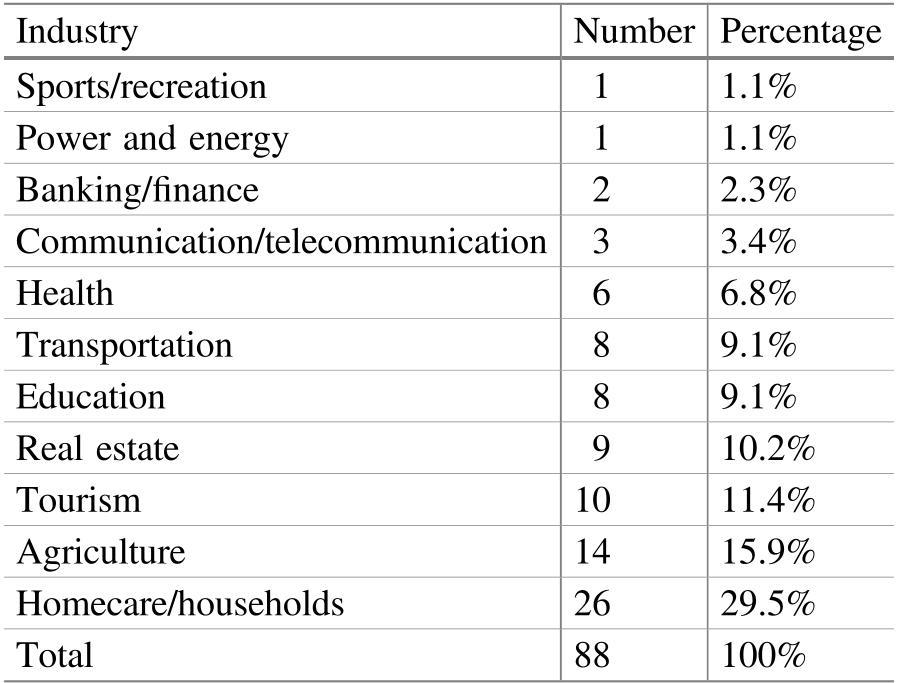
In terms of industry impact, Homecare, Agriculture, and Tourism emerged as the top sectors. The synergy between Agriculture and Tourism is particularly vital for South Australia, allowing rural communities to remain economically viable without migrating to urban centers.
Critical Analysis & Future Outlook
The paper successfully proves that hackathons can "educate" and "activate" citizens. However, a notable limitation is the study's focus on ideas rather than outcomes.
Key Lessons for Policy Makers:
- Bottom-Up Approach: Citizens have granular information about city challenges that top-down planners lack.
- Resource Preservation: Engagement leads to a sense of ownership, which is the precursor to sustainable resource management.
- Untapped Potential: Future initiatives should specifically target Open Data and Ageing Population issues, as these were identified as "missed opportunities" in the SHARE Challenge.
Future Research should look toward developing countries, exploring how these sharing economy competitions could mitigate refugee crises by fostering local entrepreneurship and resource stability.