
Redefining Reliability: A Multi-Dimensional Trust Model for the Social IoT
Clarifying Trust in Social Internet of Things (Extended Abstract)
This paper introduces a holistic socio-cognitive trust model specifically engineered for the Social Internet of Things (SIoT). It defines trust as a dynamic process involving six core ingredients—trustor, trustee, goal, evaluation, decision/action, and context—to enhance node interaction security and efficiency.
TL;DR
As the Internet of Things (IoT) evolves into the Social IoT (SIoT), the interaction between smart objects mirrors human social dynamics. This paper addresses the critical missing link in SIoT: a robust, flexible trust model. By treating trust as a dynamic process involving mutual evaluation and environmental context, the authors provide a framework that allows "friendly" objects to cooperate autonomously while minimizing exposure to malicious nodes.
The Evolution from Connectivity to Sociality
Why do we need a "Social" IoT? Traditional discovery tools for billions of devices do not scale. By mimicking social networks, IoT objects can navigate a web of "friends" to find services efficiently. However, this creates a massive security surface. Previous models treated trust as a one-way street or a simple success/failure tally, failing to capture the nuance of contextual risk and mutual interest.
Methodology: The Six Ingredients of Trust
The authors move beyond simple metrics, defining trust as a relational construct of six ingredients:
- Trustor & Trustee: Both are viewed as cognitive agents.
- Goal: The specific objective of the interaction.
- Evaluation: The expectation of competence and willingness.
- Decision & Action: The step of becoming vulnerable by entrusting a task.
- Result: The outcome, categorized into gains, damages, and costs.
- Context: The environment and task specifics.
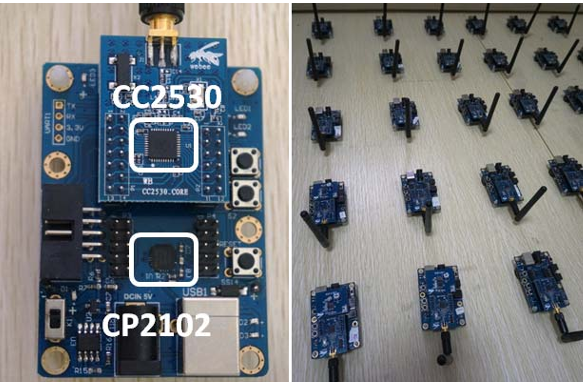 Fig 1: The dynamic process and ingredients of trust in SIoT.
Five Key Clarifications of the Model
- Mutuality: In this model, the trustee also evaluates the trustor. This "reverse evaluation" ensures both parties' interests are safeguarded.
- Inferential Transfer: If a node is trusted for Task A, and Task B shares similar characteristics, the system can infer a trust level for Task B even without prior experience.
- Transitivity Schemes: The model introduces Conservative and Aggressive transitivity, allowing the network to tune how quickly it trusts recommendations from intermediate nodes.
- Delegation Results: Unlike models that only track "success," this framework analyzes the cost of the action and the damage caused by failures, providing a more granular risk profile.
- Dynamic Environments: A task completed in a "hostile" environment yields a higher trust reward than one completed in a "safe" one, accounting for environmental uncertainty.
Experimental Results & Validation
The researchers didn't just stop at theory. They validated the model using:
- Social Graph Simulations: Leveraging connectivity data from Facebook, Google+, and Twitter to simulate how trust propagates in large-scale social networks.
- Physical IoT Implementation: Using Texas Instruments' Z-Stack (Zigbee), they tested the model on real hardware nodes.
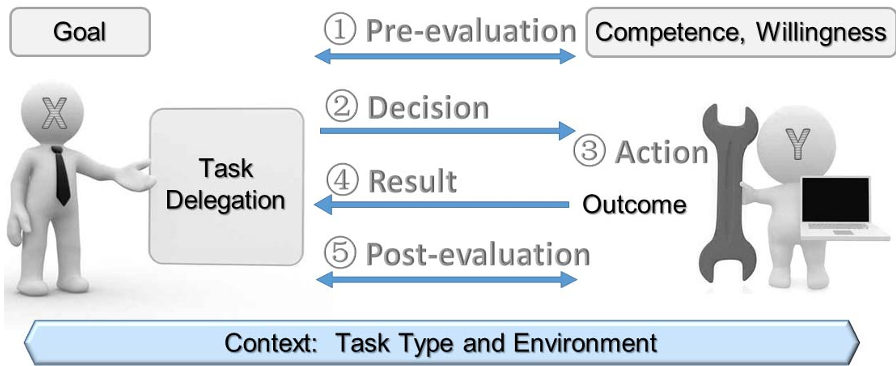 Fig 2: Experimental IoT node setup for physical validation.
The results confirmed that the proposed model significantly improves the effectiveness of node interactions, reducing "vulnerability" while maintaining high service discovery rates.
Critical Insight: Beyond the Success Rate
The true value of this work lies in its Inductive Bias toward social realism. By acknowledging that trust is context-dependent (e.g., a node trusted to measure temperature might not be trusted to route encrypted data), the authors solve the "flat" trust problem found in legacy systems.
However, the computational overhead of "reverse evaluation" and "inferential functions" in resource-constrained IoT devices remains an area for further optimization. As we move toward a world of 50 billion connected devices, adopting a socio-cognitive approach to security isn't just a choice—it's a necessity for scalable autonomy.
Conclusion
This paper successfully bridges the gap between social psychology and network engineering. By clarifying that trust is a process rather than a state, it provides a blueprint for a more resilient and self-organizing Social Internet of Things.