
Benchmarking Machine Learning Classifiers for Osteoporosis Prediction: Insights from the Tunisian Population
A Comparison Between Classification Algorithms for Postmenopausal Osteoporosis Prediction in Tunisian Population
This paper presents a comparative experimental study evaluating six data mining classification algorithms (SVM, ANN, RF, C4.5, KNN, and One-R) to predict osteoporosis in Tunisian postmenopausal women. The study identifies Support Vector Machine (SVM) as the top performer and utilizes the C4.5 decision tree to reveal critical population-specific risk factors beyond standard bone mineral density (BMD) metrics.
Executive Summary
TL;DR: This research provides a rigorous comparison of six machine learning algorithms to predict bone health status (Normal, Osteopenia, Osteoporosis) in Tunisian women. By optimizing hyperparameters and focusing on non-BMD risk factors, the study identifies Support Vector Machines (SVM) and Artificial Neural Networks (ANN) as the most robust predictors, while using C4.5 Decision Trees to map out a clinical hierarchy of risk factors.
Positioning: This work acts as a localized clinical validation study. It bridges the gap between general global health metrics and population-specific genetic/environmental factors, demonstrating that machine learning can uncover diagnostic patterns that traditional statistical "odds ratio" analyses might miss.
Problem & Motivation: Why General Models Fail
The diagnosis of osteoporosis usually relies heavily on Bone Mineral Density (BMD). However, BMD measurements can often overlap between osteopenic and osteoporotic patients, leading to diagnostic ambiguity. Furthermore, osteoporosis is a "biocultural" disease—its onset depends on a complex interplay of genetics (VDR, RANKL genes) and lifestyle (calcium intake, parity, physical activity) that varies by geography.
The authors observed that while studies existed for Taiwanese and Greek populations, the Tunisian cohort remained under-researched. Their intuition was that by removing BMD from the training data, they could force the algorithms to learn the weight of secondary clinical factors, providing a "pre-screening" logic that doesn't require expensive bone scans.
Methodology: The Search for Optimum Parameters
The research team utilized the Weka environment to evaluate six dominant classifiers. They didn't just run default settings; they performed a "Grid Search"-style manual variation:
- SVM: Tested Polynomial vs. RBF kernels and scaled the cost parameter .
- ANN (Multilayer Perceptron): Adjusted hidden layers, momentum, and learning rates.
- Tree Models (C4.5 & RF): Evaluated the impact of pruning and the number of trees ( was found optimal).
Model Architecture Strategy
The study focused on 29 clinical attributes, including genetic polymorphisms of the VDR, LRP5, and RANKL genes.
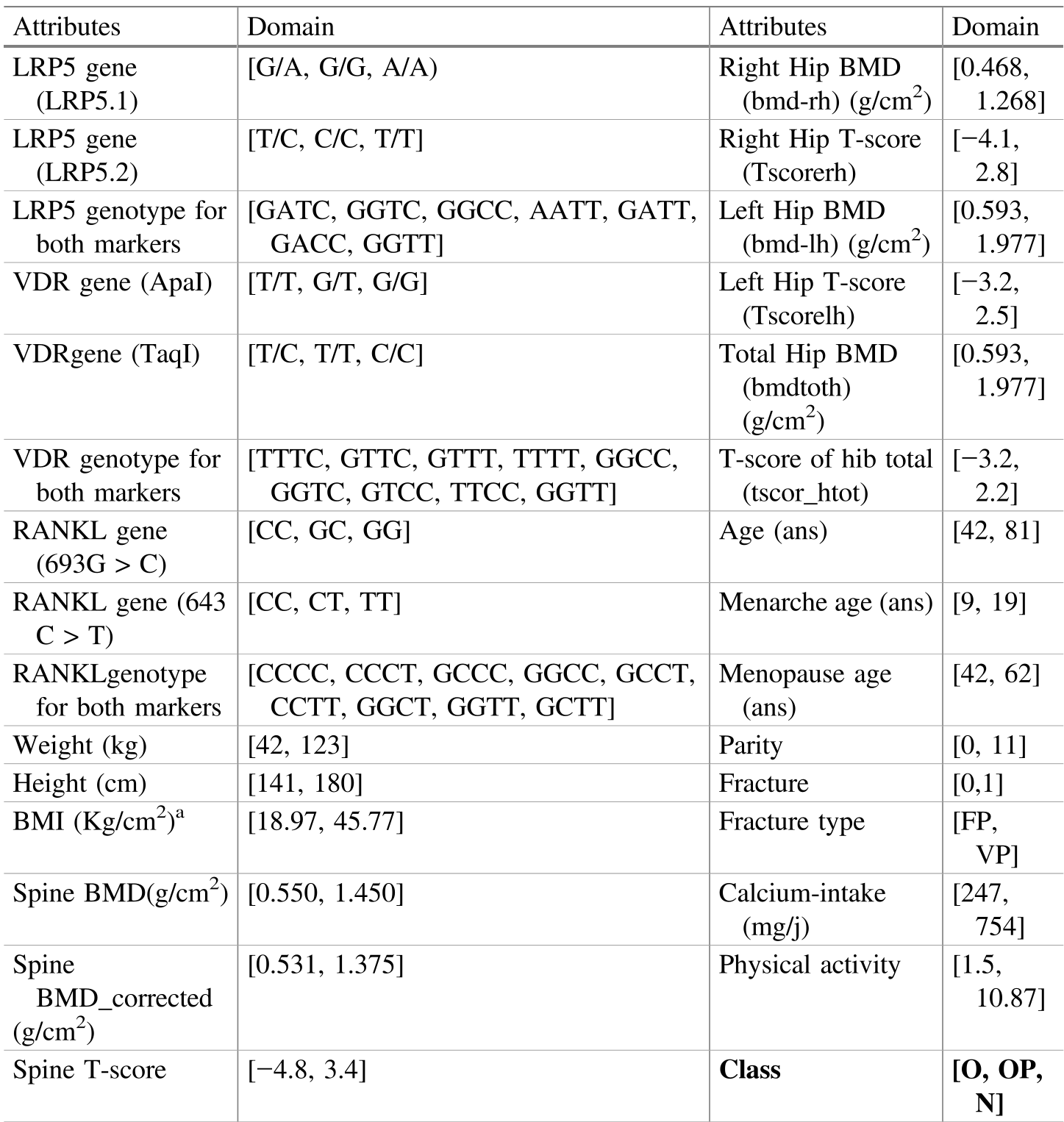 Table 1: The feature space highlights the inclusion of genetic markers alongside traditional metrics like BMI and age.
Experimental Results: SVM Takes the Lead
The experiments revealed that SVM outperformed its peers in almost every metric (PCC, Precision, Recall, and F-Measure).
- SVM Excellence: Achieved 55.65% PCC. While this number may seem low compared to CV or NLP tasks, in clinical diagnostics excluding prime determinants (BMD), it represents a significant signal above random chance (33% for three classes).
- The Pruning Effect: In C4.5, unpruned trees showed a marked increase in error rates, suggesting that "smaller" trees are essential for generalizing medical data where noise (patient variance) is high.
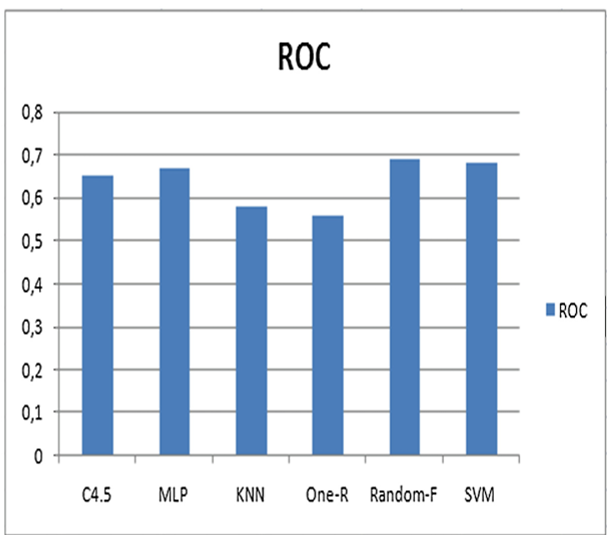 Figure: Comparative accuracy (PCC) across the selected models, identifying the superior performance of non-linear kernels in SVM.
Clinical Interpretability: The Decision Tree
One of the most valuable outputs of this study is the Risk Factor Hierarchy generated by the C4.5 algorithm. Unlike "black-box" ANN models, the tree provides a clear path for physicians.
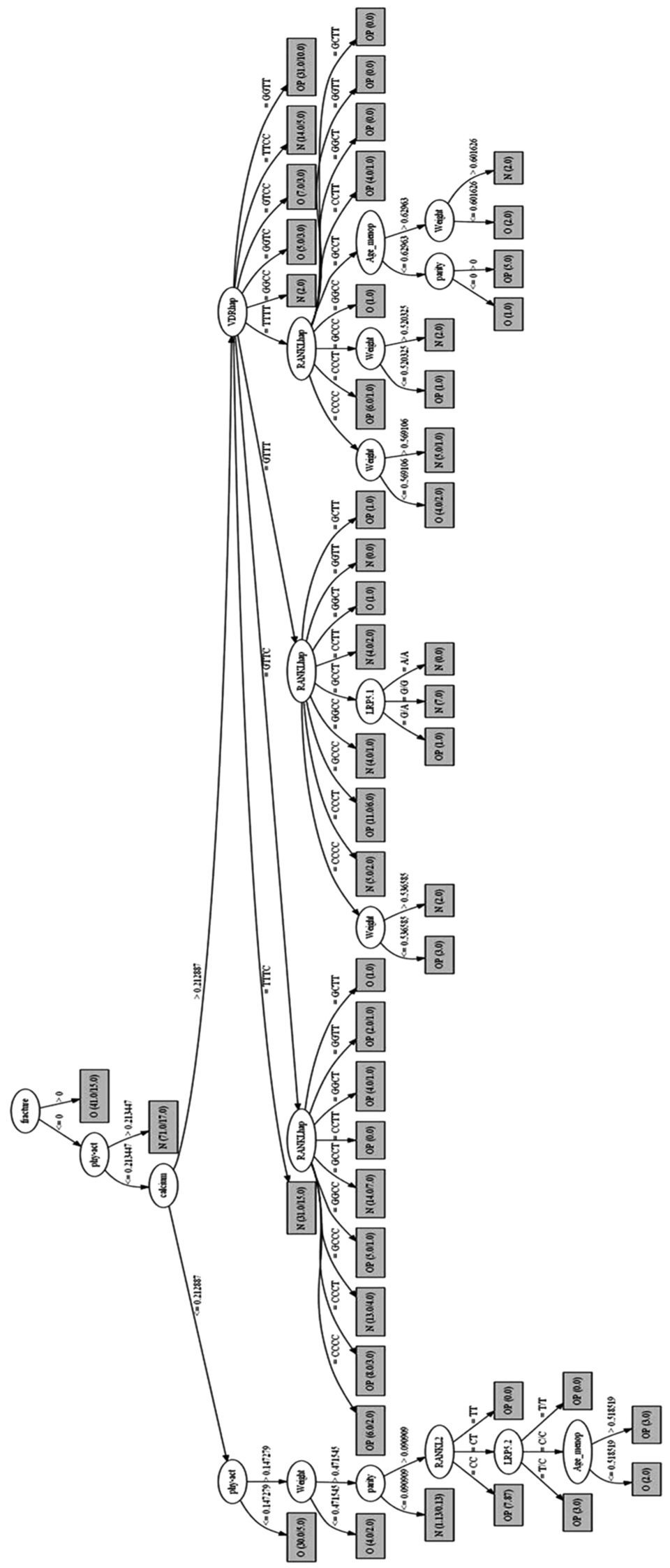 Figure 5: The derived decision logic for bone status categorization based on Tunisian patient data.
Key Findings for Clinicians:
- Fracture History: The strongest predictor of bone deterioration.
- Physical Activity: A threshold of (normalized) was identified as a critical risk marker.
- Genotype Synergy: VDR and RANKL genes are not just independent risks; their impact is amplified when combined with low calcium intake.
Critical Analysis & Conclusion
Takeaway
The study proves that machine learning provides a more nuanced understanding of "joint risk" than common statistical tests like the Chi-square. The ability of SVM with Polynomial kernels to model high-dimensional interactions makes it the preferred tool for genomic-clinical hybrid datasets.
Limitations
- Sample Size: 566 instances is relatively small for deep learning or complex ANN, likely explaining why accuracy stayed below 60%.
- Class Imbalance: The distribution between Normal (231) and Osteoporosis (141) likely introduced bias toward the majority class.
Future Outlook
The next frontier for this research lies in feature selection. By applying techniques like Information Gain or Principal Component Analysis (PCA) before classification, the authors hope to eliminate redundant variables and push accuracy levels toward clinical-grade reliability (). This work sets the baseline for a future medical decision-support system tailored specifically for the Tunisian healthcare infrastructure.