
Decoding the Academic Brain: Identifying Science vs. Art Disciplines via Musical Intelligence
Classification of educational backgrounds of students using musical intelligence and perception with the help of genetic neural networks
This paper presents a novel classification approach using Genetic Neural Networks (GNN) to identify a student's educational background—Social Sciences vs. Positive Sciences—based on their musical intelligence and perception. By analyzing verbal melody repetitions via Fast Fourier Transform (FFT), the system achieves specialized accuracy rates of up to 95%.
TL;DR
Can the way you hum a tune predict whether you are an engineer or an artist? This research suggests "Yes." By combining Fast Fourier Transform (FFT) for audio processing with Genetic Neural Networks (GNN), researchers have developed a model that classifies a student's educational background with up to 95% accuracy based solely on their musical perception and verbal repetition of melodies.
Background Positioning: This work bridges the gap between psycho-acoustics and machine learning, evolving from simple Artificial Neural Networks (ANN) to optimized Genetic-ANN architectures to enhance classification reliability in educational psychology.
The Problem: The Hidden Nuances of Perception
Educational backgrounds—categorized here as Positive Sciences (Math, Engineering) and Social Sciences (Arts, Humanities)—are traditionally seen as distinct cognitive "silos." While educators have long suspected a link between musicality and scientific aptitude (the "Mozart Effect" lineage), quantifying this link has been difficult.
Prior methods often suffered from:
- Subjectivity: Manual assessment of musical talent is prone to bias.
- Optimization Gaps: Standard Feed-Forward Neural Networks often get stuck in local minima when trying to map complex auditory features to cognitive categories.
Methodology: The Hybrid Genetic-Neural Approach
The researchers designed an experiment where 80 subjects listened to a piano melody and repeated it verbally. This audio data was processed through a sophisticated pipeline:
1. Feature Extraction (FFT)
The verbal repetition is a complex sound wave. Using Fast Fourier Transform (FFT), the signal is converted from the time domain to the frequency domain. The researchers extracted amplitudes at 15 specific frequencies (ranging from 20 Hz to 980 Hz) corresponding to specific piano notes.
2. Genetic Optimization
Instead of manually "guessing" the best neural network structure, the authors used a Genetic Algorithm (GA). The GA treats network parameters (number of neurons in the hidden layer, learning rate, and momentum) as "chromosomes."
- Selection: The "fittest" network architectures (those with the lowest Mean Squared Error) are chosen.
- Crossover & Mutation: These architectures are combined and randomly altered to explore the optimal solution space.
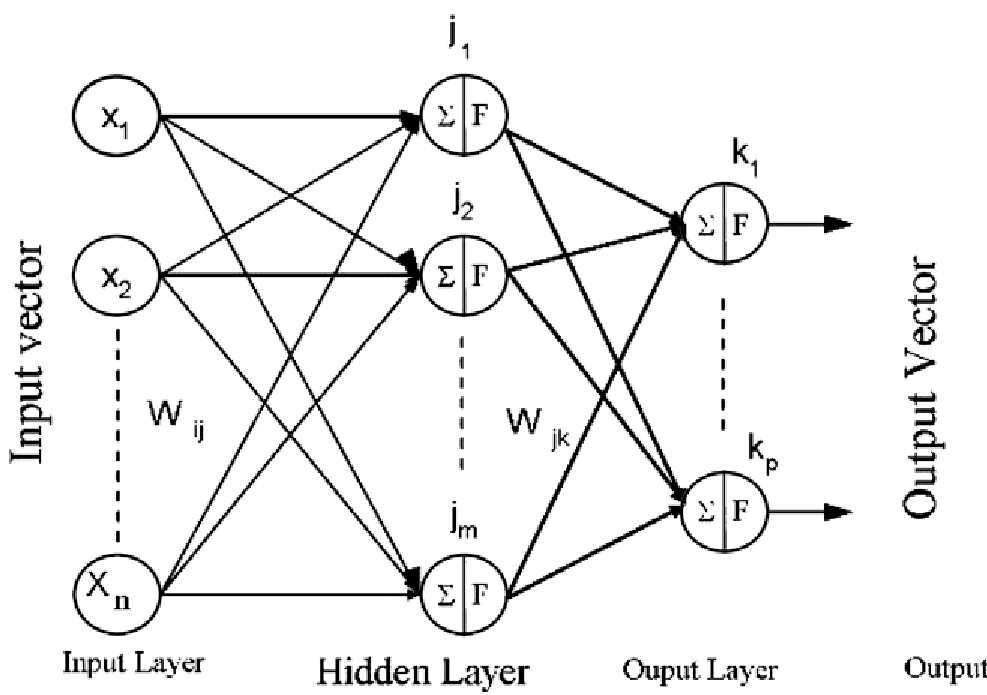 Figure 1: The Feed-Forward Neural Network architecture utilized for classification.
Experiments and Results
The results were statistically validated using t-tests (p-values < 0.05 and < 0.001), ensuring the differences in auditory perception between the two groups were not due to chance.
Performance Highlights:
- Positive Sciences: 95% classification accuracy.
- Social Sciences: 90% classification accuracy.
- Efficiency: The GA-optimized model converged at the 92nd step with an impressive MSE of 0.001.
 Table 1: Success rates of the proposed Genetic Neural Network.
Interestingly, the study identified specific "anchor frequencies" that were more influential for each group. For instance, frequencies like 420 Hz and 520 Hz showed higher relative importance for identifying "Positive Science" backgrounds, suggesting subtle physiological or neurological differences in how these groups perceive and replicate specific pitches.
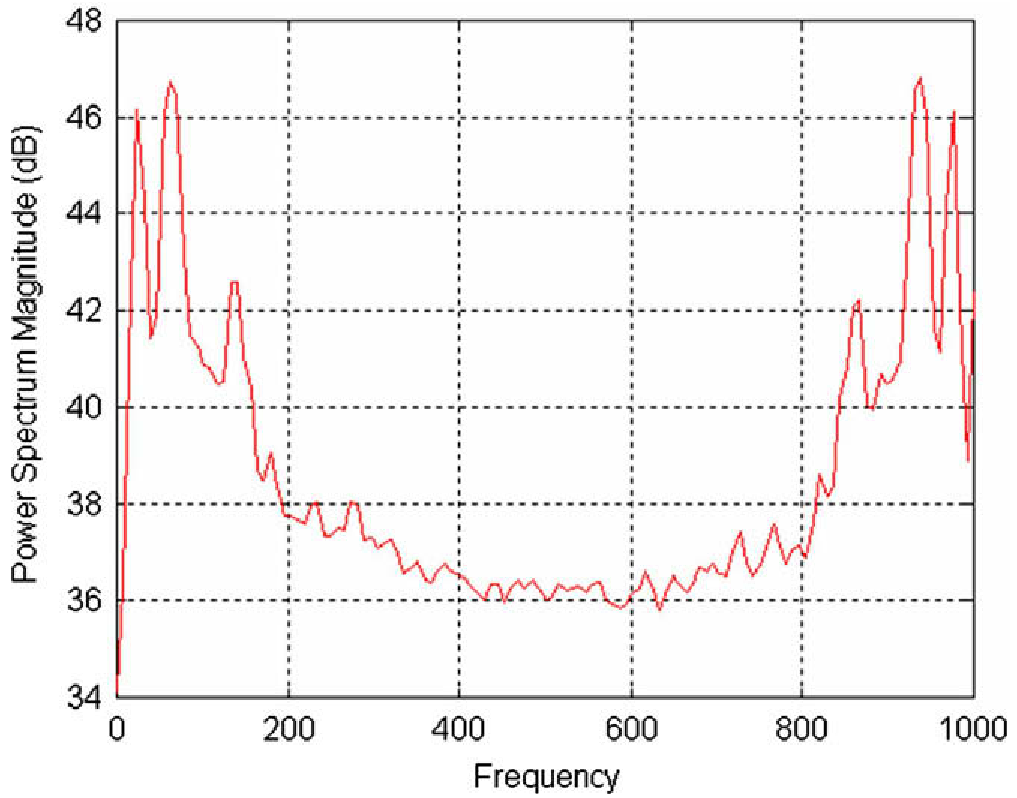 Figure 2: Weights showing the relative importance of different frequency inputs for both groups.
Critical Analysis & Conclusion
Takeaway
This research provides strong evidence that musical hearing is a biological marker for cognitive aptitude. By automating the "survival of the fittest" for neural networks, the authors created a robust tool that outperforms standard back-propagation models.
Limitations
- Sample Size: While 80 subjects provide a baseline, a larger, more diverse global cohort would be needed to generalize these findings across different cultures and languages.
- Verbal vs. Instrumental: The study relies on verbal repetition; however, vocal training or physical health of the vocal cords could act as confounding variables.
Future Outlook
The success of this Genetic-Neural approach opens the door for AI-driven vocational guidance. Imagine a world where a simple five-minute "music test" helps primary school students discover their natural affinity for either the arts or the hard sciences, allowing for more personalized and effective educational pathways.