
Classification of Mutual Fund Investment Types: Moving Beyond Manager Intuition with ML
Classification of Mutual Fund Investment Types with Advanced Machine Learning Models
This paper presents a machine learning-based framework for classifying mutual funds into three core investment types: Growth, Value, and Blend. By leveraging a large-scale dataset from Yahoo Finance (25,393 funds), the authors utilize XGBoost and Random Forest architectures to outperform traditional heuristic-based categorization, achieving a classification accuracy of approximately 90%.
TL;DR
Determining whether a mutual fund is truly "Growth," "Value," or "Blend" has traditionally been a subjective process. This paper leverages a massive dataset of over 25,000 funds and applies high-performance machine learning models—specifically XGBoost and Random Forest—to automate this classification. The result? A robust system that achieves over 90% accuracy, proving that data-driven models can decode the "DNA" of investment strategies more effectively than human labeling.
The "Experience Gap" in Fund Management
For decades, mutual fund classification was the domain of veteran fund managers. However, as portfolios have become increasingly complex—mixing stocks, bonds, and derivatives—manual definitions have become inconsistent.
The authors identify a critical Motivation: If classification is arbitrary, investors cannot accurately manage risk. A "Growth" fund that behaves like a "Value" fund creates a misalignment in an investor's portfolio. The insight here is to let the performance data and fund metrics (alpha, beta, returns) tell the story themselves through statistical modeling.
Methodology: The Analytical Pipeline
The researchers didn't just throw data at an algorithm; they followed a disciplined machine learning workflow:
1. Feature Engineering and Dimension Reduction
Starting with 54 variables scraped from Yahoo Finance, the authors reduced the set to 33 significant predictors. They tested both PCA (Principal Component Analysis) for linear relationships and Kernel PCA for non-linear structures.
Note: Surprisingly, the study found that the "Original Data" performed better than the PCA-reduced features. This suggests that in financial data, the subtle interactions between original variables are often more informative than the synthetic components created by PCA.
2. The Model Battle: Tree-Based vs. Connections
The study compared four distinct approaches:
- KNN: A "lazy learner" that classifies funds based on their proximity to similar funds in the data space.
- Neural Networks: A multi-layer regression approach using backpropagation.
- XGBoost & Random Forest: Ensemble methods that build multiple decision trees to reach a final consensus.
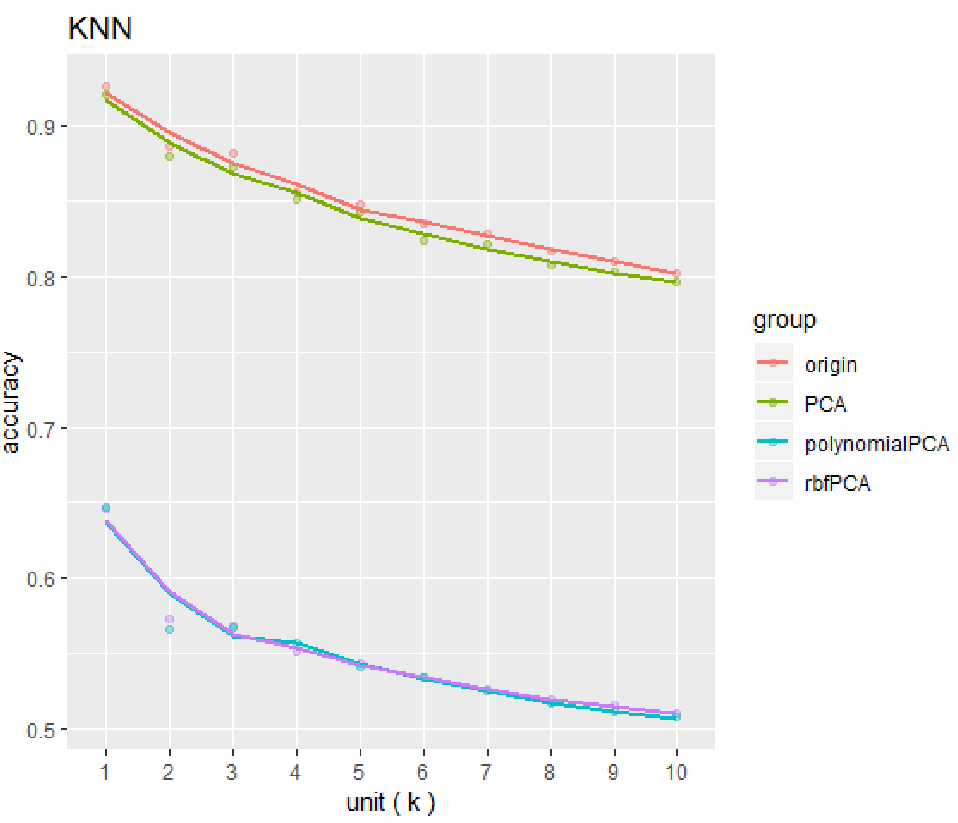 Fig 1: KNN Cross-Validation shows high performance at K=1 but struggles as local noise increases.
Experiments and Results
The experiments yielded a clear hierarchy of performance. While Neural Networks are often the "gold standard" in AI, they faltered here (80% accuracy). This is likely because financial datasets are often tabular and "noisy," where decision trees typically excel.
The Champions: XGBoost and Random Forest
- XGBoost (Tree Depth 5): Achieved the peak performance of 90.13%.
- Random Forest: Showed incredible robustness, maintaining high accuracy (89.97%) regardless of the number of trees.
 Fig 2: A comparison of accuracy across categories confirms that tree-based models (XGBoost/RF) significantly outperform KNN and Neural Networks.
Deep Insight: Why Growth Matters
A crucial part of the discussion focuses on the physical reality of these labels. As shown in the "Three Types Fund Return" chart, Growth funds consistently exhibit higher mean returns compared to Value and Blend, but with different risk profiles. By accurately classifying these funds, the model ensures that an investor seeking "Growth" isn't accidentally buying a stagnant "Value" fund.
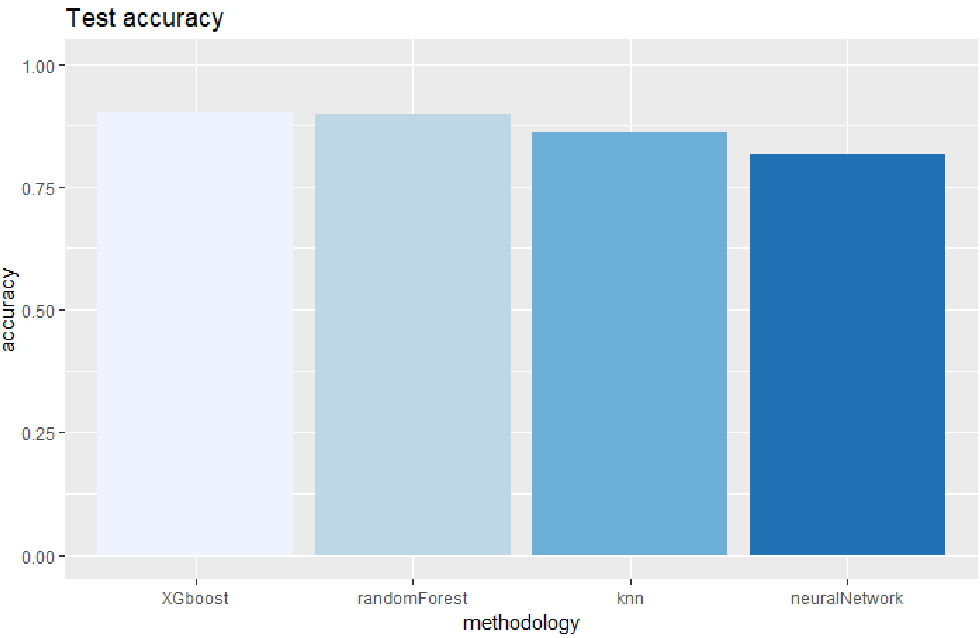 Fig 3: Visual evidence showing the return distribution across categories, justifying the importance of accurate classification.
Critical Analysis & Conclusion
This work marks a significant step toward Automated Risk Management.
Takeaways:
- Ensemble Power: For tabular financial data, ensemble tree methods like XGBoost remain superior to deep learning.
- Feature Integrity: Dimension reduction (PCA) isn't always helpful; sometimes the raw financial ratios contain a "gestalt" that is lost when compressed.
Limitations: The study identifies that Neural Networks were hampered by the non-convex nature of their cost functions in this specific data context. Future work might explore Attention-based architectures (TabTransformers) to see if they can bridge the gap between deep learning and tabular data efficiency.
In conclusion, the movement from "human-curated" to "AI-verified" fund types offers a more transparent future for investors worldwide.