
ANN vs. The Void: Recovering Massive Missing Data in Real-World Marketing Databases
Comparison of Classifiers Efficiency on Missing Values Recovering: Application in a Marketing Database with Massive Missing Data
This paper evaluates the efficiency of four classifiers (ANN, C4.5, Naïve Bayes, and K-Means) in recovering missing values within a real-world marketing database characterized by massive missing data (23.5%) and class imbalance. The study demonstrates that Artificial Neural Networks (ANN) achieve the highest stability and accuracy, reaching a 98.05% recovery rate when combined with data balancing techniques.
TL;DR
In the world of Data Mining, missing data is a chronic ailment, but "massive missing data" (where not a single record is complete) is a potential fatality. This research tackles a textile retail database where 23.5% of data is missing, using a combination of Domain Expertise, Propositional Logic, and Artificial Neural Networks (ANN). The result? A robust recovery system that achieves up to 98.05% accuracy, proving that even "garbage in" can result in "signal out" if handled with the right preprocessing rigor.
Problem & Motivation: The Reality of "Messy" Data
Most academic papers work with sanitized datasets like MNIST or Iris. In reality, marketing databases are nightmare fuel:
- Massive Absence: In this study, 0% of records were completely filled.
- Intentional Misinformation: Respondents often lie about "Annual Income" to protect privacy or status.
- Imbalance: Certain income brackets are over-represented, leading models to "guess" the majority class to inflate accuracy metrics.
The authors argue that standard imputation (simply filling in the mean or mode) introduces dangerous distortions. Instead, they treat "Missing Value Recovery" as a classification task, predicting the missing values based on the latent relationships of other attributes.
Methodology: Logic-Driven Preprocessing
The "secret sauce" of this paper isn't just the classifier; it's the preprocessing pipeline.
1. Attribute Selection via CTL
The authors didn't just throw all 71 attributes into the model. They used Computation Tree Logic (CTL) to define properties and relationships. For instance, they established logical paths like:
AG((Appeal & ¬Difficulty) || (Parking & Transport)) → AF(Income)
This formal logic ensures that only variables with a causal or high-correlation potential to "Income" were selected.
2. Handling the "Imbalance"
Raw data is often biased. The authors used the Consistent Sub-set Algorithm (CSS) to balance the training set. This effectively "levels the playing field" so the classifier doesn't develop a lazy preference for the most frequent income bracket.
3. Architecture Overview
The study compared four distinct flavors of AI:
- ANN (Multilayer Perceptron): Trained with backpropagation.
- C4.5 Decision Tree: A frequentist approach to branching logic.
- K-Means Clustering: Unsupervised grouping.
- Naïve Bayes: Probability-based classification.
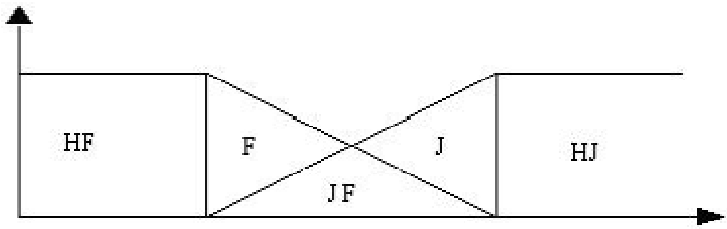 Fig 1: Classification of attribute importance, categorizing factors through domain expert intervention.
Experiments & Results: The AUC Truth
While many researchers rely on "Accuracy," this paper exposes its flaws using ROC Curves and AUC (Area Under Curve).
The "Accuracy Trap"
At first glance, the C4.5 Decision Tree seemed successful. However, the ROC analysis revealed it was biased. It was essentially "cheating" by correctly identifying majority classes but failing miserably on minority ones.
ANN’s Dominance
The Artificial Neural Network proved to be the most resilient.
- T3 Test (Balanced Data, 2 intervals): ANN hit 98.05% accuracy.
- AUC Score: ANN achieved 96.5%, significantly higher than C4.5's dismal 56.7%.
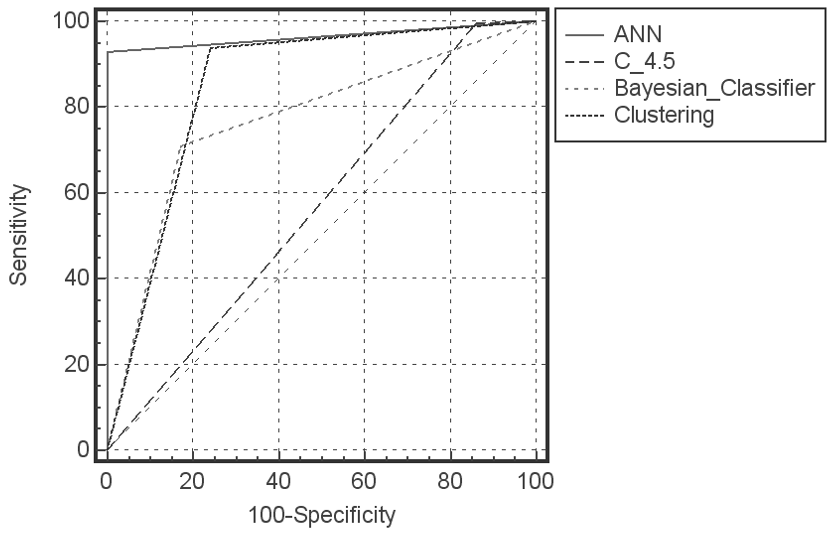 Fig 2: ROC Curves showing the distinct performance gap between ANN and other classifiers.
| Classifier | AUC Value |
|---|---|
| ANN | 96.5% |
| K-Means | 84.9% |
| Bayesian Cl. | 76.9% |
| C4.5 | 56.7% |
Critical Insight: Why ANN Won
The ANN’s success in this context stems from its ability to model non-linear, multi-dimensional relationships without requiring strict attribute independence (which Naïve Bayes requires) or being overly sensitive to local outliers (which K-Means suffers from). By processing 81 distinct inputs through a sigmoid-activated hidden layer, the ANN captured the "profile" of a store's income even when the data was sparse.
Takeaway & Future Work
The headline here isn't just about Neural Networks; it’s about Data Stewardship.
- Expertise is Mandatory: Using a domain expert to refine attributes via CTL significantly reduced noise.
- Balancing is Non-negotiable: Models trained on imbalanced real-world data are often "correct but useless" (biased).
In the future, the authors aim to test the robustness of these classifiers with even smaller "seed" datasets, pushing the limits of how little data we need to reconstruct a "lost" database.
Conclusion
For technical leaders managing messy marketing or industrial data, this paper serves as a blueprint: Balance your classes, consult your experts, and let an ANN handle the non-linear recovery.