
Modeling the Digital Playground: How SNS Recalibrates Classroom Friendships and Bullying
Classroom Group Formation Model Based on Socion Theory Considering Communication in Social Networking Services
This paper presents a multi-agent simulation model designed to analyze how Social Networking Services (SNS) influence classroom friendship dynamics and bullying. By integrating Socion Theory and Heider's Balance Theory, the researchers simulate interpersonal relationships among junior high school students, comparing traditional face-to-face (FTF) interactions with hybrid FTF-SNS environments.
TL;DR
With 80% of adolescents active on SNS, the traditional "physical classroom" is no longer the sole arena for social development. This paper develops a multi-agent simulation based on Socion Theory to explore how SNS groups impact student relationships. The findings reveal a paradoxical reality: while SNS increases overall classroom "friendliness," it also creates high-pressure pockets where rejection targets specific individuals more intensely, providing a computational look at the roots of cyberbullying.
Problem & Motivation: The "Invisible" Shift in Social Dynamics
The rate of perceived bullying in Japanese schools has reached its highest level in 30 years. Traditional sociological models struggle to track bullying because it has migrated from the playground to encrypted SNS groups. The authors identified a gap: previous simulations (like Okubo’s or Osumi’s) focused on face-to-face (FTF) "conforming behavior" but lacked a mechanism to simulate the multi-layered relationship where a student's mental "map" of their peers (P-net) might differ from the actual social ties (C-net).
Methodology: Socion Theory Meets Social Skills
The core of the proposed method lies in the integration of three distinct psychological and technical frameworks:
- Socion Theory (The Network Backbone): Each agent maintains a "Mental Network" (P-mode). Interactions in the real world (C-mode) update these mental states. Bullying often stems from a mismatch between how an agent perceives themselves versus how the group perceives them.
- Social Skill Categorization: Not all students communicate equally. Agents are assigned levels of Assertiveness (impact on others) and Receptiveness (susceptibility to others). This creates four distinct personas: Assertive, Aggressive, Non-assertive, and Avoidance.
- The SNS Mechanism: Unlike FTF communication which is one-on-one, the SNS model allows for "One-to-Many" updates. When one agent "posts" about a topic agent, every member of that private SNS group updates their likability ratings simultaneously, accelerating group-think.
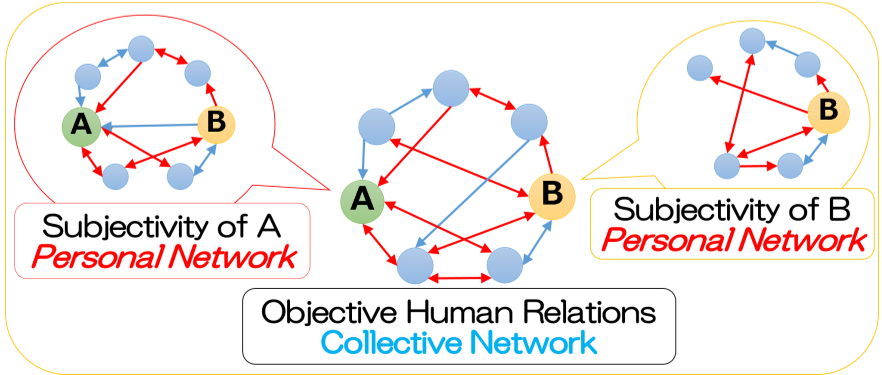 Figure 1: The dual-layered architecture of Socion Theory where internal mental networks (P-net) interact with the collective reality (C-net).
Experiments & Results: The Rise of the "Common Enemy"
The researchers compared two scenarios: FTF-only vs. FTF + SNS.
1. The Good News: More Friends
In the SNS simulation, average likability and the number of friend links increased. The explanation is simple: SNS provides more "turns" for communication without the constraints of time or physical location. For the majority, digital connectivity fosters rapport.
2. The Dark Side: Concentrated Rejection
While general rejection links decreased, the intensity of rejection for the most-hated agent significantly increased. This is a critical insight into the "malignant" nature of cyberbullying. In private SNS groups, members share their dislikes. Through the Conforming Strategy, if a group leader expresses dislike for a specific peer, the entire group quickly aligns their likability ratings to match.
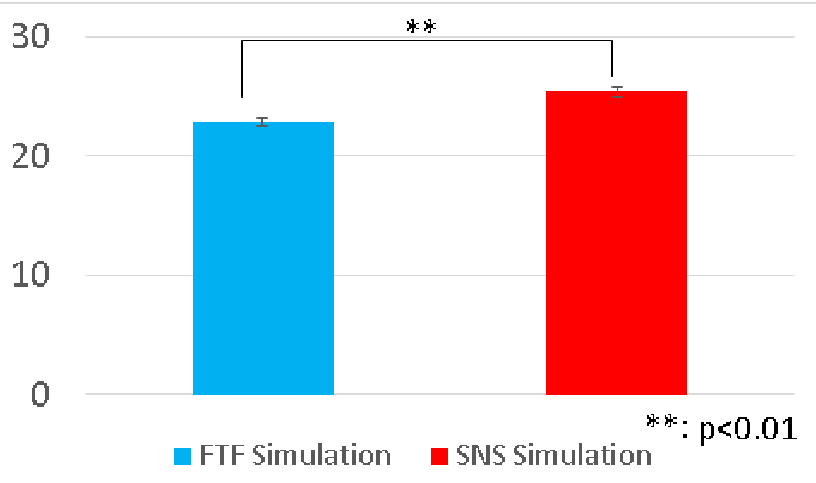 Figure 2: Average likability ratings across different social skill groups when SNS is introduced.
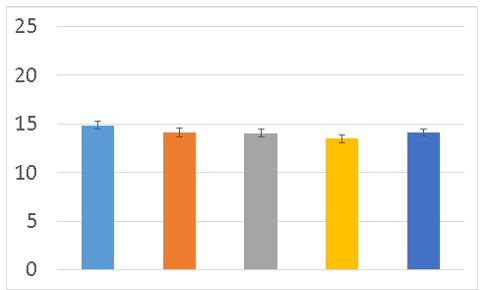 Figure 3: Comparison of rejection links toward the most disliked agent. Note the concentration effect in the SNS scenario.
Critical Analysis & Conclusion: Future with Educational Robots
This study moves beyond simple "rumor propagation" models to a deeper psychological simulation of human relationships.
Key Takeaways:
- Polarization: SNS doesn't just make people "nicer" or "meaner"; it polarizes the classroom. It creates echo chambers where popular students get more popular, and marginalized students become collective targets.
- Educational AI: The authors suggest that this model could be embedded into educational robots (like NAO or Musio X). By observing student social skills and SNS usage patterns, a robot could run these simulations in the background to alert teachers to "hidden" bullying risks before they escalate into physical-world problems.
Limitations: The current model does not yet account for gender differences in socialization or the nuances of how different social skills (like Aggressive vs. Avoidance) specifically manifest in digital text versus physical speech. Future work will need to refine these "digital personalities" to capture the full spectrum of adolescent social life.