
Maximizing Crowdsourcing Rewards: High-Efficiency Route Recommendation for the Mobile Worker
Client-Side Service for Recommending Rewarding Routes to Mobile Crowdsourcing Workers
This paper introduces a client-side route recommendation service for mobile crowdsourcing workers, enabling them to maximize rewards from on-site and delivery tasks while meeting personal destination deadlines. The authors propose an event-driven framework and a Complete Search Approach (CSA) with advanced pruning, achieving up to 80% of optimal rewards with sub-millisecond response times.
TL;DR
In the gig economy, workers often juggle tasks from multiple platforms while trying to get home on time. This paper presents a client-side service that recommends real-time routes to maximize income from both on-site (e.g., photo-taking) and delivery tasks. By utilizing an optimized Bi-Directional Complete Search, the system provides near-optimal rewards (up to 80%) with a response time fast enough for any smartphone.
The Problem: The Worker-Centric Deadline Dilemma
Most crowdsourcing research focuses on the server's perspective—how to distribute tasks to minimize total cost. But real-world workers are autonomous; they have their own schedules and destinations.
The technical challenge is twofold:
- Online Dynamics: Tasks appear and expire continuously. Theorem 1 in the paper proves that no online algorithm can be "perfect" (non-zero competitive ratio) in the worst-case scenario.
- Computational Complexity: Finding the best route among hundreds of tasks with individual deadlines is essentially an Orienteering Problem with Time Windows (OPTW), which is NP-hard.
Methodology: Bi-Directional Search and Reward Pruning
The authors move beyond simple Greedy heuristics (like Nearest Neighbor) to a Complete Search Approach (CSA). To make this run on a mobile device, they implement a clever "Event-Driven Framework."
1. The Bi-Directional Strategy
Instead of searching only from the starting point, the algorithm searches forward from the worker's current location and backward from their destination simultaneously. They meet in the middle using a "Half Travel Time Bound" to bridge the gap.
2. Tight Upper Bound Pruning
The real "secret sauce" lies in the pruning rules. The algorithm calculates a reward upper bound, , which estimates the maximum possible earnings if a specific task is included. If this bound is lower than the reward of the current best route, the entire branch is discarded instantly.
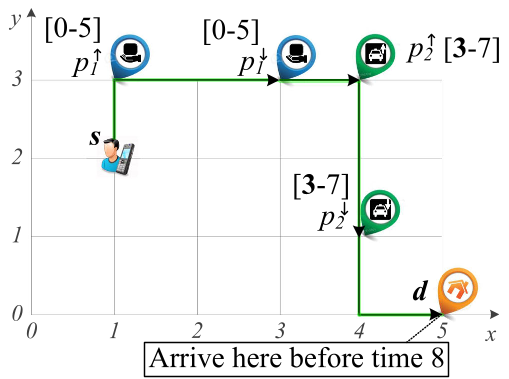 Fig 1: The worker-centric system architecture showing the interaction between crowdsourcing servers and the mobile client.
Handling Delivery Tasks: The Guarantee Constraint
Delivery tasks add a layer of complexity: you must visit a pick-up location before a drop-off location. The authors introduce a "Delivery Guarantee," ensuring that once a package is picked up, the route must deliver it on time.
To maintain speed, they offer two greedy variations:
- Non-Preemptive: Complete one delivery before starting another (Fast, but lower reward).
- Preemptive: Interleave pick-ups and drop-offs (Slower, but higher reward).
Experimental Performance
The researchers tested their system using real check-in data from Foursquare in New York (NYC) and Los Angeles (LA).
- Quality: The CSA consistently yielded 70-80% of the reward that an "all-knowing" offline algorithm would achieve.
- Efficiency: Despite searching all possible routes, the optimizations were so effective that the computation took only 0.001 seconds for on-site tasks and 0.05 seconds for delivery tasks.
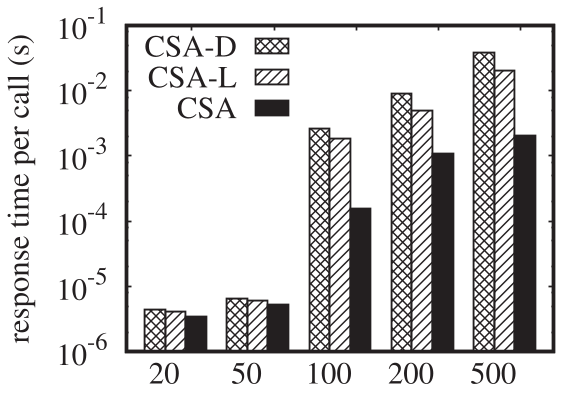 Fig 2: Performance metrics comparing CSA against various Greedy heuristics in NYC and LA.
Depth Analysis & Conclusion
This paper bridges the gap between theoretical routing problems and practical mobile services. While the "0.0 competitive ratio" proof is a sobering reminder of the volatility of online tasks, the heuristic performance proves that in typical urban settings (Gaussian or Uniform distributions), workers don't need "perfect" algorithms—they need fast, reliable ones.
Takeaway: The shift toward client-side routing not only empowers the worker with better privacy and autonomy but also demonstrates that with tight mathematical bounds, we can solve NP-hard problems in the palm of our hand.
Limitations & Future Work
The current model assumes constant travel speed and known traffic. Incorporating real-time traffic data and multi-worker collaboration (without a central server) would be the next logical frontier for this research.