
Beyond Centrality: Mapping the "Close Communication" of Europe's Corporate Giants
Close communication and 2-clubs in corporate networks: Europe 2010
This paper analyzes the 2010 European corporate network of interlocking directorates using the "2-club" framework (sub-graphs with diameter ≤ 2). It identifies a single dominant "European borough" containing 2,128 2-clubs, revealing that the UK remains the most influential pivot for close communication despite the high internal density of the Francophone network.
TL;DR
Is the European corporate elite a single, unified group or a collection of national cliques? By applying the mathematical concept of 2-clubs, researchers have mapped the 2010 network of the top 300 European firms. They discovered that while France holds a dense, massive core, the UK business elite acts as the ultimate bridge, accessing over 81% of the network’s communication areas, whereas Germany remains remarkably insular.
The "Indirect Influence" Problem
In social network analysis (SNA), we often look at direct ties—Firm A and Firm B share a director. However, corporate behavior (like political donations or governance routines) often spreads via Firm C, a common neighbor. This is "close communication."
Traditional methods like k-cores or modularity often fail to identify these tight-knit, face-to-face communities where everyone is at most "two handshakes" away. This paper uses the 2-club framework to solve this, identifying sub-networks with a diameter of at most 2.
Methodology: The Anatomy of a Borough
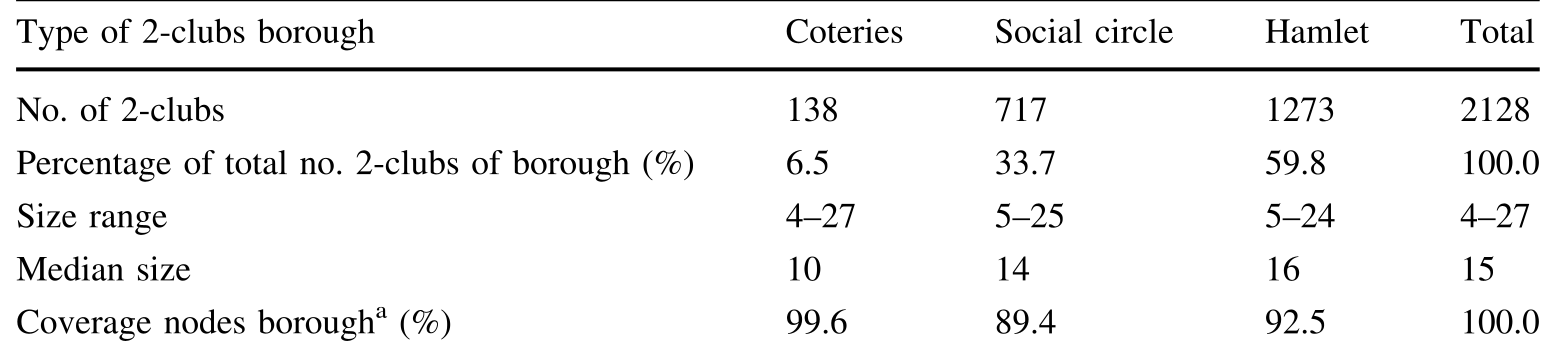
The authors define a Borough as a super-community that envelopes all close communication. Within the 2010 European Borough (225 firms), they identify three levels of closeness:
- Coteries: Ego-networks where one firm sits at the center.
- Social Circles: Networks built around a central pair of firms (e.g., a "power couple").
- Hamlets: The most widely meshed type, lacking a single center but maintaining a diameter of 2.
Key Insights: The Resilience of National Varieties
1. The Francophone Core
The research confirms French dominance in terms of sheer volume. The 35 largest social circles and 44 largest hamlets were predominantly French. Firms like GDF Suez (now Engie) and Total SA sit at the heart of massive coteries that extend into Belgium and Luxembourg.
2. The Surprising Isolation of Germany
Despite Germany’s economic weight, its corporate close communication is "inward-oriented." While French and British networks have moved away from bank-centricity, German 2-clubs remain anchored by financial institutions like Deutsche Bank. Its "scope"—the percentage of the borough it can access—is only 29.5%.
3. The UK as the "Master Bridge"
The most spectacular finding involves the UK. The British "pivotal hamlet" is small (only 11 firms) but highly efficient. It interlocks with France, Belgium, the Netherlands, and Scandinavia.
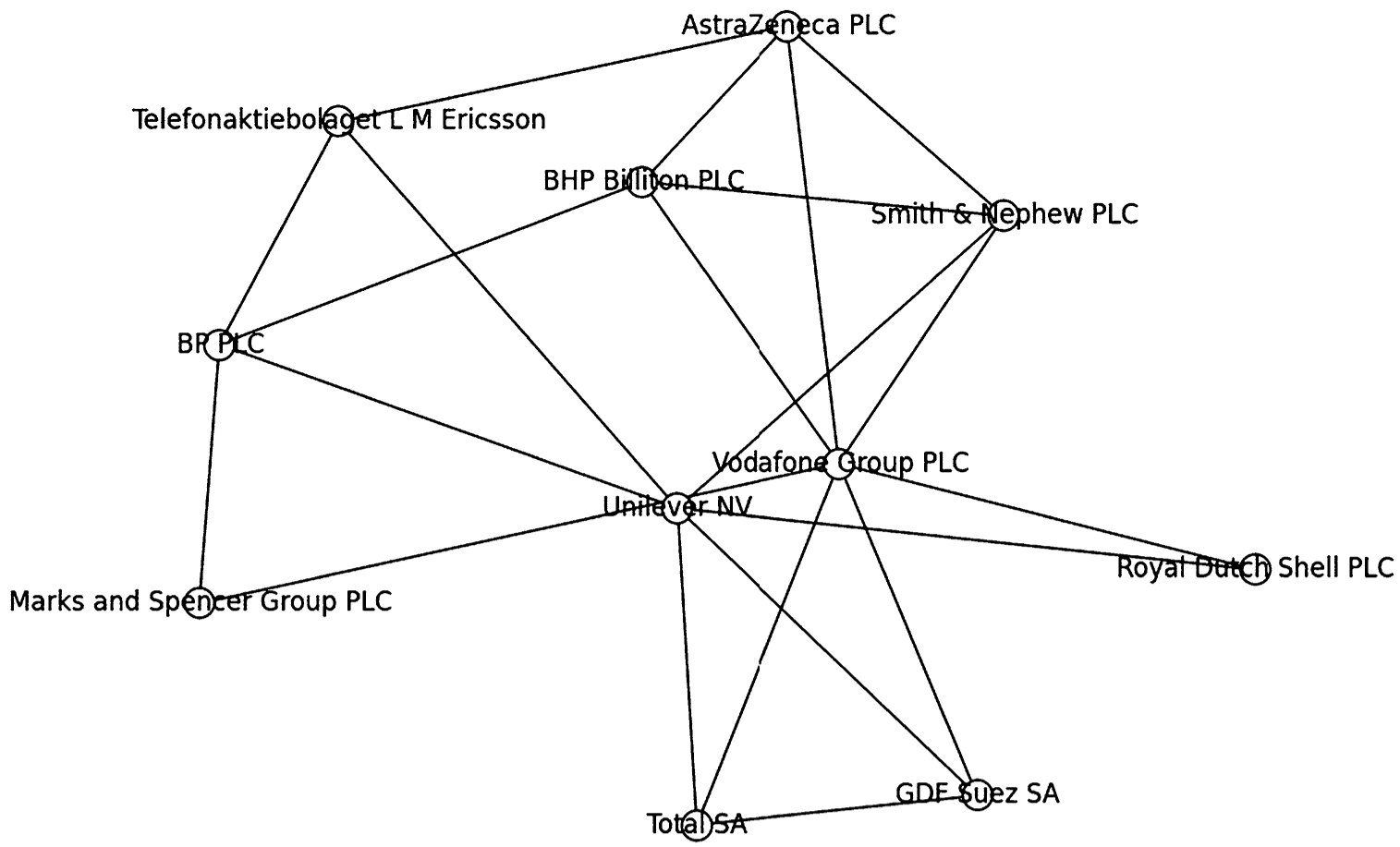 Note: Figure 6 (re-referenced as 7 in some segments) shows the widely meshed nature of the British pivot, connecting diverse national interests.
Experiments & Regional Pavements
By defining "Pivotal 2-clubs" for each nation, the authors calculated the Scope: how much of the total European close communication area does a nation’s elite touch?
- UK: 81.0% Scope (The supreme connector)
- France: 76.0% Scope (The massive core)
- Italy: 37.2% Scope (Regional player)
- Germany: 29.5% Scope (Internally focused)
- Spain/Norway: <4% (The peripheries)
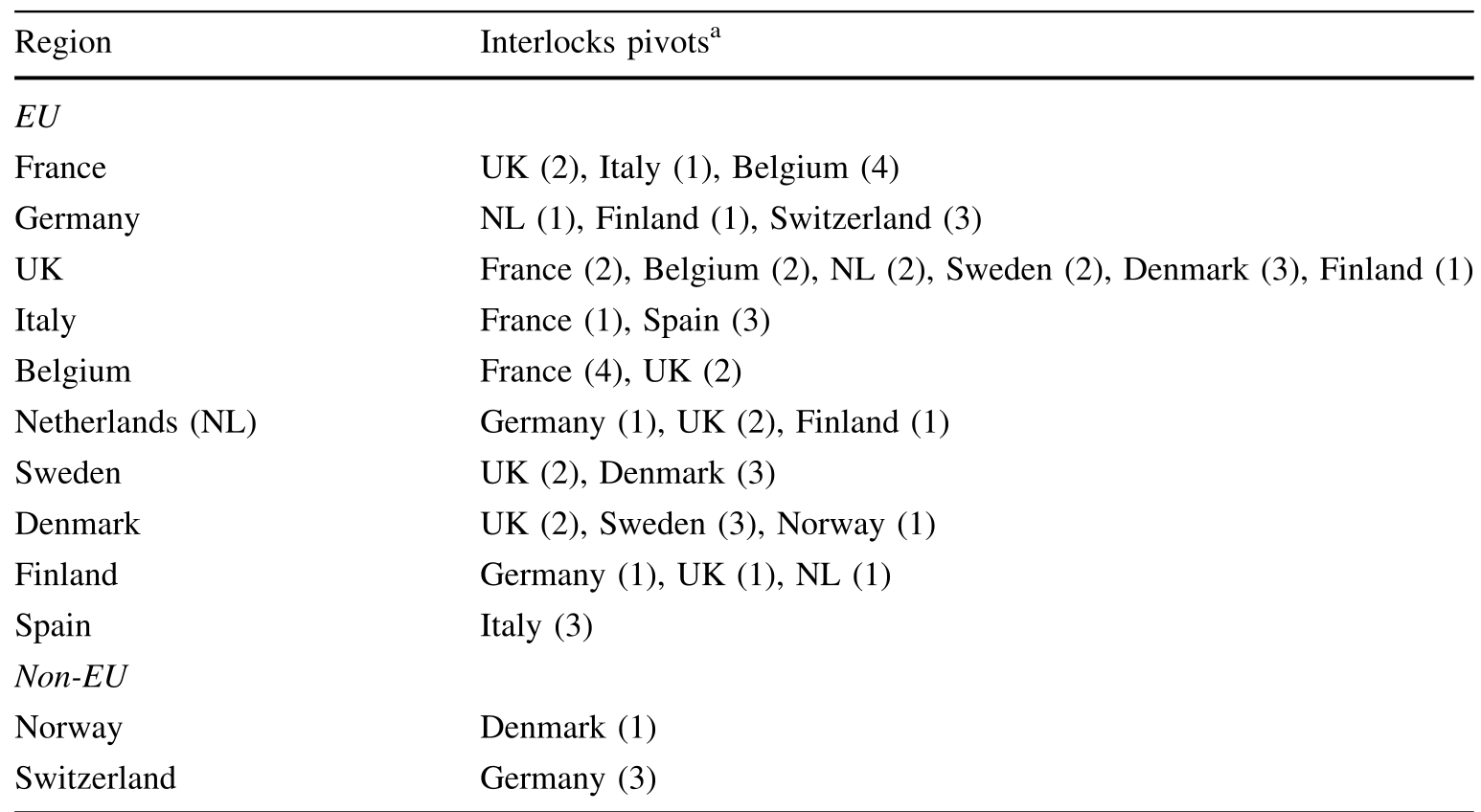 The table above shows that while the UK connects to almost everyone, the "Franco-German axis" is notably absent in the corporate boardrooms.
Conclusion: A Multilevel Reality
The study challenges the idea of a fully "Europeanized" elite. Instead, it reveals a multilevel structure. While national networks are fragmenting (losing their internal centers), they are reforming into regional "Boroughs."
The most critical takeaway for policy and business: The political link between France and Germany was not backed up by corporate "close communication" ties in 2010. Conversely, the UK's central role in European corporate communication suggests that "Brexit" in 2016 likely severed a vital artery of the Continental business network.
Limitations: The data is a snapshot from 2010. Future work must address how the 2008 financial crisis and 2016 political shifts (Brexit) reshaped these diameters of influence.