
Decoding User Dynamics: Closed-Form Solutions for Sparse Social Network Oscillations
Closed-Form Solutions of the Fundamental Equation That Describes User Dynamics in Online Social Networks
The paper derives a closed-form solution for the fermion-type fundamental equation within an oscillation model used to describe user dynamics in Online Social Networks (OSNs). This method utilizes an anti-commutation relation and a Hamiltonian structure to maintain the original sparse network topology, successfully generating general solutions for the network wave equation.
TL;DR
Researchers have derived a breakthrough closed-form solution for the fermion-type fundamental equation, a mathematical model that describes how influence propagates through Online Social Networks (OSNs). Unlike previous models that "hallucinated" connections between unrelated users, this new solution respects the sparsity of real-world social networks while accurately capturing the causal relationships and "vibrations" of user activity.
Context: Why "Oscillation" Matters
In the digital age, phenomena like online flaming (explosive collective dynamics) and echo chambers represent more than just social issues—they are physical divergences in information flow. The "Oscillation Model" treats these interactions like waves on a string. If the "oscillation energy" diverges, you get a flaming event.
However, the math used to describe this—the Wave Equation—is a second-order differential equation. In physics, second-order equations often obscure the direct "A caused B" causal link. To find the causality, we need a first-order "fundamental equation."
The Sparsity Problem: Bosons vs. Fermions
Earlier works proposed a boson-type equation. While solvable, it had a fatal flaw: it required taking the square root of the Laplacian matrix (). In matrix theory, the square root of a sparse matrix (where most users aren't connected) is almost always a complete matrix (where everyone is connected).
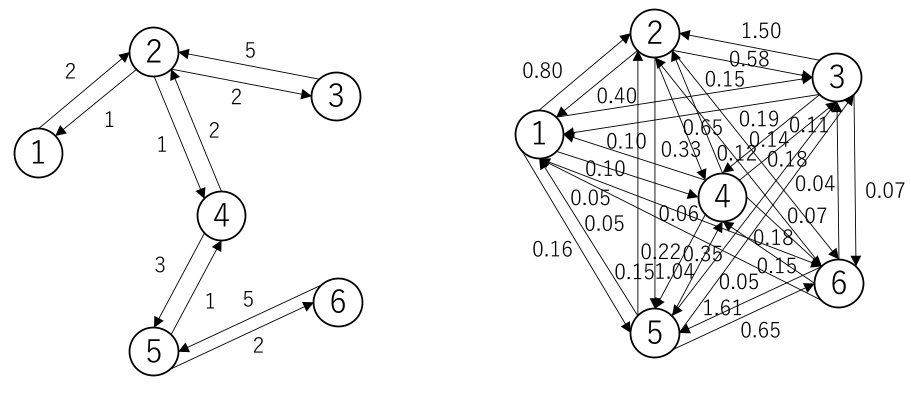 Fig 1. The structural distortion: The boson-type model (right) implies every user influences every other user directly, which is unacceptable for modeling realistic OSNs.
The fermion-type equation was designed to solve this. It uses a different Hamiltonian () that keeps the link structure intact, as shown below:
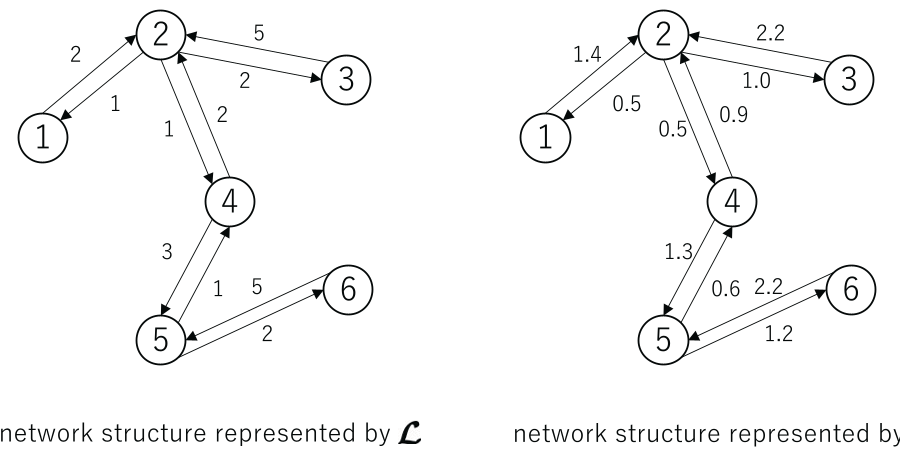 Fig 2. The fermion-type approach preserves the actual social graph (H looks like L), ensuring the model reflects real-world constraints.
Methodology: The Algebraic Breakthrough
The core challenge was that the fermion-type equation was too complex to solve in a "closed-form" (a neat, final formula) until now. The authors solved this by introducing an anticommutation relation borrowed from the logic of quantum mechanics.
By decomposing the Hamiltonian into nilpotent matrices (matrices that become zero when squared), they expanded the matrix exponential into a series of trigonometric functions.
The Formal Solution
The resulting state vector is governed by: The paper proves that the solution is a combination of cosine and sine transforms of the network's Laplacian eigenvalues, effectively allowing us to "calculate" the future state of a social network without iterative simulation.
Why This Changes Everything
- Causality: Because it's a first-order equation, researchers can now trace exactly which link or node sparked a specific "oscillation" or trend.
- Generalization: The paper demonstrates that the sum of the fermionic components perfectly reconstructs the general solution to the classic wave equation.
- Hidden Characteristics: The fermion-type solution is mathematically distinct from the boson-type. This suggests that there are "non-classical" behaviors in social networks—dynamics that we couldn't see before because our models were too simplified or structurally inaccurate.
Critical Insight & Limitations
This work moves social network analysis away from simple "epidemic" models (like SIR) toward a "physical" understanding of network tension and energy.
Limitations: The model assumes the Laplacian matrix has only real eigenvalues (no complex divergence). While this works for stable networks, the most "explosive" flaming events often involve asymmetric interactions that might lead to complex eigenvalues. Future research will need to bridge this gap to model the most extreme social instabilities.
Conclusion
By finding the closed-form solution to the fermion-type equation, Ikeya and Aida have provided a mathematically rigorous "microscope" for OSNs. We can now model user dynamics with higher fidelity, respecting the sparse nature of human connections while tracing the causal roots of collective digital behavior.