
Scaling the Social Web: A Comparative Deep-Dive into Google and Facebook’s Cloud Architectures
Cloud Computing Architecture for Social Computing - A Comparison Study of Facebook and Google
This paper presents a comparative analysis of the cloud computing architectures of Google and Facebook as of the early 2010s. It focuses on how these giants utilize "Software as a Service" (SaaS) business models, commodity hardware, and distributed file systems to manage the massive scale of social computing.
TL;DR
In the era of hyper-growth, the choice between "Scaling Up" and "Scaling Out" is the difference between survival and system collapse. This study dissects how Google and Facebook pioneered the use of commodity hardware and distributed software layers to support hundreds of millions of users, achieving unprecedented hardware efficiency and nearly 1.15 PUE.
The Scalability Conundrum: Why Vertical Scaling Fails
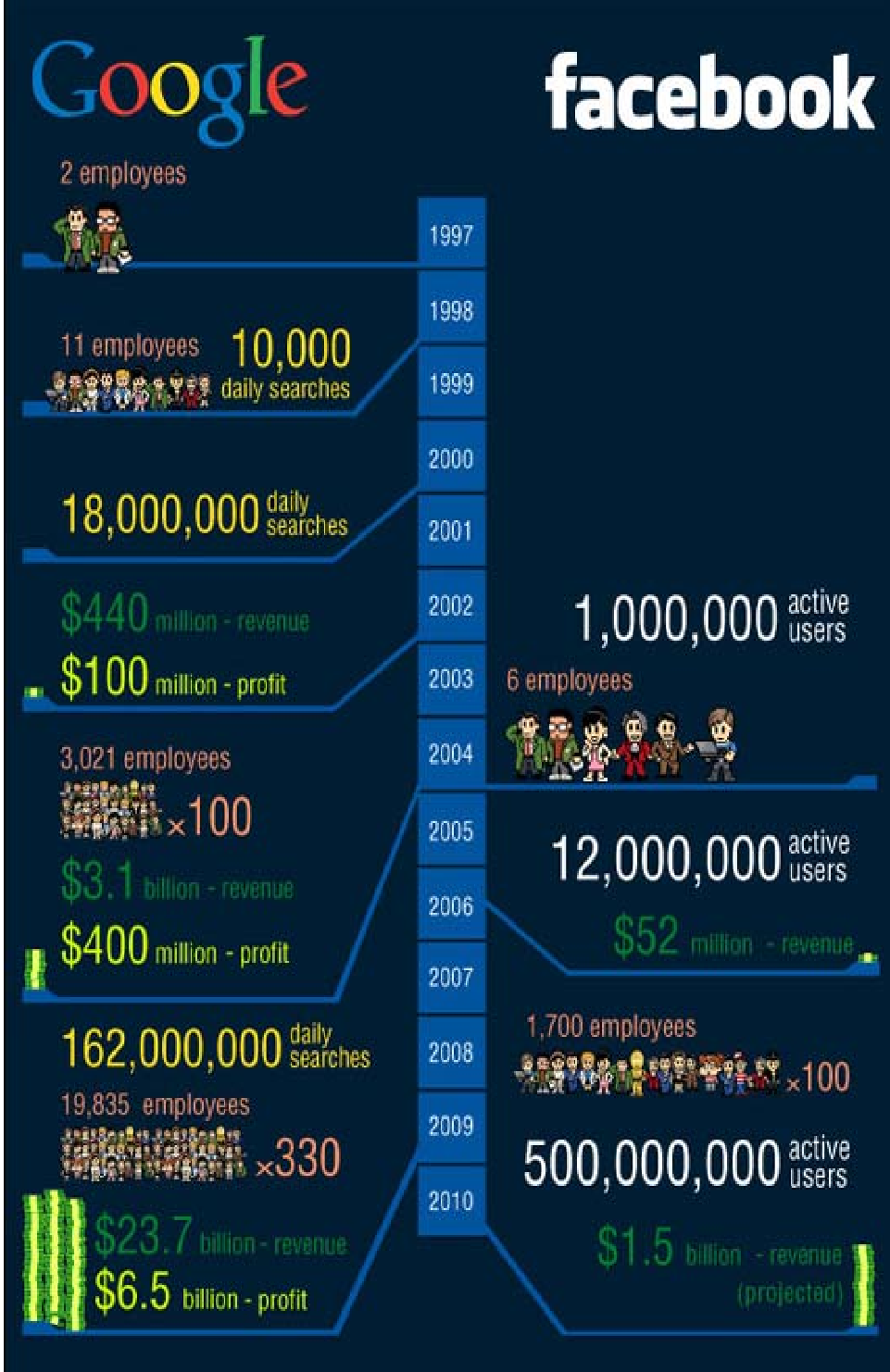
For traditional web services, vertical scaling—adding more power to a single machine—was the norm. However, Social Networks (SNs) present a unique challenge: extreme, unpredictable growth. Facebook's early history was marred by frequent outages because their initial prototype couldn't handle the traffic surges.
The "Why" behind their success lies in a fundamental shift: moving the burden of reliability from the Hardware to the Software. Instead of buying expensive, redundant servers, they built systems that expect individual hardware components to fail.
Methodology: The "Scaling Out" Blueprint
The transition involves a multi-layer distributed architecture. As shown in the figure below, the shift moves from a centralized RDBMS to a layered approach involving Application Logic, Caching (Memcache), and a Distributed Backend.
1. Commodity PC Clusters
Both giants utilize "No Redundant Component" PC servers. Key innovations include:
- Direct Current (DC) Integration: Removing the DC-to-AC conversion loss.
- In-Rack Batteries: Replacing centralized UPS systems, which typically lose 10-16% of power.
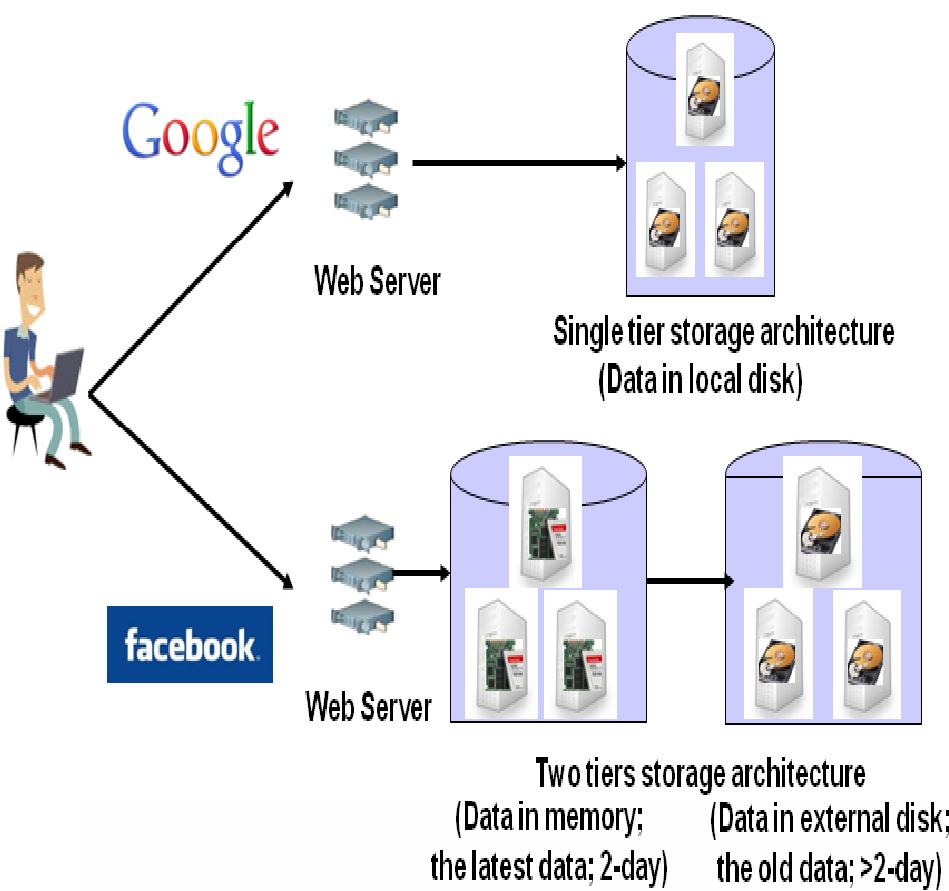
- Tiered Storage: Facebook pioneered keeping "hot data" (less than 2 days old) entirely in memory (Memcache) to optimize for the social "recency" bias.
2. Distributed File Systems (DFS)
To manage petabytes of user-generated content (UGC), Google utilized GFS (Google File System) with triple-copy redundancy, while Facebook adopted HDFS and Cassandra to handle the social graph.
Performance & Efficiency Benchmarks
The efficiency of these architectures is measured by PUE (Power Usage Effectiveness). A PUE of 1.0 is the theoretical perfect.
| Item | ||
|---|---|---|
| PUE | 1.3 | 1.15 (Target) |
| Cooling | Water/Sea Water | River/Wind/Free Cooling |
| Thermostat | 26°C | 26°C |
By running data centers at higher temperatures (26°C) and using "Free Cooling" options (ambient air/water), they drastically reduced the overhead cost of maintaining social services.
Critical Insight & Conclusion
The core takeaway is that Social Computing is inherently distributed. Because social data can be partitioned by groups or interests, the "Divide and Conquer" approach works perfectly for scaling.
However, the paper's limitation lies in its historical context; while it correctly identifies the shift to commodity clusters, it predates the massive shift toward AI-driven social feeds (like TikTok's recommendation engine), which require a different breed of GPU-heavy cloud architecture compared to the CPU/Memory focus discussed here.
Ultimately, Google and Facebook set the gold standard: Software-defined resilience is the only way to scale to the billions.