
Digital Agriculture: Bridging the Gap with Cloud-Native AI
The Impact of Cloud Computing and Artificial Intelligence in Digital Agriculture
The paper introduces a comprehensive digital agriculture platform that integrates Cloud Computing and Artificial Intelligence (AI) for real-time plant disease diagnosis. Leveraging Deep Convolutional Neural Networks (DCNNs) like DenseNet-121, the system provides farmers with an end-to-end mobile solution for identifying crop issues with high precision.
TL;DR
Agriculture is entering a new era where " intuition-based farming" is being replaced by data-driven precision. This paper presents an end-to-end digital platform that combines the scalability of Cloud Computing with the diagnostic power of Deep Learning. By deploying a high-accuracy DenseNet-121 model via a cloud API, the researchers have managed to provide real-time plant disease diagnosis directly to farmers' smartphones, regardless of their device's local processing power.
The Bottleneck: Why Digital Agriculture Fails in the Field
Modern farming faces a critical challenge: the need to produce more with fewer resources. While AI (Artificial Intelligence) has shown immense potential in research settings, the practical application in the field often fails due to:
- Resource Hardship: High-performance AI models require heavy GPUs that farmers cannot afford.
- Data Silos: Agricultural data (soil, weather, images) are often fragmented and difficult to manage.
- Expert Bottlenecks: Labeling agricultural data for AI training is time-consuming and requires specialized knowledge.
Methodology: A Synergistic Framework
The authors argue that AI and Cloud Computing are two sides of the same coin. The Cloud provides the "storage and muscle" (distributed file systems and GPUs), while AI provides the "brain" (DCNNs for recognition).
1. The Iterative Architecture
The proposed system isn't just a single model; it is a lifecycle. It includes data acquisition, a data warehouse (using buckets for images and NoSQL for metadata), a dedicated annotation tool for scientists, and a deployment pipeline.
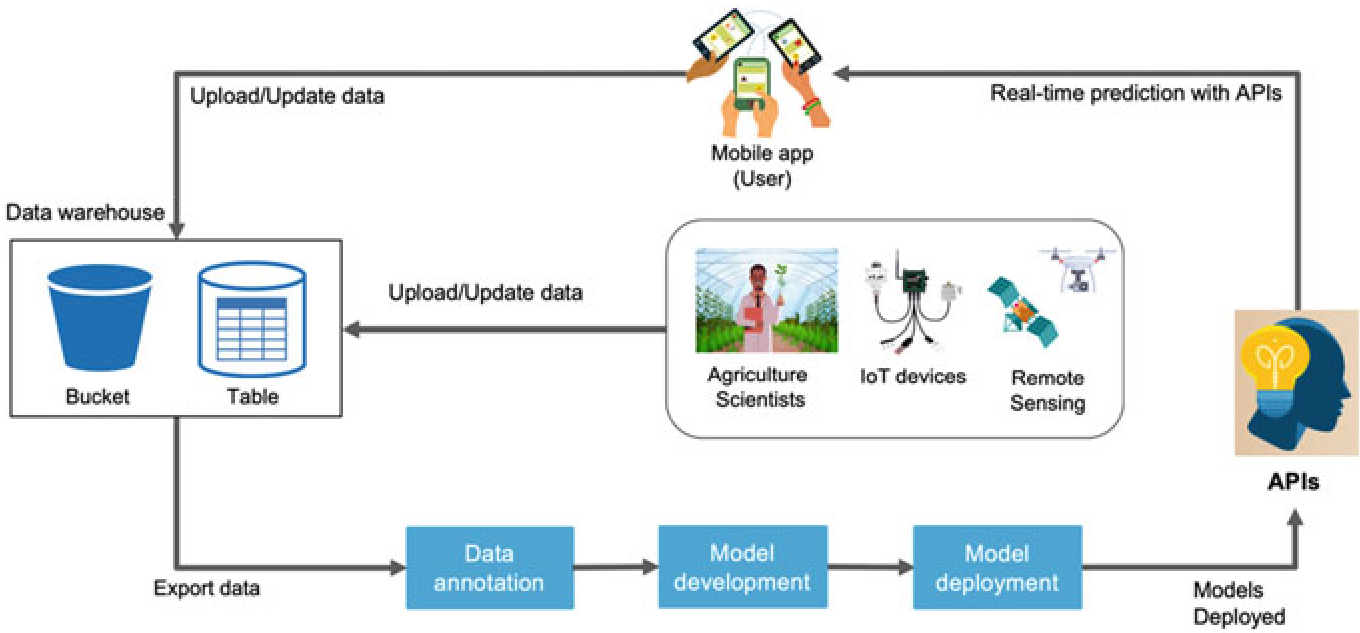 Figure 1: The iterative flow from data collection in the field to cloud-based model training and API deployment.
2. Offloading via REST API
A key technical insight is the use of REST APIs for model deployment. By hosting the AI on a cloud instance, the diagnosis happens on the server. The farmer’s mobile app acts only as a portal—uploading a photo and receiving a result. This ensures a consistent, high-performance experience even on low-cost smartphones.
Benchmarking Performance: DenseNet Leads the Way
The researchers focused on identifying diseases in chili plants, comparing five different CNN architectures. Using the AUC-ROC (Area Under the Curve) metric, they evaluated which model handled unseen data best.
| Model | Training AUC | Test AUC |
|---|---|---|
| MobileNet | 0.9976 | 0.9061 |
| DenseNet 121 | 0.9994 | 0.9421 |
| NasNet Mobile | 0.9985 | 0.8989 |
While MobileNet is typically favored for mobile devices due to its light weight, the cloud-native approach allowed the authors to choose DenseNet-121 (94.21% AUC), prioritizing accuracy over local device efficiency.
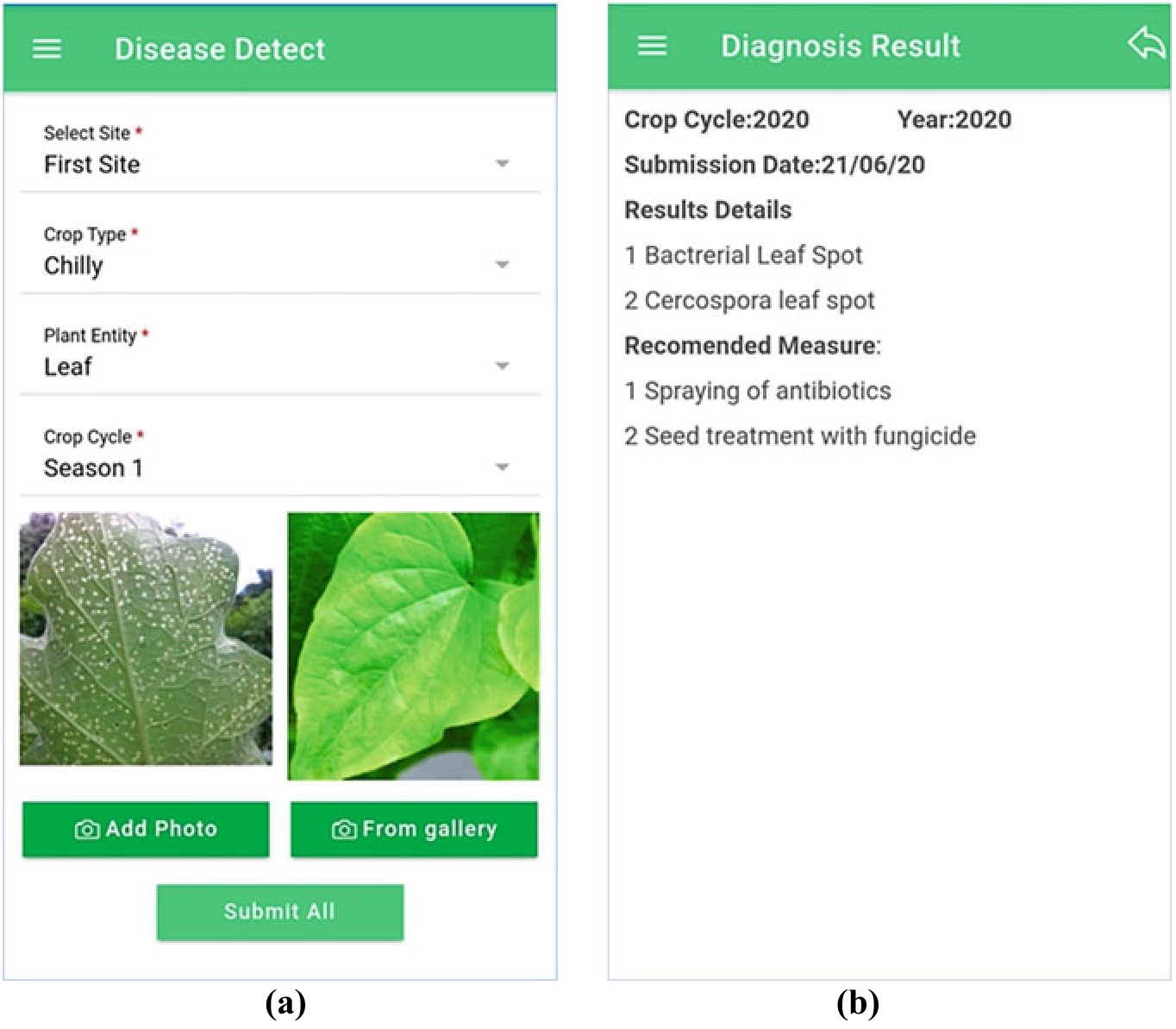 Figure 2: The farmer's mobile interface showing (a) image submission and (b) the diagnosis result with recommended measures.
Critical Insight & Future Outlook
The impact of this work lies in its holistic design. Most agricultural AI papers focus solely on "The Model," but this study addresses "The System." By streamlining the path from raw image to expert-sanctioned diagnosis, it solves a real-world usability problem.
Limitations & Next Steps:
- Data Diversity: The current model focuses primarily on visual data from chili plants. Future builds must integrate sensor-based variables (humidity, soil pH) to move from diagnosis to prediction.
- Broadening Crop Scope: Expanding the dataset to include a wider variety of regional staples is necessary for global scalability.
By moving the "intelligence" to the cloud, we can ensure that the latest breakthroughs in AI reach the hands of those who need them most—the farmers—without requiring them to buy the latest hardware.