
Bio-Inspired Intelligence in the Cloud: Leveraging AIS and Ontologies for Expert Matching
Cloud computing service for knowledge assessment and studies recommendation in crowdsourcing and collaborative learning environments based on social network analysis
The paper introduces a cloud-based service for knowledge assessment and study recommendation within collaborative learning and crowdsourcing environments. It leverages a novel integration of Artificial Immune Systems (AIS) and advanced Ontology-based knowledge representation to infer user expertise from social network data.
TL;DR
This research presents a sophisticated cloud-computing service designed to assess human knowledge and recommend educational paths. By combining the pattern-recognition capabilities of Artificial Immune Systems (AIS) with the structural rigor of Ontologies, the system analyzes social network data to bridge the information gap between what students know and what the job market demands.
Background & Motivation: The Asymmetry of Talent
In the modern digital economy, matching "supply" (educated individuals) with "demand" (specialized jobs) is notoriously difficult. The authors identify a core issue: Information Asymmetry. Universities, employers, and students all use different "substitutes" for information—degrees, rankings, and references—which are often siloed or inconsistent.
As collaborative learning moves to the cloud, we need a way to:
- Aggregate fragments of professional identity across diverse social networks (LinkedIn, Twitter, etc.).
- Infer latent expertise that isn't explicitly stated in a CV.
- Recommend specific actions to help users achieve their career goals.
Methodology: A Three-Layered Intelligence
The authors move beyond simple keyword searching, proposing a robust structural model:
1. The Knowledge Representation Layer
Instead of a flat database, the system uses Dynamic Ontologies. These are not static; they evolve using machine learning algorithms that "mine" professional networks to understand how job requirements change over time.
2. The Meta-Matching Layer
This layer acts as the "brain," using multi-objective evolutionary algorithms to align a user's specific skill set (their "reduced ontology") with the global landscape of professional knowledge.
3. The AIS Recommender Layer
The most innovative aspect is the use of an Artificial Immune System.
- Antigen: Represents the User (the entity to be recognized/processed).
- Antibody: Represents the Job or Course (the potential match).
The system uses Pearson’s Correlation Coefficient (see formula below) to determine the "affinity" between an antigen and an antibody.
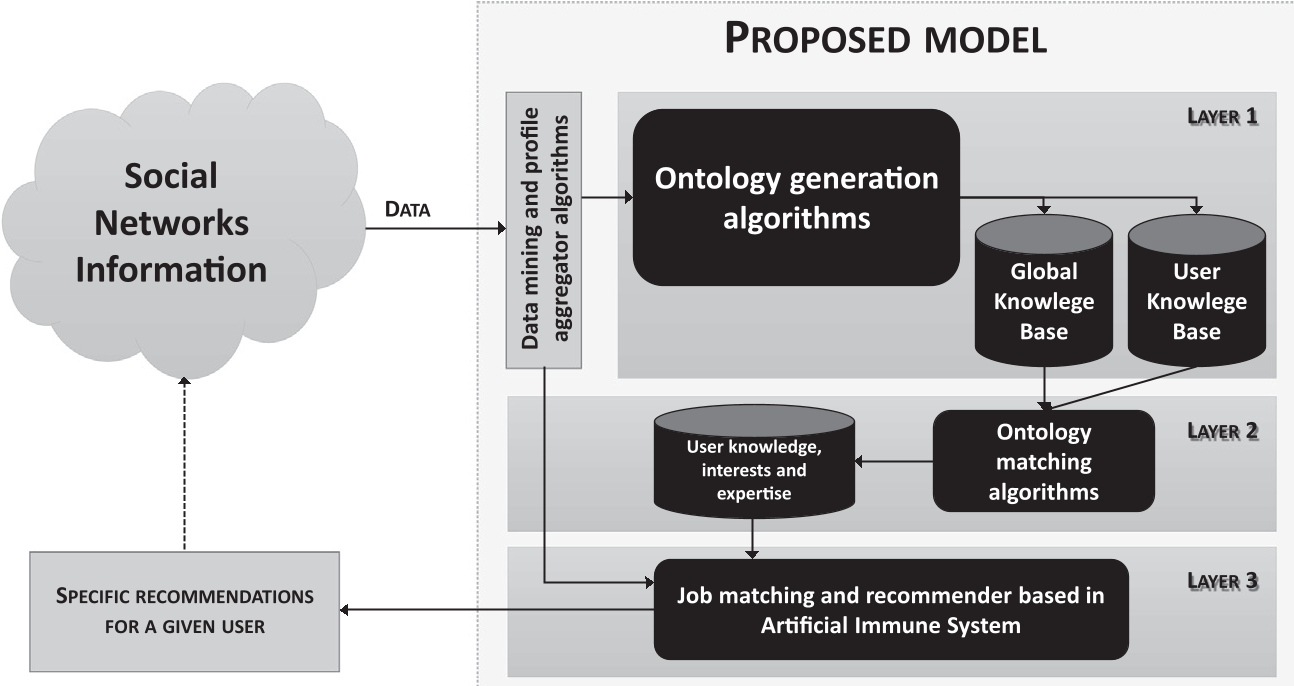 Figure 1: The model adaptation showing the flow from social network data to competence profiles.
Mathematics of Affinity
The core of the AIS mechanism relies on calculating the similarity grade between individuals. The authors employ the following linear correlation:
u_ {i} - \bar { u})}{\sqrt {\sum_ {i = 1} ^ {n} (u _ {i} - \bar {u}) ^ {2} \sum_ {i = 1} ^ {n} ( u_ {i} - \bar { u}) ^ {2}}}$$ This produces a value between -1 and 1, where 1 signifies a "perfect match" in expertise profile. This allows the system to not only find what a user knows but to **predict** their valuation in unknown knowledge areas. ## Experimental Results The authors validated the model using data gathered via the GNIP Amazon Kinesis connector, processing live streams from professional social networks. 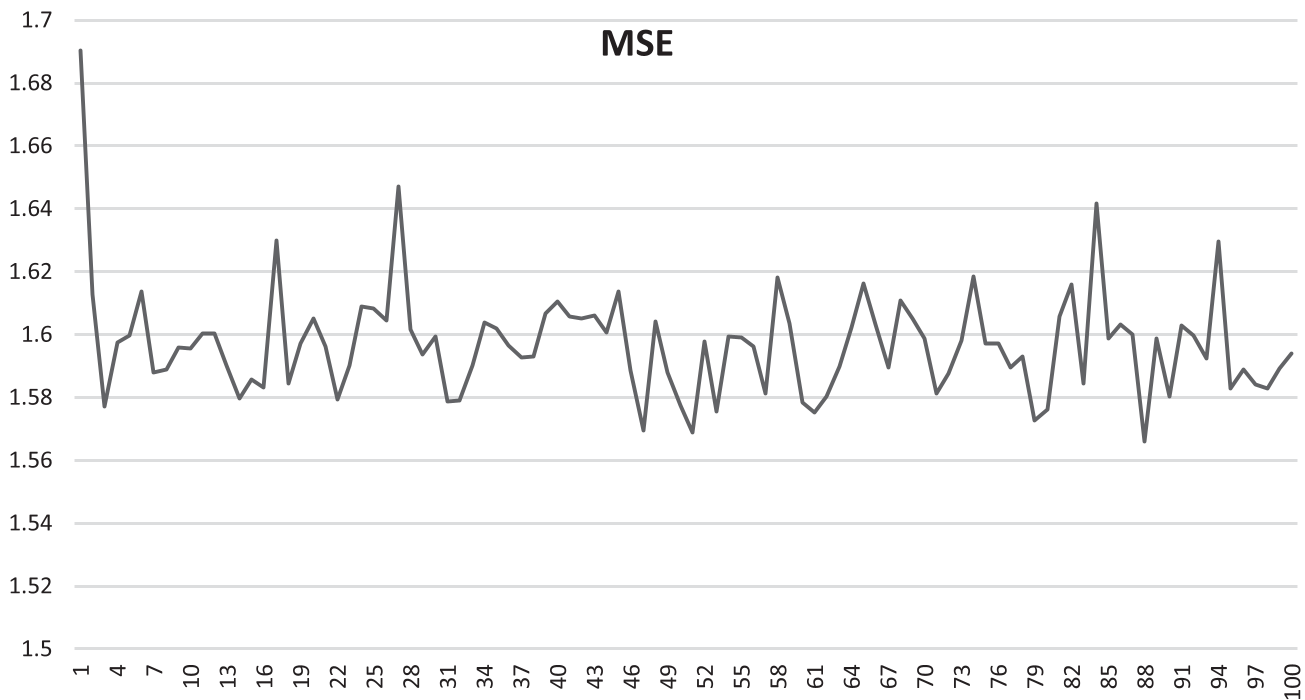 *Figure 2: RMSE Convergence over successive algorithm cycles.* The results (Figure 2) show a steady decrease in the **Root Mean Square Error (RMSE)**. While the convergence was "fair" rather than "aggressive," it proves the biological immune metaphor effectively filters out low-affinity matches, leaving behind highly accurate recommendations for studies and jobs. ## Critical Insight & Future Outlook While the paper provides a solid theoretical foundation, the authors honestly note the difficulty of accessing private social data. The future of this technology lies in **Interoperability**. By using APIs and standard OWL (Web Ontology Language) formats, this system can be integrated directly into MOOCs (Massive Open Online Courses) or HR management software. **Takeaway**: The transition from "Social Networking" to "Social Learning" requires more than just connectivity; it requires an intelligent layer that understands the *semantics* of expertise. By treating skill-matching like an immune response, we can create more resilient and adaptive career paths. ### Limitations * **Data Privacy**: Highly dependent on public profile availability. * **Computational Cost**: AIS and complex ontologies require significant cloud resources for real-time processing of "Big Data." ### Future Work The next steps involve a 1-2 semester-long large-scale evaluation to refine the precision and recall of the recommendations in a real-world university setting.