
Social Internet of Things (SIoT): When Things Start Socializing
The Cluster Between Internet of Things and Social Networks: Review and Research Challenges
This paper explores the "Social Internet of Things" (SIoT), a paradigm shift that integrates Social Network (SN) principles into the IoT ecosystem to enable human-to-thing and thing-to-thing sociality. It proposes a generic SIoT architecture and identifies key research challenges to transition from isolated "Intranets of Things" to a truly ubiquitous, socialized computing environment.
TL;DR
The "Social Internet of Things" (SIoT) is the evolution of IoT from a simple network of sensors into a social ecosystem where humans and devices interact as peers. This paper argues that by integrating Social Network (SN) principles—such as trust, community, and proactive collaboration—we can overcome the scalability and interoperability issues that plague modern "Intranets of Things."
The "Intranet of Things" Bottleneck
Despite the hype surrounding the Internet of Things, most current deployments are actually "Intranets of Things." They are isolated, proprietary networks (like a single smart home or a factory floor) where devices act as passive slaves in a client-server relationship.
The authors identify a critical missing link: Human-to-Thing (H2T) sociality. Without it, devices cannot understand user needs proactively, and users cannot leverage the collective intelligence of the billions of devices surrounding them. The problem is three-fold:
- Low Quality of Experience (QoE): Services don't adapt to social contexts.
- Discovery Failure: Finding a specific service in a sea of billions of devices is computationally "heavy" without social navigation aids.
- Trust Vacuums: How do you know a public sensor is providing accurate data?
The Methodology: The Four Pillars of SIoT
To move beyond the status quo, the authors propose a paradigm where things are "socialized." This involves four core components:
- Social Role: Devices are given identities and can form Relationships (e.g., owner-based, co-location-based, or brand-based).
- Intelligence: A middleware layer that mimics social cognition, allowing objects to start, update, or terminate relationships autonomously.
- Socialized Devices: Hardware that can "talk" to other objects to share experience or seek help.
- Everything as a Service (EaaS): Turning every device capability into a discoverable, social service.
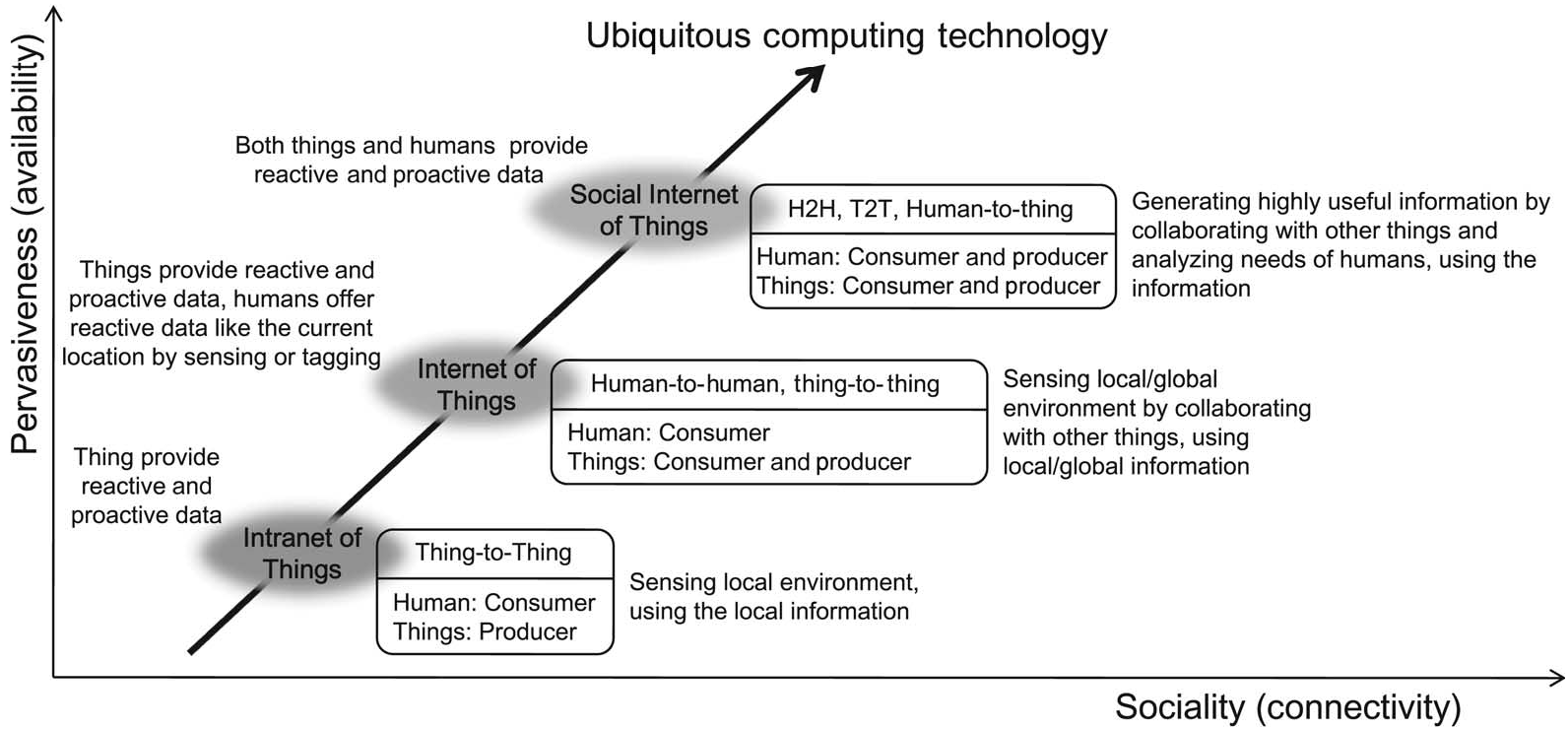 Figure 1: The evolutionary path from Wireless Sensor Networks (WSN) through traditional IoT to the Social IoT.
Architecture for a Social Frontier
The proposed architecture (shown below) moves away from silos toward an Intelligent System that orchestrates interactions between "Actors" (Humans and Things).
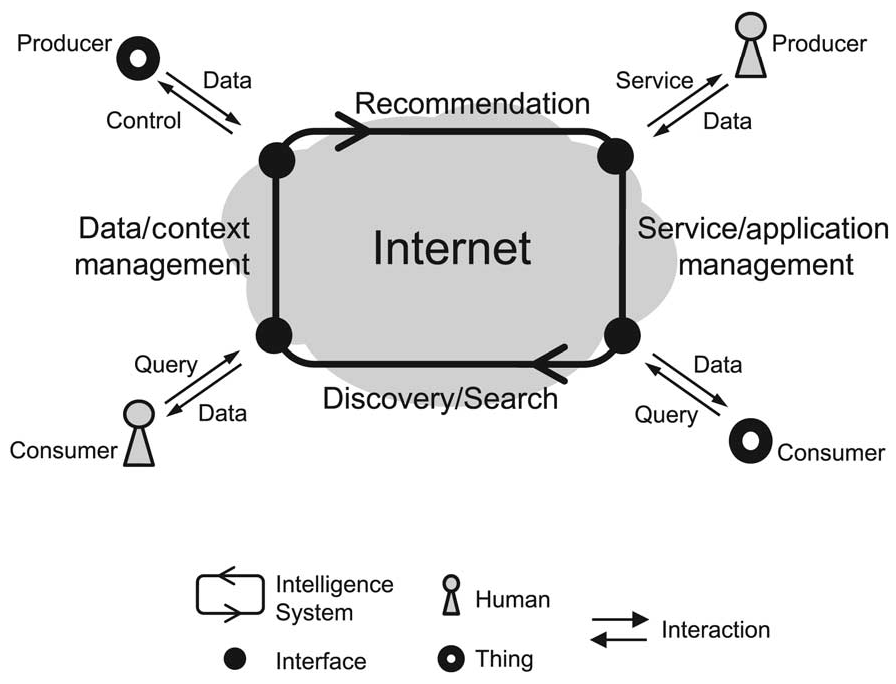 Figure 2: The generic SIoT architecture components: Actors, Intelligent Management System, Interface, and the Internet Backbone.
The "Intelligent System" serves as the brain, handling Service Management, Recommendation, and Context Management. It treats things not just as data sources, but as "Social Capital" that can be shared, recommended, and trusted within a community.
Critical Analysis: Navigating the Challenges
The authors are realistic about the hurdles. While conceptually brilliant, SIoT introduces massive technological demands:
- Trust and Privacy: If a device is "social," who sees its data? The paper emphasizes the need for lightweight security and subjective trust evaluation.
- Energy Management: Socialization requires more communication. For battery-powered sensors, "staying social" might be too expensive without energy-harvesting breakthroughs.
- Heterogeneity: Getting a Pepsi vending machine to "friend" a Nike+ FuelBand requires standardized Semantic Web protocols (like RDF and OWL).
Conclusion: A More Human Ubiquity
The ultimate takeaway is that the "Internet" part of IoT is easy; it's the "Social" part that will make it ubiquitous. By adopting the principles of Social Networks, we can create a world where technology "disappears into the fabric of everyday life." Things will collaborate on our behalf, services will find us before we ask for them, and the digital world will finally mirror the organic complexity of human society.
Future Outlook
The next wave of research must focus on Trust Management and Big Data Signal Processing. As we move toward 2026 and beyond, the success of SIoT will depend on whether we can build systems that are as trustworthy as they are intelligent.